


 Shkruar nga Armando Iannucci
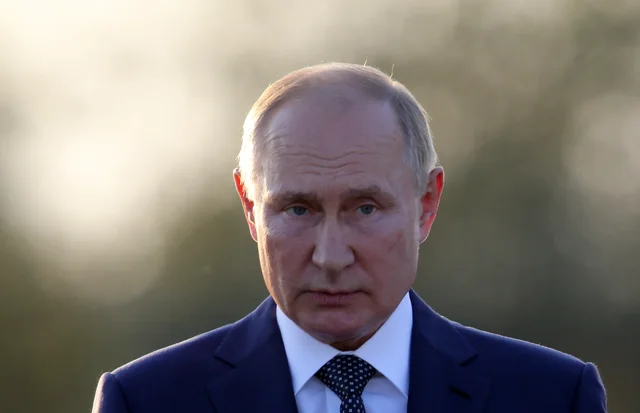
According to him, today's Russia is similar to what he portrays in the movie The Death of Stalin, saying that people close to Russian President Vladimir Putin constantly try to flatter him, try to avoid him truths, and everything is similar to the era of the dictator.
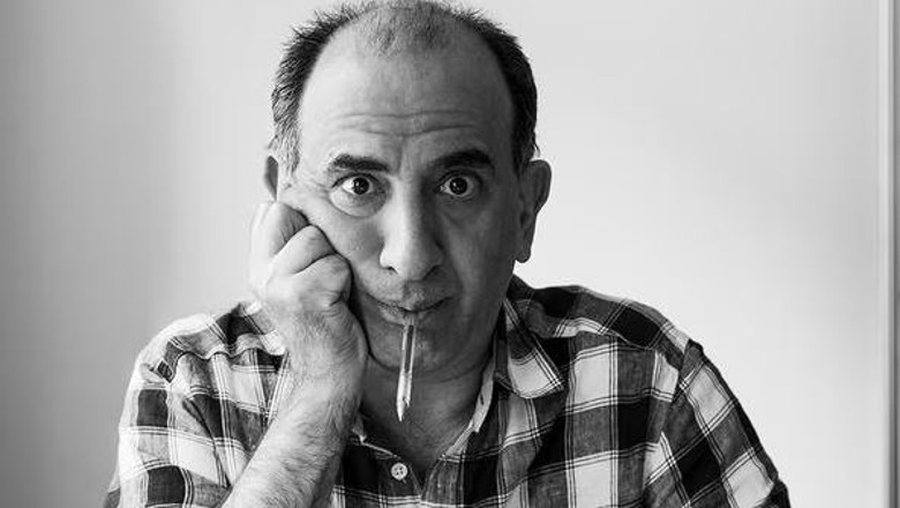
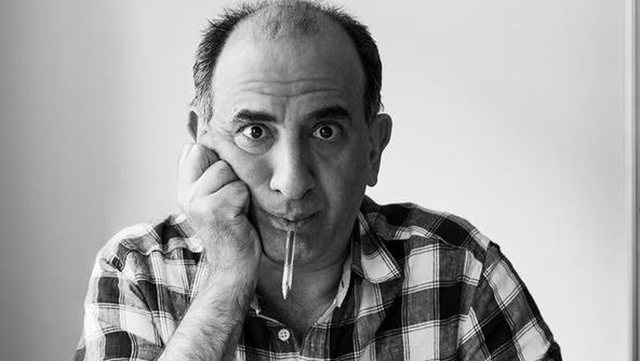
Writer and director of film and television, Armando Iannucci, is known for his political satire, and the film, In the Loop. His 2017 black comedy The Death of Stalin, which deals with ambitions for power, intrigue and backstabbing - following the death of Soviet dictator Josef Stalin in 1953 - has been banned by Russia's Ministry of Culture. Iannucci recently traveled to Tbilisi to attend the three-day ZEG festival.
During the visit to the capital of Georgia, Iannucci gave an interview to Radio Free Europe.
According to him, today's Russia is similar to what he portrays in the movie The Death of Stalin, saying that people close to Russian President Vladimir Putin constantly try to flatter him, try to avoid him truths, and everything is similar to the era of the dictator.
Radio Free Europe: Let's start with the Death of Stalin. Are you thinking about the continuation of the film? I guess, with the current dictator?
Iannucci: Well, to do The Death of Putin, as I imagine it could be called, we have to think about the events and the direction they should have taken, but didn't. I think a good part of my career has been spent responding to the death of truth, and that's something that worries me. Putin is partly responsible, for his attacks on language, and for the fact that even in Russia, if you say we are at war, you can be arrested, because there is no denying that there is no war. It's said to be a special military operation that will end within the week, so why bother? You know that now, even if you hold a billboard without any inscription, you can be sent to prison, because even something like that is considered a sign of opposition.
Radio Free Europe: If all the circumstances were created, and if there was a movie The Death of Putin, is it difficult to imagine the scene of Putin's funeral? Do you need to change something, the costumes?
Iannucci: I believe you know there are already rumors that people can only tell Putin what he wants to hear. Therefore, the army presented him with the scenario that the war would end quickly. This is what happens when fear and terror spread, and this is what the film The Death of Stalin deals with. That individual has terrorized everyone around him and this has led to his death, he died after an attack in the middle of the night, but people were afraid to open the door and ask him how he was. People have been too afraid to seek medical help without consulting the whole committee. They are also afraid of which doctor to ask for, and this indicates the installation of terror, which also caused his death. I think that Putin is facing the same situation, he is now fed with these "facts", which are not facts, but fiction. They are positive things that people say to him, so that they don't get arrested. Therefore, he lives in a reality that he created himself, and that in reality does not exist.
Radio Free Europe: As for what you can tell Putin and what you can say about him, Putin, like most dictators in the world, is allergic to comedy and humor. For what reason?
Iannucci: When we've been doing research on The Death of Stalin, people who grew up under his regime have told us about some joke books, jokes about people close to him. But in that world people could be arrested or killed if they told these jokes. However, some have said that they needed to show them because the situation was absurd. They either had to laugh or scream at the whole situation. So sometimes comedy is the only way to react to things that are absurd.
Radio Free Europe: If you could satirize Putin, in your future works, what would be his soft spot, and what would be his Achilles' heel?
Iannucci: I think it's his isolation, it's his massive symbol, the big table where people meet. This could be. And I imagine how in everyday life, people close to him stay even further away. Perhaps he is even afraid of the shadow of his reflection. He looks like a lonely figure.
Radio Free Europe: In his mind, great tsars are like that.
Iannucci: Yes. This is also his constant complaint, that the West mocks Russia, that the world is laughing at him. They are not laughing now. I think it just has to do with how vulnerable he feels.
Radio Free Europe: Its insecurity?
Iannucci: His uncertainty can be understood from the statements "we have missiles, we have worse things we can do". So the threats. This is a sign of blackmail. This is how things work with blackmail and fear. And he does this globally.
Former American general: Putin would rather use nuclear weapons than lose the war in Ukraine
Radio Free Europe: As for humor or ridicule, how can a country heal where humor has become a health hazard?
Iannucci: That's an interesting question. I don't think that's my job…. I'm participating in the ZEG festival in Tbilisi, which deals with how to tell a story. It is important how we tell the events, whether as a journalist about the events that are happening, or as a writer. This aspect affects the freedom of expression and the freedom of speech, therefore it must be fought for, even on an individual basis. This is because there is no such thing as an army of writers. The best way to combat even AI-generated fake news is through telling jokes, because AI doesn't have that ability. She still can't come up with good jokes. I have tested it but they were not good. We create original things, artificial intelligence shows what it has been fed.
Radio Free Europe: Lacks original creation.
Iannucci: Yes. And we have to keep this in mind that we are better than artificial intelligence. We can come up with original story ideas, new plays, new arguments. It is our job not to surrender to a computer.
Radio Free Europe: Back to reality. We discussed at the beginning, with doses of jokes about some movie scene, but I think it's fair to assume that when all this is over, when the war is over, movies will be made, right?
Iannucci: Yes.
Radio Free Europe: And most will not miss this opportunity. Whether from Russian soil, or elsewhere. Let me ask a hypothetical question. If you were the director of such a film, how would you portray Putin?
Iannucci: I guess in the role of a 12-year-old kid.
Radio Free Europe: A 12-year-old child? Angry?
Iannucci: No, a 12-year-old in a shirt and suit, doing all the things. And we would see the whole army and other people being addressed as if they were 60 or 70 years old.
"They understand that after Russia loses the war - because no one among them believes in victory anymore - it will be the starting point of this war for the throne," Russian journalist Roman Anin told REL.
Radio Free Europe: You should probably patent this idea, it's fantastic. You have devoted a lot of time to Putin. I seem to ask you about the phenomenon of [Ukrainian President Volodymyr] Zelensky: how a comedian, who has shown jokes to the world, has put himself in charge of preserving the truth in the world. What phenomenon is that?
Iannucci: He was also a smart businessman, with the production company he owned. Just because you make jokes doesn't mean you're an idiot. And through his jokes, the political process has been analyzed many times. So he is someone who knows very well how politics works, how messages are conveyed, because every joke has a story inside. It is a creative way of responding to developments in the world.
Radio Free Europe: In Russia, but probably also in Britain, if you call someone a palazzo - always respecting that profession - the expression takes on a negative connotation.
Iannucci: Yes.
Radio Free Europe: This is how the Russians have referred to him throughout his presidency. Before the war, and some time after the war started. Now, not so much. Why this transformation, from a palace to a figure that tells the world the truth. How did this happen?
Iannucci: What he's doing is very brave, and I'm sure deep inside he knows how important and effective what he's doing is. He has used social media, the ability to appear as a leader who has not fled, then shows the worst that is happening, and beats the drum around the world, looking for support.
Radio Free Europe: And he is not afraid of humor, on the contrary, he loves it. During the interview, we teased Russia the most.
Iannucci: Because your questions have been mostly about Russia.
Radio Free Europe: Because we are in Georgia, when Russia's shadow is visible, that is why these questions must be asked.
Iannucci: Yes, absolutely. It poses a substantial threat to existence. As a journalist from Ukraine said the other night, this is not only about Ukraine and Russia. It is about freedom and democracy versus the military regime. It is important. Autocratic governments around the world should not be given any indication that they can continue unscathed.
Radio Free Europe: Let's now look at the West with a satirical eye. I will refer to a classic British satire, Yes Minister. I will stop at a part that deals with foreign policy. There are four stages, according to the character played by Humphrey Appleby. "The first stage: We say that nothing will happen. Second stage: We say something might happen, but we won't do anything about it. Stage Three: We say that maybe we should do something, but we can't do anything. Fourth stage: We say, maybe something happened, but it's too late now". Why is something like this still relevant today? This has been the case with Ukraine, at least until 2022. The same has happened with Georgia.
Iannucci: Because it's an eternal truth, that's how politics has always worked. Time passes and we think that history cannot repeat itself. The whole surprise with the war in Ukraine, I think, was because most of us, especially the Western democracies, thought that those things belong to the past and cannot happen again. Even Putin, who has a history of oppressing the opposition and killing opponents, would never do something like that. But this is a big mistake. And we can't even promise to do better next time, because we'll do the same thing again. Another thing even bigger than war in the future is the climate crisis. But, we are still in the stage of complacency, that maybe we can invent something, that will help us technology in this aspect.
Radio Free Europe: Then why do we continue to believe these promises? Or is that how human nature works?
Iannucci: It's about human nature. We always prefer the positive result, don't we? It's about what we tell ourselves. And most think it's more depressing if we think about big problems. It is easier if we spend our days with small things./REL



Lini një Përgjigje