


 Shkruar nga Ettore Sequi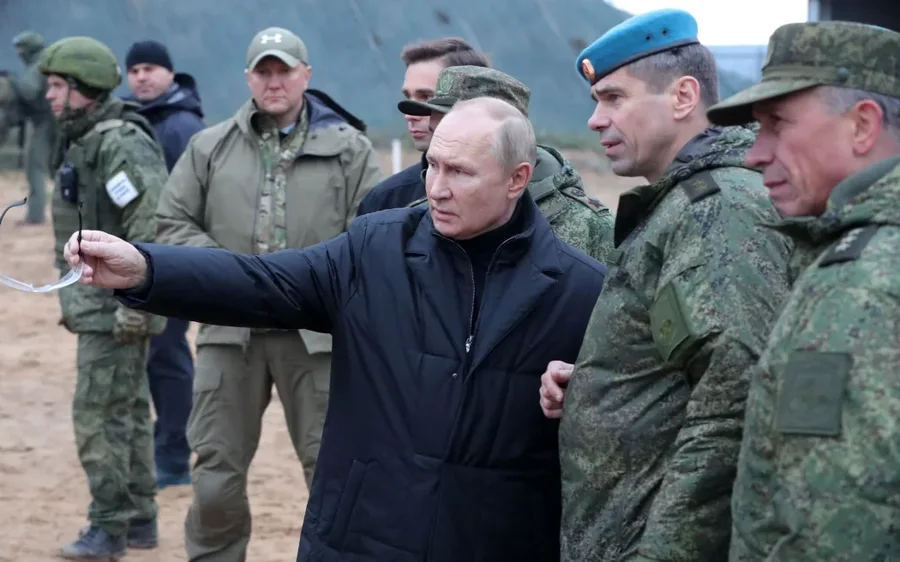
Zelensky's invitation has put him in a difficult position: sitting at the table would give legitimacy to the enemy. The Russian president may change his mind if he receives guarantees of territorial annexations, but this is an unacceptable demand for Kiev.
Vladimir Putin rejected Volodymyr Zelensky's invitation to meet in Istanbul for direct negotiations between them. The proposal was not just a gesture of rapprochement, but a strategic challenge, almost like a symbolic ultimatum. Zelensky knew that Putin would hardly have agreed to meet with him.
Therefore, it aimed to unmask and essentially neutralize the Kremlin's proposals. For Putin, sitting down at a table with Zelensky would have meant recognizing his legitimacy as Ukraine's leader, overturning years of propaganda and self-denial.
For its part, Moscow continues to use the model of the Istanbul negotiations in 2022. They started without a ceasefire, military operations continued with intensity, and were aimed at imposing a punitive agreement on Kiev.
This format is making a comeback, dressed up in the rhetoric of negotiations, but driven from behind by the same goals: to paralyze and cripple Ukraine, divide the West, and buy time.
In fact, time is Moscow's main weapon. Putin does not want a ceasefire to be reached before he has achieved concrete results from the talks. He is aware that stopping the fighting would make it politically and militarily difficult to resume it.
A ceasefire would weaken the Russian strategy, taking away the “pistol” it carries with it to the negotiating table. For Moscow, negotiations for a formal ceasefire are entirely legitimate. According to the Kremlin, war is a permanent instrument of pressure, which does not hinder, but rather supports and accompanies negotiations.
The lack of a ceasefire also allows Moscow to prolong the talks indefinitely, showing a visible willingness while the war continues. Currently, negotiations are part of the conflict, not an alternative to it. Zelensky knows this.
He is aware that the decisive arbiter is in Washington. Both he and Putin want to show Trump that the responsibility for the war lies with the other. New proposals, mutual accusations and tactical maneuvers are aimed at the White House, the real center of this game. Trump has now realized that he shares with Europe a common interest in a quick ceasefire and a lasting peace. He also knows that Moscow intends to drag out the process, so impatience is growing in the United States. However, it remains unclear what he intends to do: on the one hand, he promotes the agreement on vital minerals with Kiev - a sign of strategic engagement - on the other hand he praises Moscow's readiness for a deal.
He has not yet decided whether to break with Putin or seek a new global agreement with him. The fact is that he is in a hurry: he wants to be able to declare the end of the mission as soon as possible, tout the ceasefire as a trophy, and reposition the main American strategy in the Pacific.
For Moscow, Istanbul is a geopolitical choice aimed at excluding Europe, restarting negotiations without offering a ceasefire, and restarting them from a punitive platform for Kiev, to bring the US-Russia axis back to the center. But that is precisely why Putin's presence seemed unlikely.
His every move has two targets: Washington and the domestic front, where the room for maneuver has narrowed, and where the divisions between the most aggressive and the most cautious elements of the Russian system are becoming ever deeper.
Putin will only go to Istanbul if results are achieved that can be presented as a success: territorial concessions by Ukraine that at least match the territories already occupied, and the lack of security guarantees for Kiev. This requires negotiating conditions that are not at all favorable to the opponent.
If he took them, Putin would have an excuse. Otherwise, it is an alibi to stay away from them. However, for Moscow the problem remains to not distance Washington too much and to protect, if possible, its relationship with Trump.
Meanwhile, international pressure on Moscow is mounting. Brazilian President Lula has called on Putin to go to Istanbul. Pope Leo XIV said that “the Holy See is at your disposal so that enemies can meet and look each other in the eye”; the European Union is adopting new sanctions against Russia.
Yet Moscow has no intention of acting as if it has gone on the defensive. Putin thanked the BRICS group of countries for supporting a "realistic" peace process, and reiterated that he was not isolated. Further rapprochement with China, an invitation to visit Tehran, and calls for a multipolar international order reinforce the idea of an alternative front to the one led by the United States.
It's a message to Trump: Moscow has many options at its disposal, so it won't let conditions be imposed on it. The Istanbul meeting, which Lavrov also did not attend, took place without its real protagonists - Putin and Trump - leaving the negotiations to second-tier Russian and Ukrainian officials.
However, the significance of this meeting remains crucial. Because Zelensky forced Moscow to expose its hypocritical behavior. It also highlighted the limits of the Kremlin's narrative, and consolidated support for Kiev from allies.
Above all, it puts Trump before a choice between supporting Kiev and the temptation of reaching a pact with the Russian autocracy. The time for ambiguous behavior is ending. Istanbul is a touchstone, not for achieving peace, but for understanding who is really willing to seek it. /Adapted from “Pamphlet” by “La Stampa”


Lini një Përgjigje