


 Shkruar nga Pamfleti
This offer is a change from the Trump administration's initial stance, which had ruled out any involvement after the war.
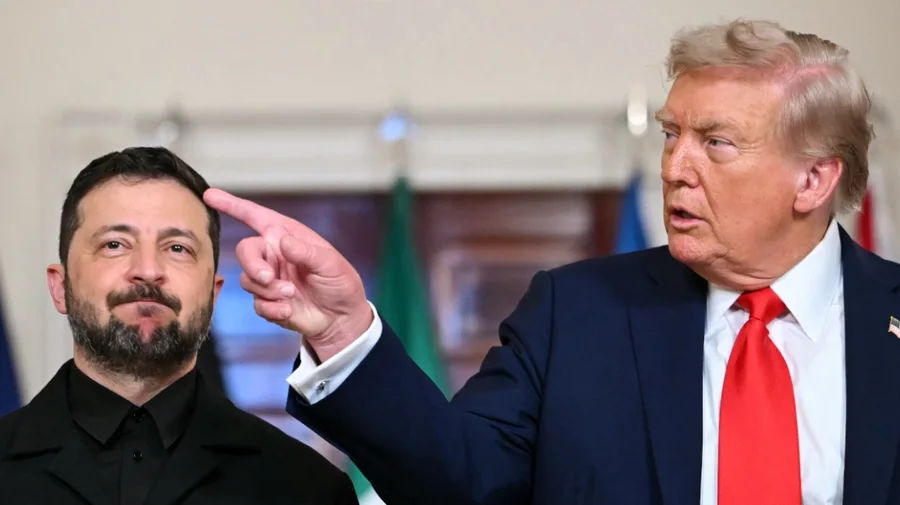
The United States appears prepared to contribute critical strategic assets to any Western security plan for Ukraine after the war ends, but without sending its own combat forces to Ukrainian soil.
According to European and Ukrainian officials who spoke to the Financial Times, Washington aims to provide "strategic force multipliers" such as intelligence, surveillance and reconnaissance (ISR) assets, command and control capabilities, and air and ground air defense systems.

American aircraft, ground-based radar stations, and logistical infrastructure could support a European deterrent force, which would take on the responsibility of enforcing a no-fly zone and guarding Ukraine's borders after a possible peace deal.
This offer is a change from the Trump administration's initial stance, which had ruled out any involvement after the war.
The "ready" plan
At the heart of the plan is an "alliance of the willing", with the UK and France leading the attack and other European countries contributing a total of four to five brigades.
The draft provides for three levels of protection:
Demilitarized zone under international observers or neutral peacekeepers.
The first line of defense by Ukrainian forces equipped and trained by NATO.
The deepest European deterrent force in Ukrainian territory, with the US providing support from the rear.
Andriy Yermak, Volodymyr Zelensky's chief of staff, confirmed that "the view will be a mix of military, political and economic support", underlining that "the US can provide the backbone that makes the whole deterrence architecture work".
Warnings and risks
Despite the progress, Washington insists it will not send troops to Ukraine, raising doubts about the durability of the guarantees. Defense Secretary Pete Hegseth and other Trump administration officials have expressed concern that even providing support assets could embroil the United States in a future conflict.
At the same time, many European governments appear wary of the idea of sending thousands of troops to Ukrainian soil, with the political costs and risk of public backlash remaining high.
Trump himself is trying to keep a low profile, saying that "we haven't even discussed the details" and that American involvement will be "on the support side, mainly from the air."
The blockade with Russia
The plan continues to be stymied by Moscow's stubbornness, the Financial Times reports. Vladimir Putin is demanding that Russia join security guarantees, something Kiev has categorically rejected. Disputes over post-war borders and control of regions such as the Donbas remain unresolved.
Despite contacts in Washington and Brussels, Trump's push for peace has not yielded tangible results. However, the change in the American position on the issue of guarantees has pleased European capitals, which for months had been pressuring the US to contribute more.


Lini një Përgjigje