


 Shkruar nga Pamfleti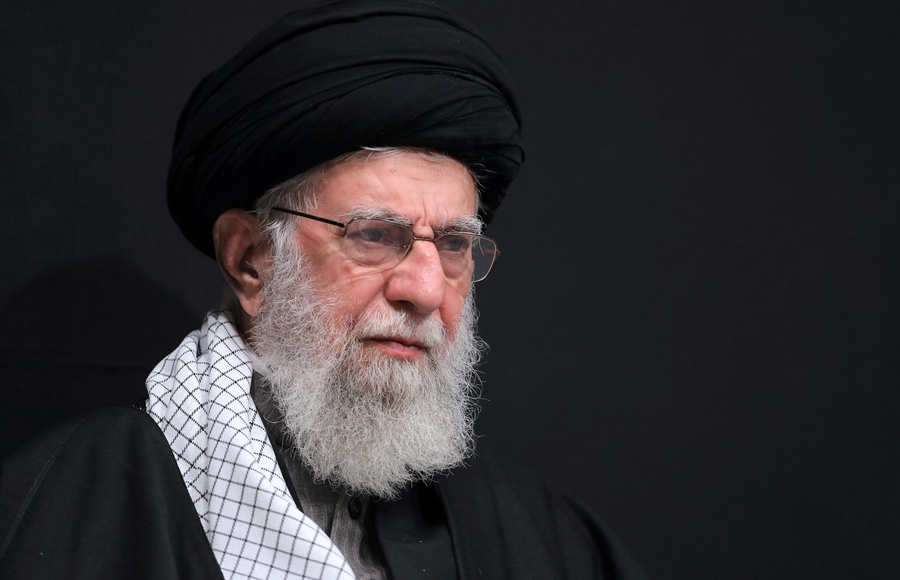
After the military, Israel may attempt to eliminate Iranian politicians and the Supreme Leader himself...
From her terrace in Tehran, Ghael sees the “Beit-e Rahbari” (the house of the supreme leader), an armored residence equipped with an anti-nuclear bunker. “Last night they tried to hit it several times,” the girl writes in a message, with an emoji attached. Ayatollah Ali Khamenei is probably not there. He is said to be hiding in Mashhad, his hometown, but no one is sure.
On the second day of the war between Israel and the Islamic Republic, the Iranian regime has been hit hard. Israeli airstrikes have killed twenty key figures in the Iranian strategic apparatus: from Hossein Salami, commander of the Revolutionary Guard, to Mohammad Bagheri, chief of the army's General Staff, Gholamali Rashid, head of the Khatam al-Anbiya central headquarters, Esmail Qaani, commander of the elite Quds force, and Amir Ali Hajizadeh, head of the IRGC's air force and architect of the latest attack on Israel.
“The regime relied on these commanders. Parliament is irrelevant. A Guard general has more power than President Pezeshkian himself. These attacks were designed to paralyze the structure of the dictatorship,” Iranian analyst Beni Sabti of the INSS in Tel Aviv told Corriere della Sera. Netanyahu has warned that if Iran kills civilians, Israel will retaliate by hitting high-ranking political figures. “Many of them have already been eliminated,” Sabti comments, adding that every figure in the IRGC is now targeted, a clear message from Israel to Khamenei and his circle: “You are the next ones.”
This rhetoric reinforces the belief that Israel's goal is not only to destroy Iran's nuclear and missile capabilities, but also to destabilize, if not overthrow, the regime. A dangerous and far from simple goal that does not necessarily guarantee the liberation of the Iranian people, oppressed for 46 years under a brutal theocracy.
Also on the “Netanyahu list” could be Khamenei’s second son, Mojtaba, the chosen heir. Ruthless and determined to preserve the family’s power at all costs, he controls the militias, security and financial channels. Another key figure is Mohammad Bagher Ghalibaf, a former commander of the Revolutionary Guard, former police chief and current speaker of parliament. A strategist and confidant of Khamenei, he was a close ally of Qassem Soleimani. Ali Larijani, another former commander and conservative leader, is also considered an influential but more pragmatic figure who has negotiated with the EU on the nuclear issue.
But the harshest scenario, and the most desirable for the Iranian opposition, is that the next target is Khamenei himself. Even for the Mossad, it would not be an easy blow, given the extreme protection that surrounds him. The assassination of the man who has led the Islamic Republic since 1989 would open up unpredictable scenarios with explosive consequences beyond the battlefield.
According to analyst and writer Arash Azizi, in the event of Khamenei's assassination, an Assembly of Experts, a kind of religious conclave, would be convened to choose a successor. Mojtaba is among the leading candidates. But such a shocking act could also push other parts of the regime to act to change the system. In that case, real power may no longer rest in the hands of the supreme leader.
This would start internal wars that would cause chaos not only in Iran, but also in the regions where Iran has influence: Iraq, Lebanon, Syria, and Yemen.
Some hope that a regime collapse will bring back the mass protests of the “Women, Life, Freedom” movement of 2022–2023. Others cite the possibility of a coup by factions of the military or the oligarchs who control the Iranian economy. There is no organized opposition leadership in Iran – it is banned. Those who have opposed the regime are in prison, on the run or killed. “There is no opposition figure today who has the strength to seize power. A spontaneous uprising could change things, but it remains uncertain. Also, a moderate faction within the regime itself could try to take the lead and negotiate with the West,” Azizi adds.
Ali Vaez of the International Crisis Group notes that there is no ready alternative to the current regime – neither inside nor outside the country. A collapse from within would bring either civil war or a military coup.
Although there is currently no chain reaction, if it does occur, it remains unclear in which direction it will go. In Iran, power is in the hands of the extremist Revolutionary Guards who control the military and the economy. They do not want to overthrow the system – but to preserve it at all costs.
Surprised and uncertain, the regime's leaders are now isolated and feeling threatened. They were preparing for a response to an Israeli attack, but they miscalculated, thinking they had until Sunday, when the sixth round of talks with the US was scheduled. Now, caught off guard and publicly humiliated, they seem driven to escalate the situation. In this climate of tension, it is not excluded that Tehran will follow the path of secret attacks against Israel, or worse, accelerate its nuclear program, plunging the Middle East into a new and profound period of instability. /Adapted by "Pamphlet" from "Corriere Della Sera"




Lini një Përgjigje