


 Shkruar nga Pamfleti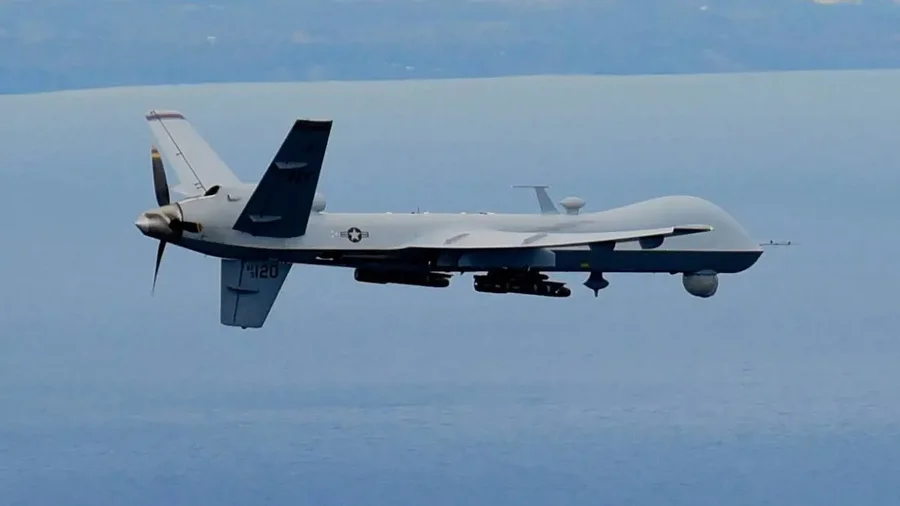
The US has permanently deployed MQ-9 drones and reactivated the 431st Squadron in Kunsan to strengthen North Korea deterrence and send a signal to China...
A permanent drone presence in South Korea to put pressure on North Korea and send a clear signal to China.
The United States is aiming to revive a squadron dating back to World War II to bolster security amid rising military tensions in the Asian region.
The 431st Expeditionary Reconnaissance Squadron was activated a few days ago at Kunsan Air Base, on the South Korean coast south of the capital Seoul.
MQ-9 Reaper drones will fly from this location. Washington's objective is clear: to strengthen the military's air capabilities on the peninsula.
The US move, among other things, comes after the repositioning of F-16 fighter jets in the same area and, more importantly, after North Korean leader Kim Jong Un met with Xi Jinping and Vladimir Putin in Beijing.
US drones on the Korean Peninsula
According to CNN, the permanent deployment of Reapers to Kunsan demonstrates Washington's commitment to South Korea, its allies and other Pacific partners. However, it has not yet been announced how many Reapers will be stationed in South Korea, although an Air Force fact sheet shows 50 in the inventory of US Special Operations Command.
What are the characteristics of the drones in question? Reapers are single-engine, unmanned, turboprop aircraft capable of performing a variety of combat and other missions.
With an extended range of over 1,600 miles, they will provide a significant boost to American forces in the region.
The Reaper's range covers not only North Korea, but also the East China Sea and Taiwan, approximately 800 miles away.
Mainland China is only about 250 miles from Kunsan, while the Bohai Sea, where the Chinese Navy frequently conducts exercises, is approximately 600 miles from the US air base.
"MQ-9 operations will support U.S. and North Korean intelligence, surveillance, and reconnaissance priorities throughout the Indo-Pacific theater," the Air Force said in a statement.
Lieutenant Colonel Douglas Slate, who will command the squadron, said that "the use of the MQ-9 provides the region with a powerful capability."
"We are here to support the mission, deepen cooperation, and demonstrate our shared commitment to maintaining security and stability in the Indo-Pacific," Slater continued.
For combat missions, the MQ-9 can carry a wide range of weapons, from Hellfire missiles to laser-guided bombs.
Furthermore, labeling the drone unit as the 431st Squadron revives a name that dates back to World War II, when it was activated in 1943 as the 431st Fighter Squadron in Australia, flying long-range P-38 Lightning fighters as escorts for American bombers in the Pacific theater.
The activation of the aforementioned squadron in South Korea is the second major Air Force move to the peninsula this year. In July, the US began moving F-16 fighter jets from Kunsan, a little more than 80 miles to the north, to Osan Air Base, to form a "super squadron" closer to North Korea.
Thousands of personnel are expected to be transferred from Kunsan to Osan. This temporary transfer will last until October next year to assess whether it will "maximize capabilities and increase combat effectiveness on the Korean Peninsula." /Adapted from Il Giornale/







Lini një Përgjigje