


 Shkruar nga Pamfleti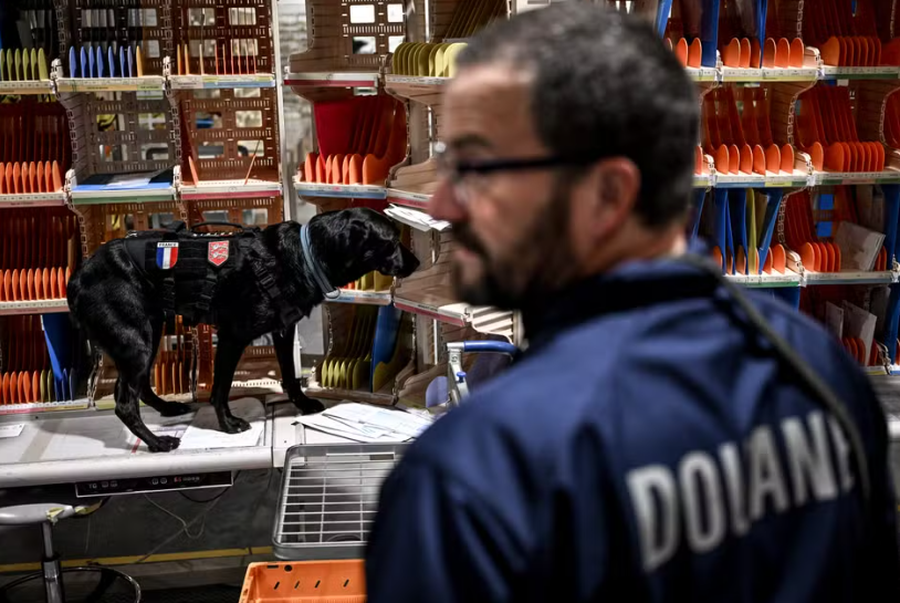
France seems to have become the European center of cocaine, but also of other types of hard drugs.
This is at least according to a confidential report from the French Interior Ministry published by Le Monde.
The report details the huge scale of drug trafficking, particularly cocaine, in France, which authorities are now calling a "white tsunami" and considering "an existential threat to our country."
According to the report, over 200,000 people in France may be involved in the retail distribution network, in addition to 5,000 gang leaders and around 100 major importers from South America.
There is talk of the emergence of a "counterculture of traffickers" who do not hesitate to show themselves, as happened with the sensational "press conference" of DZ Mafia on October 6, 2024: on that occasion, several drug traffickers were filmed with their faces covered and the name of the organization prominently displayed to distance themselves from two murders that had shocked public opinion in Marseille: the murder "in an unprecedented barbaric manner" of a 15-year-old boy and a father and Uber driver.
The men of DZ Mafia, one of many criminal organizations operating throughout France, explained in a false voice that they were not the perpetrators of these actions, but that they had "enough men, vehicles and weapons to act, if we were forced to."
The fact that drug traffickers are now increasingly coming out into the public eye is also evident in recent events in the troubled Escanaux neighborhood in Bagnols-sur-Cèze, not far from Avignon (far removed from the sun and lavender image of Provence).
France has become the European country with the fastest penetration of drug trafficking for many reasons. In addition to the significant demand (3.7 million French people have experimented with cocaine at least once in their lives, and 1.1 million are considered users because they use it at least once a year), 5,500 kilometers of coastline, the largest airport in Europe (Roissy-Charles de Gaulle) and a central geographical location make the country a major destination and hub.
The "State of the Threat Regarding Drug Trafficking" report, prepared by the Anti-Drug Office of the Ministry of the Interior (Ofast) and uncovered by Le Monde, shows a boom in global cocaine production, with 4,000 tons expected in 2024.
Colombia alone produced 2,700 tons in 2023, a 53% increase compared to 2022, and Peru 900 tons. The consumer price in France has fallen, from 70 euros per gram in 2010 to 58 euros in 2024, and transportation methods have increased: traffickers are becoming increasingly clever, from fake silicone bellies for pregnant women to clothing soaked in liquid cocaine, to the more complex but effective chemical concealment system: cocaine is dissolved in a solvent, mixed with common products such as shampoos or lotions, and then the final links in the chain take it back to the laboratories.
Traffickers often use French overseas territories as their first stop, such as Martinique, Guadeloupe, French Guiana, where every passenger is subject to a drug check at Cayenne International Airport, and French Polynesia. Here, in mid-July, French customs officers and OFAST (the anti-drug agency) intercepted a sailing vessel in the Marquesas Islands. According to official reports, the operation resulted in the seizure of 1.7 tons of cocaine, 230 kg of methamphetamine, 11 pistols and 24 magazines.
Alongside the French-based criminal organisations, with their links to South American cartels, the most active structures are the Calabrian 'Ndrangheta, the Moroccan-Dutch Mocro Mafia, the Balkan clans and then Turkish, Asian, Senegalese and Nigerian criminal groups. A special case is the Mexican Sinaloa cartel, which, in addition to its usual trafficking operations, has set up a laboratory not far from Saint-Tropez (discovered and dismantled in May) with its own "chemists" to produce synthetic drugs on site.




Lini një Përgjigje