


 Shkruar nga Pamfleti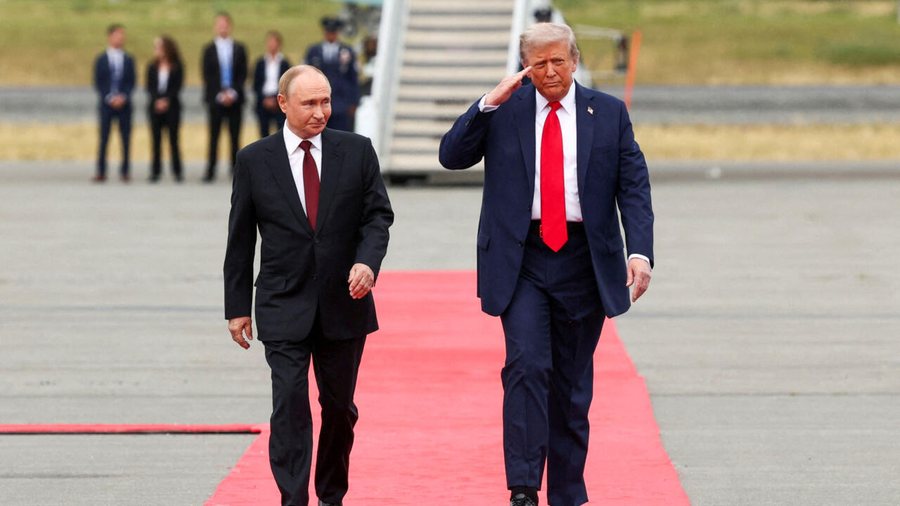
After the meeting in Anchorage, much remains to be done to achieve peace...
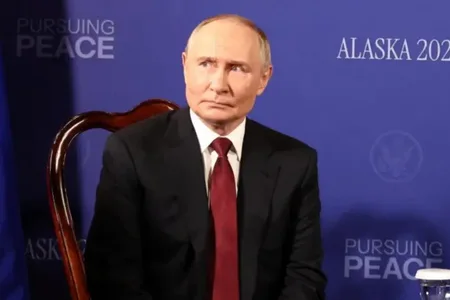
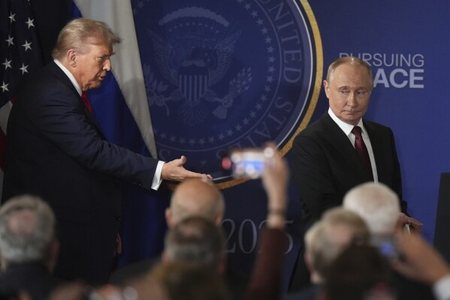
The meeting between Donald Trump and Vladimir Putin in Anchorage, Alaska, was a political spectacle that highlighted three important facts:
-First, the restoration of high-level diplomacy between Russia and the United States, four years after the meeting in Geneva between Putin and Joe Biden;
-Secondly, the vast ocean separating the two countries after years of significant diplomatic freeze;
-And finally, the realization that an agreement to end the war in Ukraine will not be easy to reach and, as we had predicted, the two leaders would never have done so with a handshake.
Trump-Putin: Progress and further moves
The reopening of dialogue and the decision of historical adversaries to sit at the same table are undoubtedly positive. But anyone who thought of Anchorage as a point of arrival was disappointed. Ultimately, Alaska marked the beginning of a long journey, a journey that remains steep and difficult.
After the summit, Trump, speaking to Fox News' Sean Hannity, said the way is open for an extended dialogue with Ukrainian President Volodymyr Zelensky, without specifying whether a negotiating basis has been established. The Economist mentions the idea of an initial ceasefire in the air, but this has not yet received formal approval from an official proposal.
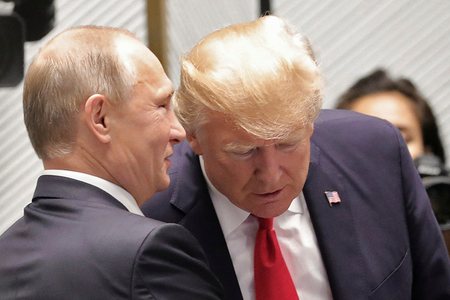
Trump and Putin spoke at length, but the press conference seemed to come off as a "parallel" and extremely asymmetrical meeting. How could it be otherwise when two such different leaders met?
Trump acted, as usual, like a real estate developer and a poker player: gambling, showing strength and flexing muscles, such as the flight of a B-2 Spirit bomber accompanied by F-22 fighters over Elmendorf-Richardson Air Force Base after Putin’s arrival. Putin was a chess and judo player, in the best Russian and personal tradition, and given the facts, it is fair to ask what basis a possible future diplomatic meeting between the two countries, a new Putin-Trump summit, or even an expanded triangular meeting in Ukraine should be based on.
Concreteness and vagueness
Behind the patina of the meeting and the surprising cordiality, one fact remains: the fundamental ambiguity surrounding the start of the summit has not been resolved. And it continues to revolve around a number of indisputable facts. First, Trump is willing to give Putin a theoretically positive outcome of the war in Ukraine and even pave the way for the cession of territories, de facto if not de jure, without, however, achieving the strategic objectives desired by the Kremlin leader.
The US is rushing to end the war to focus on the Far East and China. Russia is not so concerned, but it knows that the offer Washington is making seems to fall far short of what Moscow hopes to achieve (territorially and strategically) and, above all, does not justify the effort of three and a half years of war, with the deaths, the damage to trade and the economy, and the internal mobilization it has brought.
Second, Washington and Moscow are behaving as if they are sailing into an eternal 1945, or at least an endless Cold War, where the meeting between the two emperors, the occupant of the White House and the occupant of the Kremlin, could indeed lead to immediate and essentially applicable decisions for the world. To this day, neither the main shareholder of the global order, the United States, nor the world’s leading nuclear power, Russia, can claim this right, and even their bilateral relationship remains incapable of creating tectonic dynamics of this kind. The world has changed; it is more complex and more competitive, even for Moscow and Washington.
The global order envisioned by Trump and Putin
Finally, it is important to understand in perspective what kind of world order Trump and Putin have in mind beyond the "imperial reflex" that their approach seems to highlight.
The suggestion of a “New Yalta” is interesting and tempting, but is it really feasible? Is Trump willing to challenge the hegemonic space of the US, Washington’s control over Europe, in the name of appeasement with Russia? And does Putin really want to encourage, with a quick outcome of the war in Ukraine, the possible repositioning of the United States against its main partner, China? How is Beijing interpreting these dynamics, which emanate from across the Pacific and from Anchorage, which in 2021 hosted in-depth talks, but which perhaps finally sealed the transformation of Washington-Beijing relations into bilateral rivalry? All these questions need to be answered properly.
Mid-August was the time for the first, decisive words. The future must present facts. Decisive for Ukraine, Russia, the United States, and much of the entire global order. However, one inescapable fact remains: something has begun to change. It is up to Trump, Putin, and other world leaders to understand and decide where these changes will lead. /Adapted from “Pamphlet” by “Inside Over”


Lini një Përgjigje