


 Shkruar nga Pamfleti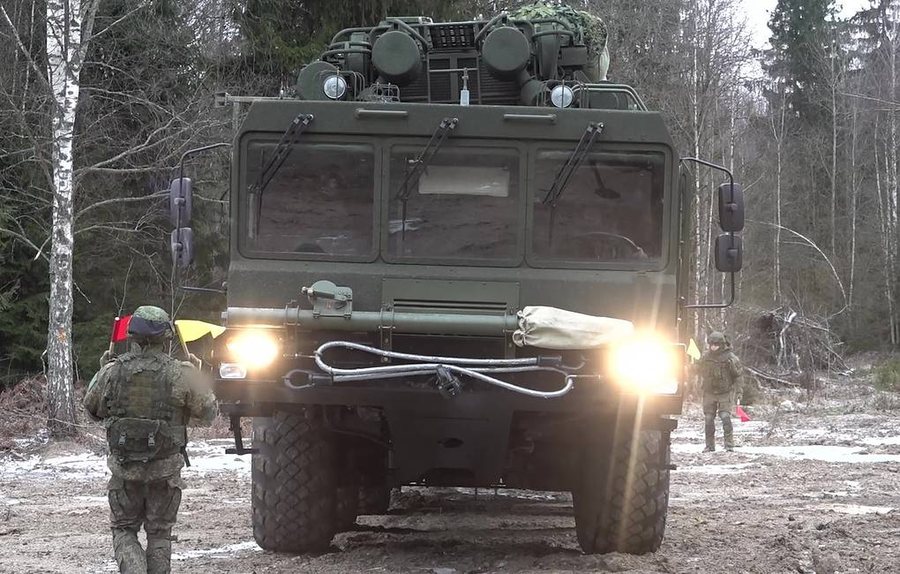
The Russian Defense Ministry announced that the Oreshnik ground-based missile system has officially entered service in Belarus. The inauguration ceremony marked the start of combat operations for a unit equipped with the system, Russian news agency Tass reports .
During the military ritual of the changing of the guard, the flag of the Strategic Missile Forces was raised, while the Russian ministry emphasized that all conditions have been created for the operational deployment and accommodation of Russian military personnel on Belarusian territory.

According to the Ministry of Defense, the "Oreshnik" system aims to strengthen missile capabilities and increase defense readiness in the region, playing a strategic role within military cooperation between Belarus and Russia.
This move comes at a time when regional tensions have increased, raising questions about its impact on security and stability in Eastern Europe.
What is the "Oreshnik" missile system?
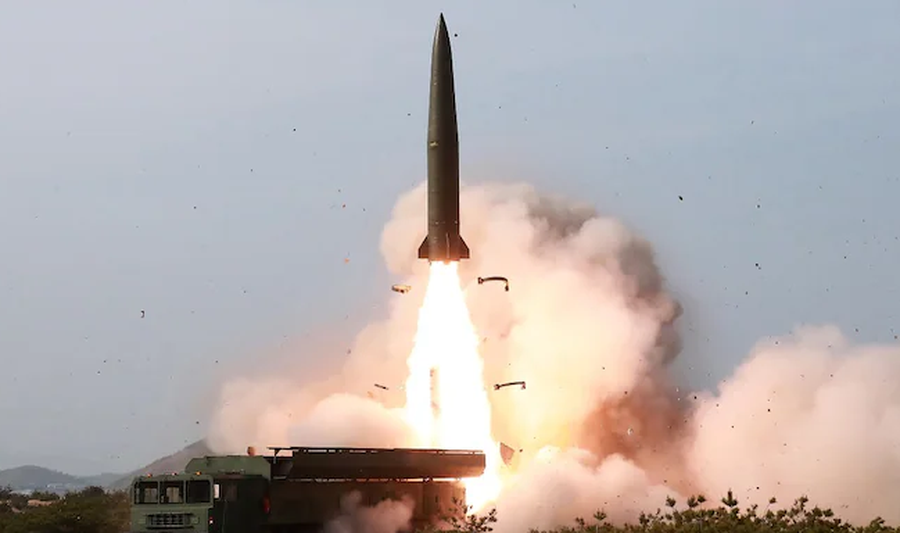
With the little information we know about Russia's military arsenal, the Oreshnik missiles are one of the most advanced missile systems that Moscow has developed over the past five years. These missiles belong to the new generation of long-range missiles, but not of the intercontinental range, as officially announced by Kiev a few hours after its launch.
In fact, the Ukrainian insistence, given that even President Volodymyr Zelensky in his message mentioned the fact that the missile was intercontinental, also brought Western reactions, mainly from analysts, who emphasized that the multiple-warhead missile that hit the Dnipro does not belong to this category of systems.
"Oreshnik" is certainly one of the weapons whose characteristics and dynamics the West currently lacks. According to what Russian President Vladimir Putin stated, and reported by Russian media, the main advantage of these missiles is the speed with which they hit their targets during descent.
More specifically, the “Oreshnik” fly at a speed of 2 to 3 kilometers per second, which practically makes them beyond supersonic and “invisible” to the air defense systems, which Kiev has currently deployed, mainly around large urban centers and major energy units.
The "Oreshniks" belong to the "family" of hypersonic weapons as they actually strike at speeds exceeding 10,800 km/h and are part of the category that includes missiles that move at speeds from 6,100 km/h to 12,300 km/h.
The “Oreshniks” also have the capability of carrying multiple warheads and are not intercontinental, but long-range as they travel a distance of no more than 900 kilometers. What is also certain based on Putin’s words is that the strike on the Dnipro is the first that Russia has attempted with this particular weapons system.
Vladimir Putin called it a “test,” which is the most worrying of the recent developments. If Russia has made the decision to respond to Western ballistic attacks on its territory even using test weapons, then the escalation is likely to have dimensions that the West and Kiev today do not seem to have calculated.








Lini një Përgjigje