


 Shkruar nga Pamfleti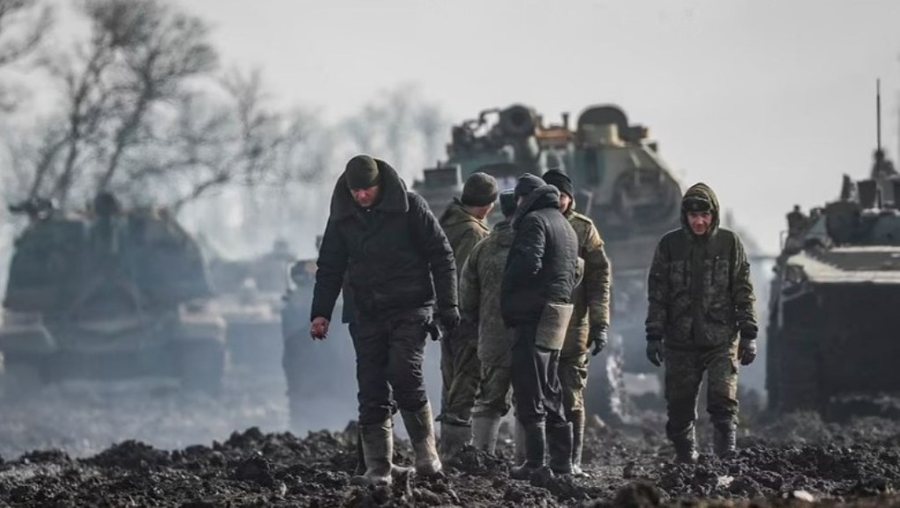
The 21-year-old from Sri Lanka did not expect to be sent to the front line in Ukraine when he signed the contract with the Russian Ministry of Defense. He had heard about the possibility of joining the Russian army from a compatriot from Sri Lanka. He had told him that if he served for a year in the army, he and his parents would receive Russian citizenship. "He told me that you are not sent to the front, but only serve as an assistant," says the young man. So in February he decided to quickly sign a contract and immediately received about $2,000. He was promised a monthly salary of $2,300 plus some additional benefits.
The Sri Lankan from the town of Walasmulla says he was forced to sign a contract with the army to gain legal residency status in Russia. In the spring, while in a Ukrainian hospital near the front, after being wounded and taken prisoner, he agreed to tell his story on condition of anonymity. He spoke to a DW reporter in Sinhalese through an interpreter over the phone, under the watchful eye of Ukrainian military officers who apparently did not speak English well enough and did not intervene.
From the slaughterhouse to the restaurant and then to the army
"Due to the bad economic situation in Sri Lanka", as the young man says, he decided to get a work visa in Russia through an employment agency. The crisis in his country has also worsened due to the war in Russia, since the prices of of food and fuel have increased due to the blockade of Ukrainian exports to the Black Sea. The man worked for a year in a slaughterhouse in Russia and, when his visa expired, he lived illegally for another year, where he worked in a fast food restaurant joined the Russian army.
After only two months of service in the interior of the country, it was moved to the outskirts of the occupied Ukrainian city of Donetsk. "I told the commander that I wanted to return to Sri Lanka, but he said that this was impossible and that according to the contract I would face 15 years in prison in Russia if I escaped," says the young man, adding that in his unit there were also a citizen of Nepal, Kyrgyzstan and Tajikistan. He had been at the front only once - for five days. He was wounded and taken prisoner.
Russia forces migrants and foreign students to join the army
As the Bloomberg news agency reported in June, citing European officials, Russia has forced thousands of foreign migrant workers and students to join the Russian military in the war against Ukraine. If they refused, foreigners were threatened that their visas in Russia would not be extended. "We are very, very poor," says a 35-year-old Nepalese man in a prisoner-of-war camp in western Ukraine. He told his story to DW in July and did not want to be named. A guard was also present in this conversation, but he was silent and did not seem to understand English.
In Nepal, the man had worked as a taxi driver - with a salary of about $400 a month. This was not enough to support his wife, two children and parents. From some friends from India, he learned that "a lot of money" can be earned in the Russian army. So he came to Moscow in October 2023, where he was examined and sent to the "Avantgarde" training center on the outskirts of the Russian capital along with 60 other foreigners. Other recruited foreigners have also reported on this facility. According to American broadcaster CNN he serves only to train foreign mercenaries.There, the Nepalese signed an annual contract with the Russian army for a salary of $2,000 a month.
He says that he also initially settled in the interior of Russia, together with a Chinese as assistant cook. In his unit there were 23 people from Nepal and three from India. Eleven others were Russian. Everyone communicated with each other with the help of audio translation systems. After a month he was transferred to positions near Donetsk. There he begged the commander to let him go home, but he was also told that terminating the contract was not possible. A few weeks later, in April, he was wounded and saw Ukrainian soldiers. "I took off my helmet, protective vest and automatic rifle, asked for help and told them I'm from Nepal," he says.
People from the global south in military service for Russia
There are currently about ten mercenaries captured by the Ukrainians, says Petro Jacenko, spokesman for the coordination headquarters for prisoners of war at the Ukrainian military intelligence service HUR. "Several others have been captured, but they have not yet been included in the statistics," Jacenko told DW. According to him, among the prisoners there are citizens from African countries, such as Sierra Leone and Somalia, but also from Sri Lanka, Nepal and Cuba "They are mostly people from the global south, from poor countries," says Jacenko, adding that a Cuban told him that in his country he earned only seven dollars a month.
HUR has no idea how many foreigners fight on the Russian side. However, Russia lures foreigners with ads on social networks as well as directly through agitators abroad, Yatsenko says: "They are often promised jobs in various firms, and when it comes to the military, they are told that you will only be deployed to interior".
However, Petro Yatsenko from HUR points out that among the foreigners there are also professionals who fight for Russia. "They have military experience and know very well where they are going," says Yacenko. Not everyone is a victim of fraud.
Foreign mercenaries are classified as prisoners of war
"As long as there is no trial against them, they are kept as captured Russian soldiers", says Yatsenko regarding the status of these foreigners. None of them have yet been released through exchange or other procedures. "Some countries, especially Sri Lanka and Nepal, are interested in receiving their citizens. This allows us to negotiate," says the HUR spokesperson.
Even foreigners are offered help to escape from the army
There are also well-known cases when foreigners have escaped from Russian positions. In May, HUR announced, without giving figures, a mass exodus of mercenaries from Nepal who were stationed in the occupied Luhansk region. And in June, the France 24 station reported on 22 Sri Lankans who had escaped from the Russian army. Activists of the Russian human rights organization "Idite lesom" ("Walk through the forest") help to escape from the Russian army - especially Russians and Ukrainians, who have been forcibly taken into the army in the territories occupied by Russia. But they also take care of citizens of other countries.
Ivan Chuvilyaev, representative of the organization, confirmed in an interview for DW that the activists were able to help citizens from African countries and Afghanistan to escape. According to him, the way Russia recruits foreigners into the army is no different from the recruitment of its own citizens. "It takes advantage of the fact that people don't know the law and are in a precarious financial situation," says the human rights activist./DW


Lini një Përgjigje