


 Shkruar nga Pamfleti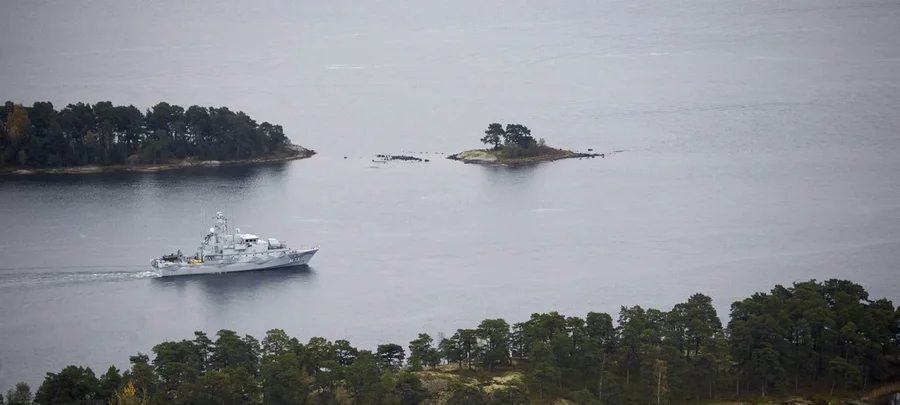
Sweden's top commander warns Moscow could invade an island to test alliance's response...
If Moscow were to test NATO, it would be most likely to do so from the perspective of the militaries in the Baltic Sea region. For this reason, the concern about an escalation is high. Until now, the focus has been on the Baltic states, but now the thousands of Baltic islands are coming into focus.
The Kremlin could launch a small naval attack as early as tomorrow to expose divisions within the alliance, as US President Donald Trump threatens to abandon European partners, the commander-in-chief of the Swedish armed forces, Michael Claesson, recently told the London newspaper The Times. Sweden is preparing for the possibility that Russia could test NATO at any moment by invading an island in the Baltic Sea.
With the accession of Finland and Sweden, the Baltic Sea has by no means become a “NATO sea”. Although the alliance dominates geographically, Russia strongly defends its claim to free access. It has recently deployed more military personnel in so-called “shadow tankers” to protect them from interference by western coastal states. It has long been thought that Russia could re-form its troops after the end of the conflict in Ukraine and strengthen positions in northeastern Europe, perhaps with the aim of testing NATO, writes the German media FAZ.
It has been assumed so far that such a scenario could occur in the Baltic states, which do not have sufficient strategic depth to defend themselves effectively. In the event of Article 5 of the NATO treaty being activated, the allies would send troops and equipment through Sweden and the Baltic Sea. For this reason, free access to this area would be crucial. To prevent this, Russia could try to place troops in key points, for example by occupying large islands such as Gotland or Bornholm. Possible scenarios include an amphibious or airborne operation at night, or even the use of “green men” arriving on yachts, a ferry that is presented as damaged, and other similar forms.
During the Cold War, Gotland and Bornholm had a significant military presence, but this was significantly reduced in the 1990s. Since 2022, the situation has changed, and troops have been redeployed to these islands and defensive positions have been strengthened. A quick overnight invasion is now considered difficult. Claesson shifts his attention to the thousands of other islands, often difficult to reach by land. According to him, Russia could achieve its goal of challenging NATO by establishing itself on almost any island. An attack does not have to be large; it can simply aim to send a signal and wait for a political reaction. There are about 400,000 islands in the Baltic Sea, so the choice for Russia is only a matter of selection.
Estonian expert Erkki Koort, head of the Institute for Internal Security at the Estonian Academy of Security Sciences, even warned of a scenario where Russia could invade the German island of Rügen, for example with about a hundred “green men”. However, Professor Kjell Engelbrekt from the Swedish Defence University considers this scenario unlikely. According to him, such an action would trigger a rapid reaction under Article 5 and would be dangerous for Russia, while Rügen is located very close to the mainland and is easy to defend.
Engelbrekt finds Claesson's scenario more plausible: the occupation of one of the thousands of small islands in the Baltic by troops that may not initially be clearly identified as Russian, to see how NATO reacts. Sweden is expected to react strongly on the political level, while the military response will be determined in coordination with the allies.
Sweden has significantly increased its defense spending. About 50 billion kronor has been invested in air defense alone since November, an amount equal to the entire defense budget in 2018. Since 2020, spending has doubled to about 2.8 percent of GDP. However, the military remains relatively small and the country relies on assistance from allies, which has led Sweden to join NATO in 2024.
There are also doubts in Stockholm about US support. Along with other Nordic countries, Sweden is building contingency plans to maintain NATO structures in the event of a US withdrawal from the alliance. One of the impetuses for these preparations is considered to be the crisis over Greenland.
If NATO does not react quickly in a conflict situation, Engelbrekt suggests that the Joint Expeditionary Force (JEF) could serve as an alternative mechanism. This is a military cooperation led by the UK, with the participation of the Nordic, Baltic countries and the Netherlands, which has gained increasing importance due to recent political developments. According to him, the European allies would act in solidarity with Sweden, regardless of whether Article 5 is activated or not. /Adapted Pamphlet /







Lerini keto budalleqe....Rusia nuk ka ushtare as per te mbajtur frontin ne Ukraine...boll i tmerruat njerezit...me kovid, luftera e Hormuz...