


 Shkruar nga Paolo Mauri
This region, once isolated by ice, is becoming a new strategic arena where the military interests of Moscow, Washington and Beijing clash with the ambitions of Europe. Through the latest doctrinal documents, the great powers are redesigning the map of global security on one of the most critical borders of the planet...
Donald Trump's interest in Greenland has brought back into focus an issue that has long been on the strategic agenda of many powers: Arctic policy. The United States, Russia and the Nordic NATO member states, along with China, have been developing or refreshing new doctrines for the High North region for at least a decade.
The reasons for this renewed interest are numerous and vary from country to country, some of which are historical in nature. But they can be summarized in three main points: the exploitation of natural and mineral resources, the possible opening of new trade routes as a result of global warming, and the expansion or creation of new strategic security zones.
Russian strategy
Moscow, Washington and Beijing have drawn up clear documents on their strategic policies for the Arctic. Russia remains the state that has acted most intensively to recover the role lost after the collapse of the Soviet Union.
Over the past 15 years, President Putin has adopted concrete measures to strengthen the Russian presence in its part of the Arctic, especially in terms of infrastructure, energy, and military.
Russia, along with Canada, owns most of the Arctic territory.
For Moscow, since the Soviet era, this region has served as a border to be defended and a key point for power projection towards North America. The “New Naval Doctrine of the Russian Federation,” drafted in 2010 and updated in 2015, envisaged the creation of a joint command for the Arctic.
This command includes armored brigades, special forces, air bases and air defense systems, which together with the Northern Fleet create an A2/AD (area access denial) “bubble”. Also, long-range interception and target monitoring systems have been added.
All of these units operate under the joint command established in Severomorsk, which has already assumed the functions of the Northern Fleet and the First Air Defense Division.
Moscow has also invested in new infrastructure in northern Siberia, even building floating nuclear power plants.
The main points of Russian forces in the Arctic are located on the islands of Novaya Zemlya, Kotelny and Alexandra Land, where the "Arctic Clover" military complex has been built, capable of permanently housing 150 troops and equipped with landing strips for combat aircraft.
Strategjia amerikane
Në strategjinë e tyre të përditësuar të vitit 2024, Shtetet e Bashkuara e cilësojnë rajonin arktik si vendimtar për sigurinë kombëtare dhe atë të NATO-s. Ai përshkruhet si “fronti verior” i teatrit Indo-Paqësor, gjë që shpjegon edhe interesin e veçantë të Uashingtonit për Grenlandën.
Në Arktik ndodhen pika detare nevralgjike si Ngushtica e Beringut dhe Deti Barenc, të cilat po bëhen gjithnjë e më strategjike për trafikun tregtar ndërkombëtar falë shkrirjes së akujve prej ndryshimeve klimatike. Dokumenti amerikan, thekson se aktivitetet e Kinës dhe Rusisë, si dhe bashkëpunimi i tyre në rritje, ndërthurur me zgjerimin e NATO-s, po krijojnë një kontekst të ri dhe më dinamik në fushën e sigurisëe.
Sipas Pentagonit, ky ndryshim mund të sfidojë stabilitetin e përgjithshëm të Arktikut, por njëkohësisht i ofron Departamentit të Mbrojtjes mundësinë për të forcuar sigurinë përmes një bashkëpunimi më të thellë me aleatët dhe partnerët rajonalë.
Faktori kinez
Faktori më destabilizues për SHBA-në mbetet Republika Popullore e Kinës. Pekini e ka përfshirë Arktikun në planifikimin e tij afatgjatë dhe synon që të rrisë ndikimin dhe aktivitetet e tij në rajon. Edhe pse nuk është gjeografikisht një shtet arktik, Kina po përpiqet të shfrytëzojë dinamikat e reja për të fituar qasje, shfrytëzuar burimet natyrore dhe për të luajtur një rol protagonist në menaxhimin e Veriut të Madh.
Edhe pse ende e kufizuar, prania kineze po njeh rritje të vazhdueshme. Kina ka ndërtuar anije akullthyese moderne dhe përgjatë 13 ekspeditave kërkimore të kohëve të fundit,
ka testuar mjete nënujore pa pilot. Marina kineze, ka treguar tashmë aftësinë dhe synimin për të operuar në ujërat arktike përmes stërvitjeve të përbashkëta me Rusinë.
Edhe pse pjesa dërrmuese e Arktikut është nën juridiksionin e shteteve sovrane, Pekini përpiqet ta paraqesë rajonin si një “pronë globale” për të justifikuar pretendimet e tij për qasje në zonë. Ky vizion, që bie ndesh me politikën e tij rreptësisht nacionalizuese në Detin e Kinës Jugore.
Politika arktike e vitit 2018 e Pekinit, argumenton se shtetet jo-arktike duhet të kontribuojnë në “të ardhmen e përbashkët të njerëzimit”. Përmes projektit “Rruga Polare e Mëndafshit”, Kina ka investuar në infrastrukturë dhe burime, përfshirë Grenlandën. Por aty shumica e kompanive kineze janë përjashtuar nga autoritetet daneze, si në projektet e infrastrukturës ashtu edhe në koncesionet minerare.
Evropa në përpjekje për të mos mbetur pas
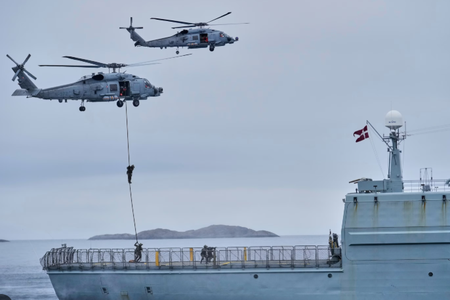
Edhe Evropa e ka rritur praninë e saj në Arktik, megjithëse në një shkallë më të moderuar krahasuar me 3 fuqitë e mëdha globale. Në kuadër të NATO-s, prania në Islandë është bërë e vazhdueshme, veçanërisht me misione ajrore për patrullim dhe mbikëqyrje të rrugëve detare.
Vendet nordike si Norvegjia, Finlanda dhe Suedia, kanë intensifikuar stërvitjet ushtarake në mjedisin arktik për të testuar gatishmërinë e tyre. Megjithatë, këto hapa nuk konsiderohen të mjaftueshëm për të krijuar një kapacitet të vërtetë parandalues.
Strategic territories such as Greenland, Iceland and the Svalbard archipelago still remain without a large-scale permanent military presence. Although there is currently no immediate risk of invasion by Russia or China, the return of the “spheres of influence” policy makes it increasingly necessary to establish permanent, militarized structures in these uninhabited areas./ Adapted from “Pamphlet From “ Inside Over”






Lini një Përgjigje