


 Shkruar nga Pamfleti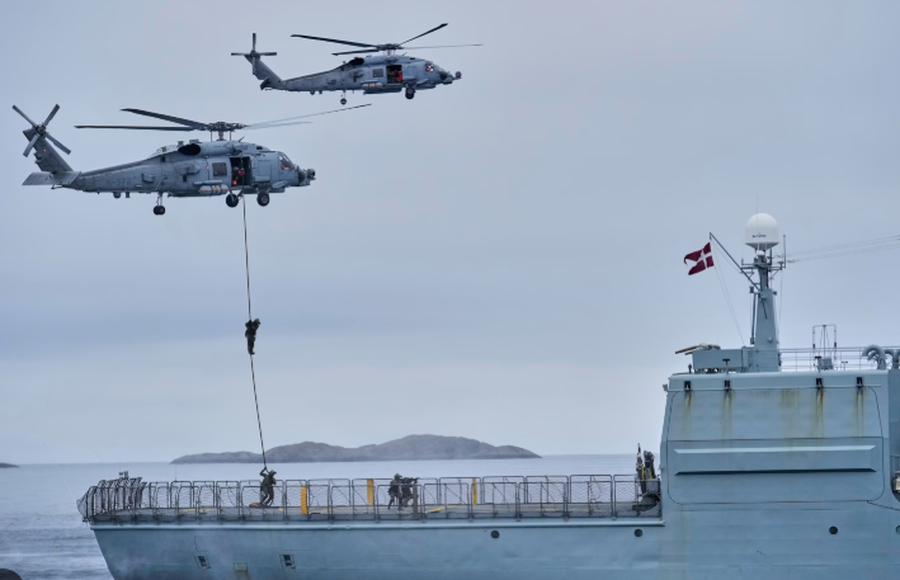
One possible way to ease the current political tensions between Denmark and the United States over the future of Greenland could be to establish a NATO-led mission called "Arctic Guardian."
This idea was born when the ambassadors of the military alliance gathered in Brussels on January 8 to discuss the issue of Greenland, the Danish island, after the White House expressed interest in the United States acquiring it, even not ruling out military intervention to achieve this goal.
NATO has already established two similar missions in 2025: first “Baltic Guard,” in response to numerous underwater sabotage attacks in Northern Europe, and then “East Guard,” which was created shortly after a major Russian drone incursion occurred in Poland.
These two "guards" are still ongoing. They are also considered major successes, according to NATO officials who spoke to Radio Free Europe (RFE/RL) on condition of anonymity.
But could something similar happen around and perhaps within Greenland?
Belgian Defense Minister Theo Francken has publicly supported the idea, while London and Berlin are increasingly open to it. At the Brussels meeting, there was consensus that NATO should increase its engagement in the Arctic region.
"Canada has been shouting for years about the need to increase efforts in the High North, so we can't say that Washington is the first to bring this to the table," said a European diplomat.
Seven of the eight so-called Arctic countries are members of NATO, excluding Russia. And while the waters around Greenland are not currently filled with Russian and Chinese ships, that could change as Arctic ice melts rapidly and new sea lanes open up.
NATO's Supreme Allied Commander (SACEUR) and top US general in Europe, Alexus Grynkewich, recently stressed at a military conference in Sweden that Russian and Chinese ships "are not studying seals and polar bears."
He added that the ships "are conducting bathymetric studies and trying to understand how they can counter NATO capabilities above and below the sea. This is something that could grow very quickly, and we need to be vigilant and ready."
At the same time, Grynkewich added that any NATO mission at this time is "premature."
Speaking in Berlin earlier this week about a possible "Arctic Guard" mission, Germany's Defense Minister Boris Pistorius also stressed that such an initiative would take months.
However, NATO Secretary General Mark Rutte is engaged in talks with Washington about how the alliance can increase its commitment, one way or another.
Diplomatë evropianë i kanë thënë REL-it se nisma “Roja e Arktikut” mbase do ta hidhte poshtë argumentin se Grenlanda duhet të jetë e Shteteve të Bashkuara dhe se do të dëshmonte se Evropa mund t’i përballojë dy fronte njëkohësisht: Rusinë në lindje dhe Rusinë dhe Kinën në Arktik.
“Në shumë aspekte, këtu bëhet fjalë edhe për ndarjen e barrës”, tha njëri prej tyre, duke shtuar se një skenar i mundshëm mund të përfshijë mbikëqyrjen ajrore dhe detare nga evropianët, dhe rritjen e pranisë së trupave amerikane në Grenlandë.
Shtetet e Bashkuara i kanë një personel prej 200 vetash në një bazë në Grenlandë, të angazhuar në paralajmërimin e hershëm për raketat balistike dhe mbikëqyrjen hapësinore. Gjatë Luftës së Ftohtë, megjithatë, në ishull kishte deri në 10.000 trupa amerikane të shpërndara në 17 baza.
Një “pushkë e mbushur”
Kjo u bazua në një marrëveshje të vitit 1951 midis Kopenhagës dhe Uashingtonit, e cila ua lejon Shteteve të Bashkuara të kenë mjete ushtarake, përfshirë baza, për aq kohë sa ekziston NATO-ja. Ky traktat mbetet në fuqi dhe nuk vendos kufizime mbi praninë ushtarake amerikane, megjithëse kërkohet pëlqimi i Danimarkës prapëseprapë, e cila me gjasë do ta jepte.
Kjo do të hapte gjithashtu rrugën që SHBA-ja ta përdorë Grenlandën në programin e saj të mbrojtjes raketore “Kupola e Artë”, të cilin presidenti amerikan Donald Trump e ka përmendur kur ka folur për ishullin gjigant.
Ajo që do të bënin vendet evropiane do të ishte përqendrimi në mbrojtjen e hapësirës ajrore dhe rrugëve detare të asaj që njihet si “hendeku GIUK”, që nënkupton zonën e gjerë midis Grenlandës nga njëra anë dhe Irlandës dhe Mbretërisë së Bashkuar nga ana tjetër.
Ky hendek është përshkruar si një “pushkë e mbushur” përballë Shteteve të Bashkuara, sepse është një pikë hyrëse për aktorë si Moska dhe Pekini për të kryer veprime të ndryshme, nga sabotimet nënujore deri te pushtimi i tokave, sipas një burimi.
Vendet që ka gjasa të kontribuojnë janë kryesisht Mbretëria e Bashkuar dhe Franca, por edhe vende si Danimarka, Italia, Norvegjia, Holanda dhe Spanja, pasi të gjitha kanë mjete detare.
Kjo, natyrisht, do të kërkonte disa lloje anijesh, veçanërisht kryqëzorë dhe fregata, por edhe nëndetëse dhe sidomos akullthyese. Së bashku, aleanca ka vetëm rreth 40 të tilla, më pak se Rusia, edhe pse ka përpjekje për të prodhuar më shumë.
Pritet që shefat e Mbrojtjes së aleancës ta diskutojnë këtë më në hollësi kur të mblidhen në Bruksel më 21–22 janar, dhe më pas sërish kur ministrat e Mbrojtjes së NATO-s të mblidhen në kryeqytetin belg më 12 shkurt.
Pengesa praktike
Megjithatë, ka edhe hezitim brenda aleancës nëse misioni “Roja e Arktikut” është i realizueshëm. Ka shumë pengesa praktike. Për shembull, do të duheshin qindra anije për ta mbuluar një zonë kaq të madhe, përfshirë mjete që furnizojnë anijet ushtarake.
Apart from the Nordic countries and Canada, there are few troops experienced in operating in harsh Arctic conditions. Therefore, the current Danish-led operation, “Operation Arctic Resilience,” in and around Greenland involves troops from Canada, France, Germany, the Netherlands, and Norway.
And, while not everyone has to contribute, everyone must give their consent to embark on such a mission.
What about Americans, will they agree with this?
At the NATO ambassadors' meeting on January 8, Denmark and the United States agreed that this is a bilateral issue, for now.
This prompted a meeting in Washington on January 14 between the foreign ministers of Denmark, Greenland, and the United States, hosted by US Vice President JD Vance.
Danish Foreign Minister Lars Løkke Rasmussen stressed after the meeting that the United States had not changed its position on Greenland, but also added that a high-level working group of American and Danish officials would be established to discuss the issues in the coming weeks.
In Brussels, this is seen as a sign that there may be a "deal" that suits everyone, with an expanded role for NATO.
While there are fears of a military intervention, most of those REL spoke to still see this as "impossible" and believe the US president is using the same strong negotiating tactics he used when securing a 5 percent defense spending commitment from all allies at the Hague summit last year.
Now it's about Europeans spending more and faster, and not just focusing on their eastern flank./REL



Lini një Përgjigje