


 Shkruar nga Paolo Valentino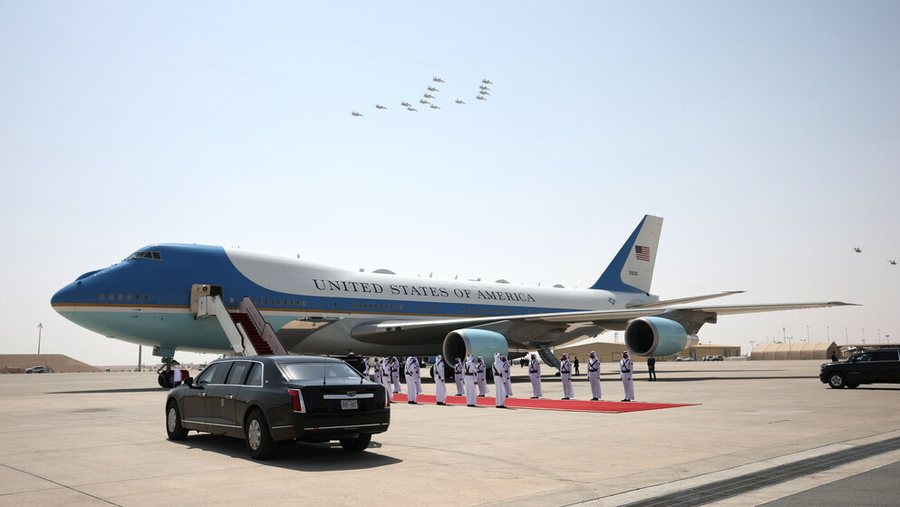
Gifts and diplomacy have gone hand in hand since ancient times. Long before photos and press conferences, kings, presidents, and prime ministers have always exchanged jewelry and precious fabrics, and even offered their daughters in marriage as a guarantee of good relations...
Whenever Silvio Berlusconi met Angela Merkel in Berlin or elsewhere in Germany, he would bring her a gift, bought with his own money, of course. Once it was a precious "Capodimonte" porcelain, another a box of 12 bottles of excellent Brunello di Montalcino or Barolo wine.
On one occasion, he gave her a Loro Piana cashmere scarf or a personalized Murano glass. These gifts greatly embarrassed the chancellor, a person who was not at all attached to material things, but who was above all obliged by German law not to accept any gift worth more than 300 euros.
She repeated to him every time: "Silvio, thank you, but I can't accept it. So please, next time don't do this again!" But Berlusconi pretended not to understand, and the next time she met him again with gifts in her hands.
Each of them was immediately taken by a federal official who, after cataloging it, placed it in the Asservatenkammer, a windowless room on the third floor of the chancellery, where, as I was able to see for myself, there are shelves filled with everything: jewelry and silverware, paintings and carpets, valuable books and CD collections, wines and champagne, even high-fashion clothes and autographed football jerseys.
But Berlusconi's gifts make you laugh when compared to the generosity of the Emir of Qatar, Tamid bin Hamad Al Thani, who two weeks ago said he would give Donald Trump a luxury Boeing 747-8 Jumbo Jet worth over $400 million.
"I would be a fool to turn it down!" the White House chief declared. Trump plans to use it for his own trips instead of the 40-year-old, depreciated Air Force One that is currently in service, before handing it over to the Presidential Museum that will bear his name when he leaves the Oval Office.
This news caused anger among the Democratic opposition, criticism among Republicans, and raised some doubts even among analysts close to MAGA people, such as Ben Shapiro and Laura Loomer.
"It's a bribe disguised as a gift. It's like if Britain's King George III had given George Washington a replica of the royal carriage for his personal use: Would the Founding Fathers have considered this corrupt act?" said Richard Painter, a former ethics lawyer in the George W. Bush administration.
The U.S. Constitution prohibits presidents and federal officials from accepting gifts or “emoluments” from foreign leaders without Congressional approval. The current rule states that no federal elected official can accept gifts worth more than $480 from a foreign government.
However, Attorney General Pam Bondi and White House Chief of Staff David Warrington said the Qatari emir's gift is "legally permissible," provided that the transfer of ownership to the Presidential Museum occurs before the end of Trump's term.
But this explanation scandalizes experts. "If the US keeps the plane when Trump leaves office, it would be a gift to the country. But if he takes it with him to his museum, it's a gift to him, so we're in violation of the Constitution," says Richard Briffault, who teaches at Columbia University's Law School.
In fact, gifts and diplomacy have gone hand in hand since ancient times. Long before photos and press conferences, kings, presidents, and prime ministers have always exchanged jewelry and precious fabrics, and even offered their daughters in marriage as a guarantee of good relations.
This has been happening since the Trojan Horse, the archetype of deceptive diplomacy. Byzantine emperors gifted fragments of the original cross of Christ to the Christian rulers of Europe, the kings of France gifted the famous Sèvres porcelain, the Spanish rulers large-format paintings, while the sultans of the Sublime Porte preferred silk tunics.
Because diplomatic gifts sweeten, stroke the ego, seduce, entertain, but above all, they connect people to each other. They are expressions of appreciation, levers of friendship, gestures of repentance, requests for forgiveness, and very often instruments of flattery to gain various favors in return.
A characteristic that runs through the history of diplomatic gifts is the desire for originality. For example, exotic animals have been used for this purpose for centuries. Giraffes were very popular during the Renaissance. The Mamluk sultan, Qaitbay, offered one to Lorenzo de Medici in 1487 to expedite the signing of a trade treaty with the Florentine aristocracy.
More recently, in 1972, during the state dinner on the occasion of Nixon's historic visit to China, US First Lady Patricia told Zhou Enlai that she loved pandas very much. As a gesture of goodwill, the Chinese premier gifted the presidential couple two giant specimens, Ling-Ling and Hsing-Hsing, which lived at the Washington Zoo for the next 20 years, attracting millions of visitors.
And the rest is history, because ever since then, “panda diplomacy” has been one of China’s most potent tools of soft power. Meanwhile, Soviet leader Nikita Khrushchev gifted his American counterpart John F. Kennedy a small dog during their summit in Vienna in 1961.
But beyond the animal world, there are many examples of diplomatic gifts that failed to yield results. In 1935, Adolf Hitler decided to seduce Maharaja Bhupinder Singh, a powerful prince of the Indian state of Patiala, in an attempt to convince India to remain neutral as Europe was heading towards a new war.
The Nazi dictator gifted him a luxury Maybach car, the pinnacle of German technology at the time. The Maharaja accepted the car, but it remained locked in the garage, while his support for the British crown remained intact.
Staying on the subject of cars, a Cadillac Eldorado that Richard Nixon gifted in 1972 to the secretary of the Communist Party of the Soviet Union, Leonid Brezhnev, a great fan of American cars, certainly had a positive effect on reducing tensions between the United States and the Soviet Union.
Two years later, the US president gifted him a Lincoln Continental during the Camp David summit, which Brezhnev immediately tried out on the tight curves of the presidential residence in Maryland, driving at full speed as Nixon watched in horror in the passenger seat.
"If we look back in history, diplomatic gifts were at the heart of the concerns of kings and rulers. They spared no expense in them," says British ambassador Paul Brummell, who has written a wonderful book on the subject.
In Trump's dream world, where authoritarian leaders negotiate delicate national and international agreements as if they were real estate deals, the ancient practice of expensive diplomatic gifts has come back into fashion. And its consequences are evident. /Adapted from "Il Foglio" Pamphlet/




Lini një Përgjigje