


 Shkruar nga Pamfleti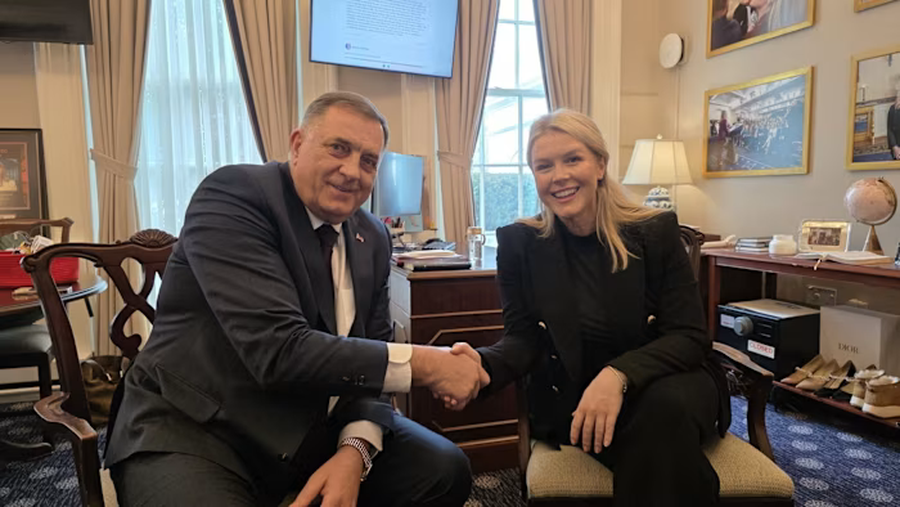
Six months ago, Milorad Dodik, the former leader of Bosnian Serbs, was under sanctions by the United States. Washington accused him of corruption and inciting separatism that, according to American authorities, risked reigniting ethnic conflict in the Balkans.
On Friday, he was at the White House, where he met with President Donald Trump's spokeswoman, Caroline Leavitt, who posed for a photo with Dodik and other senior Bosnian Serb officials.
In a rare interview with international media, Dodik told the Financial Times that he has "high expectations" from Trump and that he has been encouraged by the US president's criticism of previous US state-building efforts abroad.
" When he says 'America First,' it encourages us to say 'Republika Srpska First,'" Dodik declared, emphasizing the priority he gives to the independence of the Serb-majority entity, which he has led for more than two decades, first as prime minister and then as president.
"We are here to seek support to determine our status ," he added.
The Trump administration lifted sanctions on Dodik and dozens of his associates and relatives in October after he agreed to comply with a Bosnian court ruling to step down as president of Republika Srpska.
This decision, which changed American policy in the region, was interpreted as a bold but risky attempt to neutralize Dodik, whose refusal to step down had plunged Bosnia into a deep political crisis.
However, his visit to Washington suggests that he has no intention of retreating from politics or giving up calls for secession, which critics say threaten the stability of the multi-ethnic state, where over 100,000 Bosniaks were killed during the 1992-1995 war.
Two other officials present at the interview, Željka Cvijanović, one of Bosnia's three co-presidents, and Ana Trišić-Babić, acting president of Republika Srpska, remained in the shadows in the face of Dodik's dominant role.
Speaking through an interpreter, Dodik called the Dayton Peace Agreement unenforceable in its current form and attacked the High Representative, Christian Schmidt, who oversees the implementation of the agreement, claiming that he “has no legitimacy” in Bosnia.
Ai u përpoq ta paraqesë komunitetin serb si të krishterë të kërcënuar dhe argumentoi se marrëveshja për ndarjen e pushtetit mes tre grupeve kryesore etnike, serbëve ortodoksë, kroatëve katolikë dhe boshnjakëve myslimanë, nënkupton se vendi drejtohet nga një “qeveri myslimane”.
Një broshurë e shpërndarë nga delegacioni titullohej “Përplasja e qytetërimeve në Bosnjë dhe Hercegovinë”, duke iu referuar tezës së Samuel Huntington se konfliktet pas Luftës së Ftohtë do të nxiteshin nga ndarje kulturore dhe fetare.
Senatorja amerikane Jeanne Shaheen, demokratja kryesore në Komitetin e Marrëdhënieve me Jashtë të Senatit, kundërshtoi heqjen e sanksioneve ndaj Dodikut dhe kërkoi rikthimin e tyre të menjëhershëm.
“Dodik ka përdorur retorikë separatiste dhe ka minuar integritetin e Marrëveshjes së Dejtonit, çka bie ndesh me arsyetimin e administratës për ta hequr atë dhe bashkëpunëtorët e tij nga lista e sanksioneve në fund të vitit të kaluar”, deklaroi Shaheen.
Michael Murphy, i cili shërbeu si ambasador i SHBA-së në Bosnjë deri vitin e kaluar, tha se Dodik “ndihet më i inkurajuar”.
“Ai e interpreton vendimin e administratës për heqjen e sanksioneve si një vërtetim të botëkuptimit të tij”, u shpreh Murphy.
Sipas tij, qëndrimi i administratës ndaj Dodikut “u jep mbështetje nacionalistëve etnikë në të gjithë rajonin”. Gjatë vitit të kaluar, Republika Srpska ka nënshkruar kontrata me vlerë qindra mijëra dollarë me lobistë të afërt me administratën Trump. Ata kanë synuar ta paraqesin liderin serb të Bosnjës si një figurë të ngjashme me Trumpin në Ballkan, një provokator i ndjekur penalisht për arsye që, sipas tyre, janë të motivuara politikisht.
Dodik u pajtua me këtë përshkrim, duke argumentuar se Trump dhe Republika Srpska kanë “problem me të njëjtët njerëz: elitën liberale globaliste, që po shkatërron Evropën tani”.
Delegacioni i serbëve të Bosnjës ndodhej javën e kaluar në Uashington për Mëngjesin Kombëtar të Lutjes. Aktiviteti vjetor, ku mori pjesë edhe Donald Trump, mbledh mijëra përfaqësues nga elitat politike dhe të biznesit në SHBA dhe në mbarë botën.
Departamenti i Shtetit nuk iu përgjigj kërkesës për koment lidhur me vizitën e Dodikut në Uashington.
Një zyrtar i Shtëpisë së Bardhë deklaroi se takimi i Leavitt me Dodikun u zhvillua me kërkesë të delegacionit.
“Përshëndetja zgjati rreth 10 minuta dhe ata shkëmbyen fjalë mirësjelljeje”, tha ai.
Vizita e zyrtarëve të Republikës Srpska në Uashington u zhvillua disa ditë përpara përsëritjes së pjesshme të zgjedhjeve presidenciale në entitet, të mbajtura të dielën, pasi votimi i nëntorit u shoqërua me parregullsi.
“Pavarësisht se nuk mund të kandidojë, Dodik vazhdon të mbajë kontrollin”, deklaroi Adnan Cerimagic, analist i lartë në Iniciativën Evropiane për Stabilitet.
During his time in power, Dodik has cultivated close relations with Russian President Vladimir Putin and other regional allies, particularly Hungarian Prime Minister Viktor Orbán, who offered support to Dodik when the Bosnian court ruled that he should resign.
According to Cerimagic, Dodik aims to force the international community to renegotiate the Dayton Agreement.
"If the US administration is open to this, he will turn them into his best friends ," Cerimagic said, adding that Putin and Hungary are already in that position./ TheGeopost


Lini një Përgjigje