


 Shkruar nga Pamfleti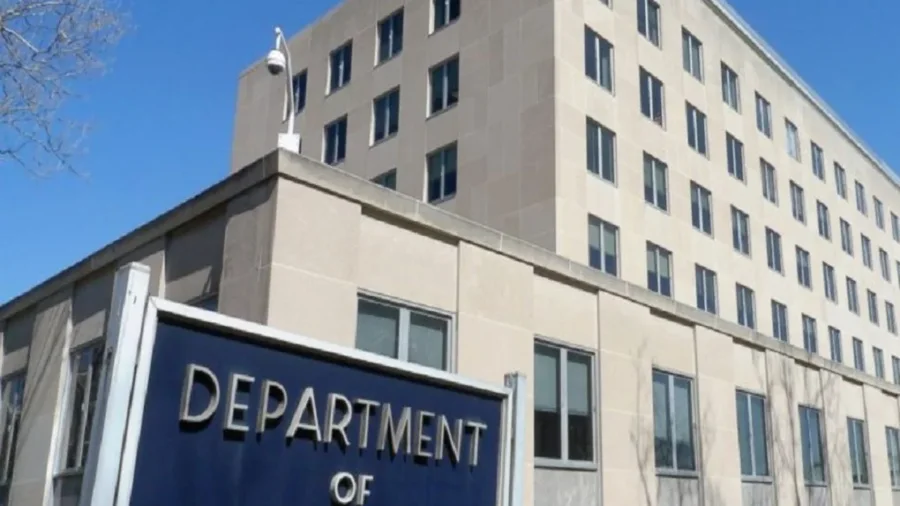
The US State Department is developing an online portal that will allow users in Europe and other regions to view content banned by their governments, including material classified as hate speech or terrorist propaganda. Three sources familiar with the plan told Reuters that Washington sees the initiative as a way to counter censorship.
The site will operate at “freedom.gov,” according to the sources. One of the sources said officials have discussed including a VPN (virtual private network) feature that would make user traffic appear to originate in the United States. The same source added that user activity on the site will not be tracked. The project is being led by Undersecretary for Public Diplomacy Sarah Rogers. According to the sources, it was expected to be unveiled last week at the Munich Security Conference but was postponed.
Reuters was unable to determine the reasons for the delay. Two sources said several State Department officials, including lawyers, had expressed concerns about the plan, without elaborating on their nature.
The project could increase tensions between the Trump administration and the United States' traditional European allies. Relations have already been strained by trade disputes, Russia's war in Ukraine and President Donald Trump's stance on Greenland. The portal could put Washington in the unusual position of being perceived as encouraging citizens to circumvent local laws.
In a statement to Reuters, a State Department spokesman said the US government does not have a specific censorship circumvention program for Europe, but stressed that “digital freedom is a priority for the State Department, and this includes the proliferation of privacy and censorship circumvention technologies like VPNs.” The spokesman denied that any announcement had been delayed and dismissed claims that Department lawyers had raised concerns.
The Trump administration has placed freedom of expression at the center of its foreign policy, especially in cases where it assesses that conservative voices are being restricted online, including in Europe and Brazil.
The European approach to freedom of expression differs from the American one, where the Constitution protects almost any form of expression. The European Union's restrictions are linked to efforts to prevent the return of extremist propaganda that fueled Nazism, including language against Jews, foreigners and minorities. American officials have criticized the EU's policies, arguing that they restrict right-wing politicians in countries such as Romania, Germany and France, and that regulations such as the EU's Digital Services Act and the UK's Online Safety Act restrict freedom of expression.
The EU delegation in Washington did not immediately respond to Reuters' request for comment on the US plan.
Under a series of rules and laws adopted since 2008, the EU restricts the availability and, in some cases, requires the prompt removal of content classified as illegal hate speech, terrorist propaganda or harmful disinformation. These rules apply in particular to large social networks and platforms such as Facebook's Meta and X.
Clash with European regulators
Sarah Rogers has emerged as a vocal supporter of the Trump administration's stance on European policies on online content. Since taking office in October, she has visited more than six European countries and met with representatives of right-wing groups that the administration says are facing restrictions. The State Department did not make Rogers available for an interview.
In the National Security Strategy released in December, the Trump administration warned that Europe faces "civilizational collapse" due to migration policies and announced that the US would prioritize "cultivating resistance to Europe's current direction within European nations."
EU regulators regularly ask US-based platforms to remove content and, as a last resort, can impose bans. Platform X, owned by Trump ally Elon Musk, was fined 120 million euros in December for failing to comply with the rules.
In Germany, during 2024, authorities issued 482 removal orders for material they deemed to support or incite terrorism and forced providers to delete 16,771 pieces of content. Similarly, Meta’s supervisory board in 2024 ordered the removal of posts by a Polish political party that used racial slurs and portrayed immigrants as rapists, a category that EU law treats as illegal hate speech.
Kenneth Propp, a former State Department official who worked on European digital regulations and is currently with the Atlantic Council’s Center for Europe, called the U.S. plan “a direct attack” on European rules. According to him, freedom.gov “would be perceived in Europe as a U.S. attempt to thwart the enforcement of national law provisions.”
Two sources said Edward Coristine, a former member of the Department of Government Efficiency with ties to Elon Musk, was also involved in the project. Coristine works with the National Design Studio, a unit created by Trump to improve the aesthetics of government websites. Reuters was unable to reach him for comment.
It's not clear what concrete advantages the government portal will offer over existing commercial VPNs. According to the federal registry get.gov, the freedom.gov address was registered on January 12. As of Wednesday, the site had no content, but displayed the National Design Studio logo, the phrase "fly, eagle, fly" and a login form.
Before President Trump's second term, the US government funded commercial VPNs and other tools to promote democracy and help users access free information in countries like China, Iran, Russia, Belarus, Cuba, and Myanmar.







Lini një Përgjigje