


 Shkruar nga Pamfleti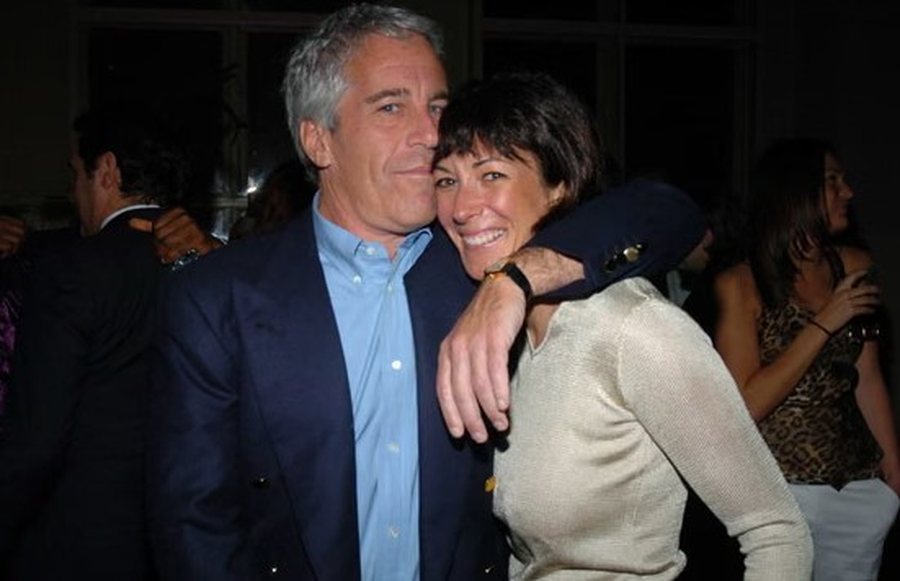
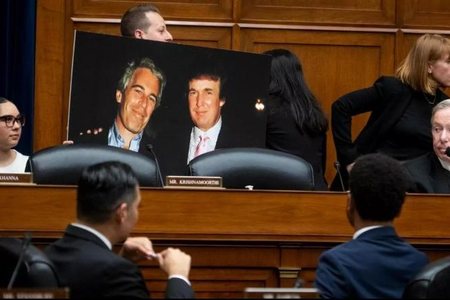
While media attention remains focused on the relationship between Donald Trump and Jeffrey Epstein, the financier accused of sex crimes who died in prison of an apparent suicide at the Metropolitan Correctional Center in New York on August 10, 2019, hundreds of emails made public in recent hours by the House of Representatives oversight committees are revealing a web of international connections that include DP World CEO Sultan Ahmed bin Sulayem, former Obama deputy adviser Kathy Ruemmler, New York Times journalist Landon Thomas Jr., former CIA director William Burns, Peter Thiel, Bill Gates and even Mohammed bin Salman, the crown prince of Saudi Arabia. (The latter is also friends with the Albanian prime minister).
In February 2016, veteran New York Times reporter Landon Thomas Jr. had entered into a steady communication with Jeffrey Epstein, exchanging political analysis during the US Republican primaries. In one of the messages, Thomas wrote: “To be shameless, to be guiltless – that is a powerful weapon for a presidential candidate,” referring to Donald Trump, then a presidential candidate. Epstein responded curtly: “Wow.”
Just a few months later, in November 2016, the journalist sends another message to the convicted financier: “Now all the big investment funds are in love with Trump.” Epstein replies: “Trump is not loyal. ZERO. He dumped Christie in four seconds.” To this day, the New York Times has not commented on whether it was aware of this correspondence between its reporter and a convicted pedophile.
In another episode, Sultan Ahmed bin Sulayem, the head of Dubai’s giant port company DP World – which has billions in contracts with the US Navy – sends Epstein promotional materials for shoes with built-in GPS. In the message, he writes: “Suitable for tracking children, the elderly or patients.” Epstein replies: “Thank you, brilliant idea. I really like your friend.” DP World is one of the UAE’s main military logistics contractors and has close ties to Abu Dhabi’s intelligence services.
In December 2016, Epstein wrote to billionaire Tom Pritzker, owner of the Hyatt Hotels chain: “Can you believe it? Mohammed bin Salman sent me a tent – carpets included.” Pritzker jokingly replied: “A tent? That must be code for ‘I love you.’ Or maybe ‘go to hell.’ I’ll have to look it up in the Saudi urban dictionary.” This episode occurred at the same time that Mohammed bin Salman was consolidating power in Riyadh and Jared Kushner, Trump’s son-in-law, was making his first visits to Saudi Arabia.
In February 2017, another well-known figure in Epstein’s circle, Kathy Ruemmler, a former deputy White House counsel during the Obama presidency and later a legal director at Goldman Sachs, wrote to Epstein: “Trump is so disgusting.” Epstein replied: “Even worse up close.” According to the documents, Ruemmler had visited Epstein’s luxury Manhattan apartment several dozen times after he left the White House.
In an email dated July 2011, Epstein asks renowned publicist Peggy Siegal to use her media contacts, including Arianna Huffington, to smear Virginia Giuffre, the woman who accused him and Prince Andrew of sexual abuse. “She has a criminal record and is a complete liar,” Epstein writes, falsely adding that Giuffre had worked for Trump at Mar-a-Lago when she was just 15 years old.
New correspondence and documents coming to light show that Epstein's circle was not simply a club of American billionaires, but a global network of influence, encompassing Wall Street finance, Middle Eastern intelligence, the New York media, and Washington and London politics. While public opinion continues to focus on the ties between Trump and Epstein, recent evidence suggests that the story is much broader and involves figures who were previously considered untouchable.
Meanwhile, Republican Congressman Thomas Massie announced that his petition to release the full Epstein files has reached the 218 signatures needed, forcing the House of Representatives to vote in December on declassifying the documents. Despite resistance from Congressional leaders, the motion passed. But according to sources in Washington, the most explosive materials have yet to be made public – what has been released so far may be just the tip of the iceberg, while the full files expected to be declassified could contain important names from the political and financial worlds that have so far remained in the shadows.







Lini një Përgjigje