


 Shkruar nga Pamfleti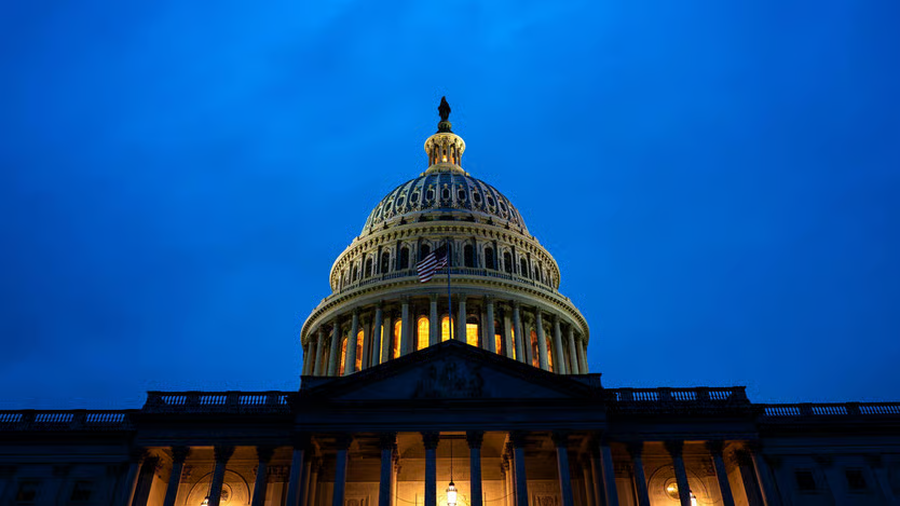
Republicans and Democrats clash, America risks institutional paralysis...
The U.S. government is in danger of shutting down on Wednesday if Democrats and Republicans in Congress fail to reach an agreement on a key funding bill. Without it, many federal services will be suspended and hundreds of thousands of workers will lose their pay, with the possibility that this time, they will never return to work.
Why is this impasse happening?
The new federal fiscal year begins on October 1, but Congress has yet to agree on a short-term funding bill. Republicans control both chambers of Congress — 53 seats in the Senate to Democrats’ 47, and a narrow majority in the House of Representatives, 220 to 212. However, the Senate needs 60 votes to pass the bill, which Republicans lack.
The issue that has blocked the process is funding for the health care program known as Obamacare. Democrats refuse to support the Republican bill unless it repeals cuts to Medicaid approved under Trump's package in July. They also want to extend tax credits that lower the cost of health insurance for low-income Americans.
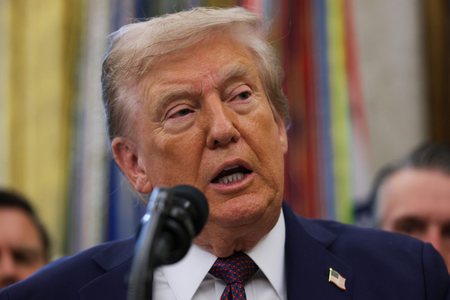
Republicans have rejected compromises proposed by Democrats, including a funding bill that would only last 7 to 10 days. President Trump broke off dialogue with Democratic leaders, calling their demands "worthless."
Political rhetoric and racial tensions
After a fruitless meeting with congressional leaders, Trump released an artificial intelligence-generated video on his Truth Social platform. The video mocked the two Democratic leaders, Chuck Schumer and Hakeem Jeffries, with racist stereotypes referring to Mexican immigrants. Jeffries denounced the video as “disgusting,” accusing Republicans of an unprecedented attack on public health care.
What happens if the government shuts down?
In the event of a shutdown, about 900,000 federal employees will be furloughed. Those who remain on the job, such as the armed forces, FBI, CIA and air traffic controllers, will not be paid until the government resumes operations. Services such as Social Security and Medicare will continue as normal, while the Postal Service will not be affected.
In the longest shutdown, during Trump's first term in 2018-2019, 35 days of funding suspended the work of 9 federal departments. Such shutdowns have occurred before in the 1970s, 1980s and 1990s, including under Presidents Reagan, Carter and Clinton.
But this time, the situation is even more aggressive. The Office of Management and Budget (OMB) has issued an order requiring federal agencies to plan for permanent staff reductions in the event of a shutdown, not just a suspension. This means that many federal employees could lose their jobs permanently.
Democrats have condemned this as an “attempt at mass intimidation.” Chuck Schumer wrote that Congress will not allow workers to be held hostage, while Jeffries stressed that “threats of mass layoffs will not stop us.”
Economic and political consequences
A government shutdown would delay the release of the monthly jobs report and inflation data, disrupting markets and economic decision-making at a fragile moment for the US public debt.
Politically, the impasse increases pressure on Republican senators running for re-election in 2026, who are under pressure from Trump to support the cuts but face the wrath of voters who risk losing health benefits.
If no agreement is reached by midnight (local time) on Tuesday, the shutdown will automatically take effect on Wednesday morning. According to predictions market Polymarket, the probability of a shutdown is currently 86%.
In Trump's own words: "I don't know how we're going to solve this." But for federal workers and citizens who depend on public services, the shutdown is more than a political debate - it's a direct blow to their livelihoods / Adapted from "Al Jazeera"







Lini një Përgjigje