


 Shkruar nga Pamfleti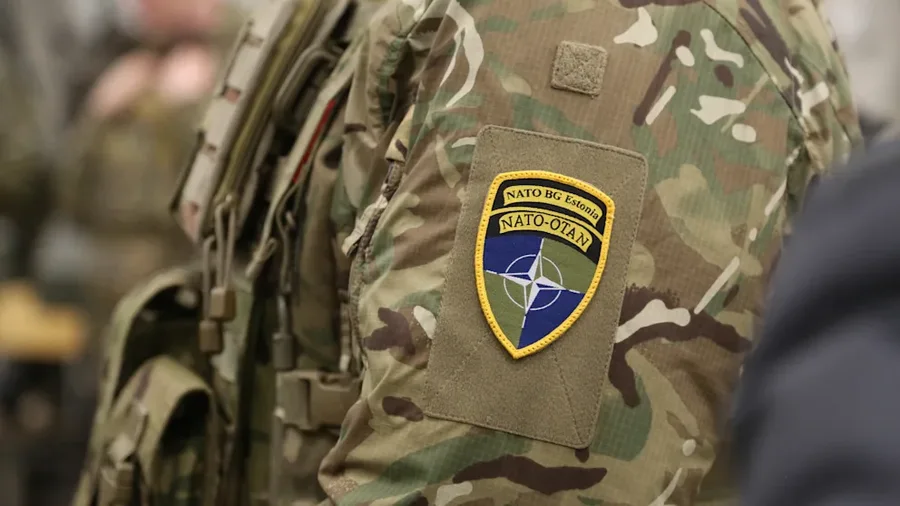
Speculation over border town of Narva heightens tensions; experts warn of dangers, but see no immediate military threat...
Russian propaganda about a possible annexation of the border city of Narva is causing concern in Estonia, a small NATO member. Estonian intelligence sources believe that this campaign could signal possible preparations for an intervention by Russia. The main question remains how NATO would react if such a scenario were to materialize.
Military expert Carlo Masala told German media outlet BILD that there are concrete NATO plans for the defense of the Baltic region. According to him, Estonia, Latvia, and Lithuania are considered a joint operational area in military terms.
Currently, NATO troops are deployed in Estonia. About 180 kilometers west of Narva is a multinational NATO unit under the Enhanced Forward Presence (EFP) mission, led by the United Kingdom, which aims to serve as a first line of defense. Masala emphasizes that there are clear plans for the defense of Estonia, as well as for Latvia and Lithuania, but the city of Narva remains a weak point in NATO’s defense.
Narva is a city in eastern Estonia with about 50,000 inhabitants, of whom about 90 percent are Russian-speaking. Its position directly on the border with Russia makes it vulnerable in the event of a crisis. Although Estonia has strengthened the city's defenses in recent years, the lack of a direct NATO presence is considered problematic. Masala estimates that Estonia would react immediately in the event of an attack and that the Nordic countries would seriously consider intervening in support, but this does not automatically guarantee an immediate reaction from NATO as an alliance.
A possible option, he said, would be to deploy NATO troops directly to Narva, so that any Russian attack would be immediately met with alliance forces, increasing the deterrent effect. However, this idea has not been implemented so far. Germany could also play a role in such a scenario, as it leads a NATO brigade in Lithuania. If this brigade were to move towards Estonia, there is a risk that Russia would take advantage of the situation to exert pressure on Lithuania.
Masala considers the current campaign for a so-called “People’s Republic of Narva” to be part of hybrid warfare, mainly through activities on social media. He emphasizes that, as long as Kremlin representatives do not publicly declare the need for “protection” of Russians in Estonia, there is no sign of an immediate military threat. Another deterrent factor remains Russia’s continued involvement in the war in Ukraine. /Adapted from Pamphlet /




Lini një Përgjigje