


 Shkruar nga Pamfleti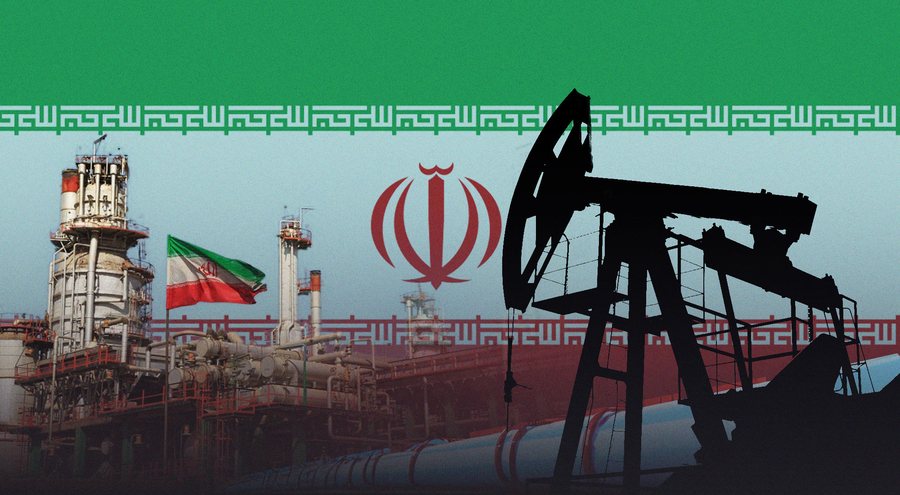
Iran didn't have to become stronger than its opponents. It had to find where they were most vulnerable.
Nearly three months into the war, Iran has not won on the ground. It has failed to overturn the air superiority of the United States and Israel. It has failed to protect its military infrastructure or its citizens. It has not neutralized the blow it suffered from targeted attacks early in the conflict. Yet Tehran has achieved something that Washington and Tel Aviv initially considered impossible: to survive politically, to resist strategically, and to transform a war that began with the goal of quick subjugation into a conflict of constraints, costs, and forced negotiations.
This is the key point. Iran did not have to become stronger than its adversaries. It had to find where they were most vulnerable. And it found that in the Strait of Hormuz, in the Gulf's energy installations, and in the global economy's dependence on a maritime corridor that could become, within hours, a global economic chokepoint.
Tehran’s strategy relied on what analysts call “triangular pressure.” Not a direct confrontation with the most powerful adversary, but strikes at more vulnerable third parties that are of direct importance to the major power. In this case, these third parties were the Gulf states of Qatar, Saudi Arabia, Kuwait, and the United Arab Emirates. Countries that are militarily exposed, vital for energy, and politically linked to the American security architecture in the region.
How Iran lost the war militarily, but managed to hit a critical sector of the global energy market hard
The equation that changed the war
The turning point came when Israel struck Iran’s South Pars natural gas field, and Tehran responded with an attack on Ras Laffan in Qatar, one of the world’s most important liquefied natural gas hubs, as well as drone strikes against refineries in Saudi Arabia and Kuwait. From that moment on, the war took on a different logic. Iran’s message was clear: any attack on Iranian energy would have a response on the energy of the Gulf and, consequently, on the energy of much of the world.
This “export” of the crisis is proving more powerful than any rhetorical threat. Because it was not directed only at Israel. It was directed at markets, American consumers, European energy importers, Asian economies, insurance companies, shipping companies, LNG producers, and Gulf leaders who do not want to see their countries become secondary battlegrounds.
Washington found itself and continues to find itself facing a dilemma that cannot be solved with aircraft carriers, missiles, and stealth bombers alone. It can strike Iran. It can destroy infrastructure. It can increase pressure. But it cannot guarantee that the cost will remain within Iranian borders. And that is precisely the Iranian advantage.
Tehran shifted the focus from military confrontation to economic vulnerability. It didn't just threaten the United States. It threatened the environment within which the United States exercises its power: energy flows, the stability of allies, the price of fuel, the safety of maritime navigation, and the ability of the White House to present itself as a force of control rather than a force that causes uncontrollable consequences.
The Strait of Hormuz as "life insurance" for the Iranian regime
Closing or partially controlling the Strait of Hormuz is not just a military tool. It is the Iranian regime's security policy. About a fifth of global oil passes through it. A critical part of the LNG that supplies European and Asian markets passes through it. And the very feeling that the global economy, no matter how technologically advanced, remains hostage to a few narrow maritime corridors passes through it.
For Tehran, this point is now more than geography. It is negotiating leverage. If Iran manages to emerge from the war with a role – even an informal one – in how maritime navigation is fully reopened, then it will have transformed a conflict that began as a threat to its survival into an instrument of empowerment.
This is the great paradox. Iran may have suffered serious damage. It may have lost key figures, infrastructure, and capabilities. It may be under great economic pressure. But if the world needs Iranian approval to restore normalcy in the Strait of Hormuz, then Tehran will not be treated only as a target. It will also be treated as an indispensable interlocutor.
This does not mean victory in the classical sense. But it means something more complex: survival through leverage. And in the Middle East, that is often enough.
The limit of American power
This situation highlights a deeper problem for Washington. The United States remains the world’s greatest military power. But its power does not operate “in vitro.” It operates within a web of alliances, markets, infrastructure, sea lanes, political balances, and internal pressures. The more complex this web, the more pressure points are available to an adversary who cannot win head-on.
Iran understood this reality better than its adversaries expected. Instead of responding only at the level where it was weakest, namely in the conventional military field, it shifted the conflict to the level where American superiority is less decisive: in regional interdependence.
This explains the pressure for negotiations. It is not an indication of American weakness in the simplified sense of the word. It is an indication that Washington understands that continuing the conflict could produce costs disproportionate to the military benefits. Any additional strike could bring about a new attack in the Persian Gulf. Any new attack could raise energy prices. Any price increase could affect the American political scene. And any political cost limits the president's freedom of action.
After 90 days, Iran has become the point where strategy meets economics and economics meets domestic politics.
The difficulty of the next day
Even if an agreement is reached, the problem is not over. Because the question is not just how the Strait of Hormuz will be reopened. The question is under what conditions it will be reopened. Who will guarantee navigation. Who will oversee security. Who will be compensated. Who will have the right to control. And above all, what will prevent Iran from using the same instrument again in a future crisis.
The answer is not simple. Quite the opposite. If the West tries to restore the pre-war situation as if nothing had happened, it will underestimate Iran's new card. If, on the other hand, it practically recognizes a role for Tehran, it will strengthen a regime that used blackmail as a strategy. And if it tries to take away this card by force, it risks causing the very crisis it seeks to resolve.
This is also the impasse we seem to be heading towards, whether the bombings resume or not. Iran does not need to completely control the Strait of Hormuz. It only needs to prove that it can destabilize it. It does not need to permanently cut off the flow of energy. It only needs to make the world reckon with the opportunity. It does not need to defeat America. It only needs to increase the cost of every American choice.
Lesson for other opponents of the West
There is a broader dimension. Iranian tactics will be studied – if they are not already being studied – by other US adversaries. Not necessarily as a model to be copied, but as an example. Anyone who cannot directly strike at American power can look for the third links that support it: allies, sea lanes, infrastructure, energy networks, cables, bases and supply chains.
This is the true message of war. The era when superiority in missiles, aviation, and fleets was enough to determine the outcome of a crisis is over. Today, power is also measured by the resilience of the networks that support it. And these networks are vulnerable precisely because they are global.
Tehran understood this. It turned the Gulf into a field of pressure, the Strait of Hormuz into a negotiating weapon, and energy security into political blackmail. It did not overthrow American power. But it forced it to face its cost. And that, for a regime that many believed would soon be broken, is already a significant strategic success.


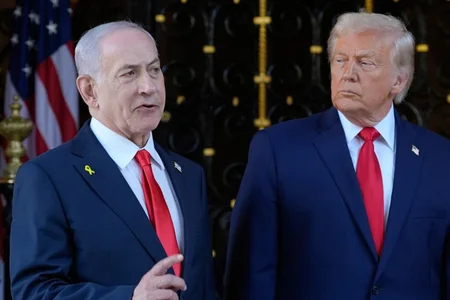
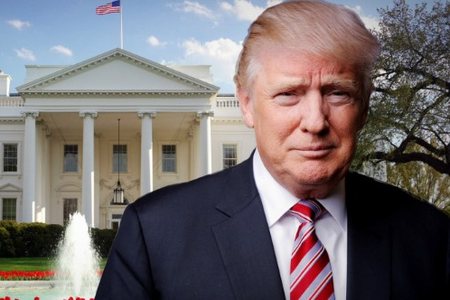


Dmth lrani (për mirë a keq) i ka ca mendje brilante. Amerika (për keq a mirë) ka Trampin.
Eshte turp te mendosh vetem per nje sekonde qe Irani e humbi luften me USA. Pse cfare prisnit qe te fitonte Irani me USA gomere artikull shkrues.