


 Shkruar nga Pamfleti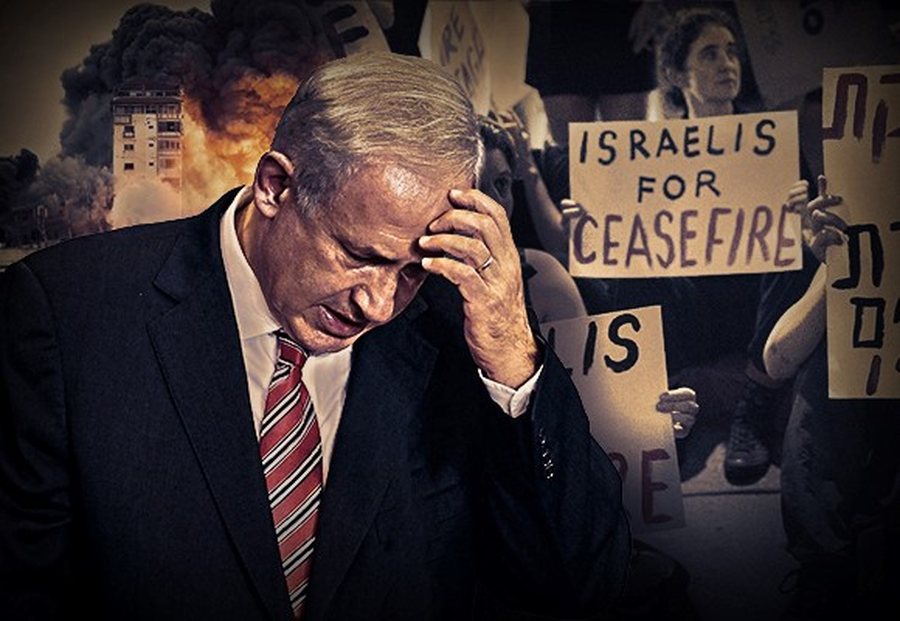
The Governor of the Bank of Israel warned Netanyahu that the prolongation of the war will bring extremely negative consequences for the country, if he does not react immediately to make some fundamental changes in the budget.
The Governor of the Central Bank of Israel, Amir Yaron, has warned Israeli Prime Minister Benjamin Netanyahu to 'hold back' on spending from the state budget this year as this is the only way to meet the cost of the war of 210 billion dollars.
He asked Netanyahu to make cuts in his cabinet, even suggesting that he dissolve some redundant ministries that are merely fictitious and burden the state budget.
"I would like to say as clearly as possible: do not act now to adjust the budget through spending cuts, eliminating redundant ministries and increasing revenues in function of the needs of the war as it may cost the economy much more in the future.
In markets, the negative feedback effect is not always linear. It is difficult to predict when the inflection point will occur, when the markets will reprice this risk, but to the extent that these adjustments are not made, the probability of this increases ," said the governor.
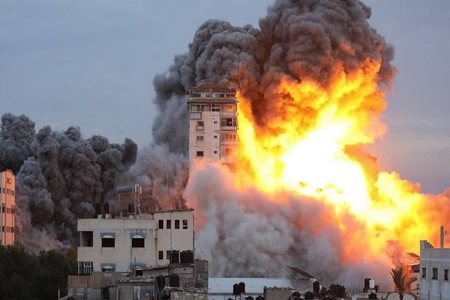
Israel declared war on Hamas after the Palestinian militant group launched a devastating attack on the country on October 7, with the militants killing 1,200 people, according to Israeli officials, and taking 240 others hostage.
Israel has waged a ferocious campaign of ground attacks in Gaza that has killed more than 21,800 people, according to Palestinian officials, as well as displacing more than 1.9 million of its 2.3 million residents and turning large parts of the enclave into uninhabitable.
Yaron said the central bank estimated that assuming the economic impact of the war continued to be felt throughout 2024 and the fighting was mainly concentrated in Gaza, the cost to Israel's state budget would reach about 210 billion Shek (Israeli currency).
He added that while the economy was beginning to recover from the initial shock of the war (which forced the closure of businesses in the area around Gaza and on Israel's northern border with Lebanon) the process was "incomplete", particularly in the tourism sector.
The Governor of the Bank of Israel warned Netanyahu that the prolongation of the war will bring extremely negative consequences for the country, if he does not react immediately to make some fundamental changes in the budget.
Thus suggesting to the Israeli Prime Minister, to remove some money intended to be invested in a certain sector, in order to be able to finance the war.
"The Israeli economy is strong and has the necessary characteristics to move forward even during the war. However, this does not happen on its own. As with many other things in life, what is put off now ends up costing much more and requires more effort and pain later.
Therefore, what is needed now is a responsible budget that requires decisions that are not easy in terms of priorities", said the governor. / Adapted "Pamphlet" from "Financial Times"





Lini një Përgjigje