


 Shkruar nga Pamfleti
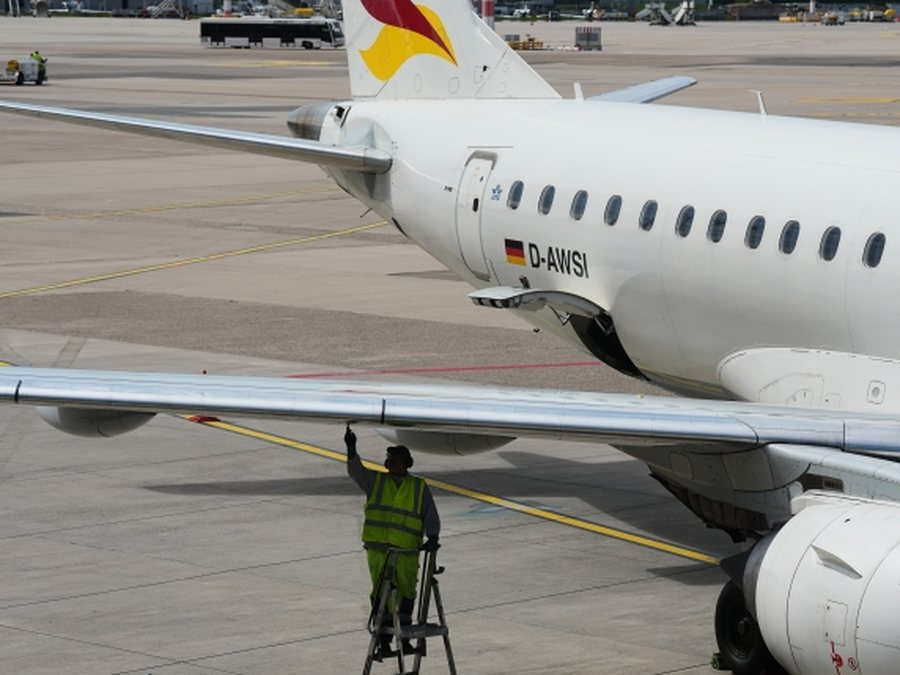
Airlines in Europe are preparing for restrictions on the supply of jet fuel (kerosene), initially in some areas of the continent from mid-May. But, due to uncertainty over supplies in the coming weeks, some operators are drawing up contingency plans for the autumn, while the Strait of Hormuz remains closed since late February.
“I have never seen a situation like this: nobody knows anything and nobody wants to say anything beyond the end of the month,” the CEO of a European airline tells Corriere. “We are preparing for the worst-case scenario,” he adds.
According to the most pessimistic forecasts of analysts, September is seen as the month when bookings could fall to zero, if the situation does not improve. “This does not simply mean that some flights will be canceled,” explains the head of operations of a low-cost company.
“It means there won’t be a single jet fuel station to refuel even a single plane on the entire continent.” But before such a scenario is reached, “we will have gone through the cancellation of thousands of departures every day, right at the height of summer,” the director says.
In public, airlines are trying to reassure passengers and investors, insisting they are not experiencing fuel shortages. But behind the scenes, alarm has reached alarming levels, especially due to the "silence" of some oil companies.
To better understand the situation, Corriere has spoken to about ten sector professionals, CEOs, COOs, CFOs and airport managers in recent days. What further worsens the picture is the fact that alternatives to fill the gap created by the ban on imports from the Gulf are running out and the continent has already started to use up its warehouse reserves.
The confirmation comes from a meeting of two task forces set up by the European Commission. Commercial stocks of jet fuel "are decreasing due to the prolonged closure of the Strait of Hormuz," the EU said in a statement.
And, although "the market has so far withstood the supply tension", Brussels "must start preparing for the possible consequences if the situation lasts beyond the end of May" and, if necessary, use emergency reserves.
Industry experts explain that we are already in an emergency situation. “Reducing the number of flights will not be enough,” say some executives.
“There are companies that are buying available fuel directly from refineries,” continues one executive, “an unusual practice, because agents usually mediate, but now the rules have been broken.” “Some oil companies have stopped answering our questions about the availability of kerosene in the coming months,” says another executive.
“We’re going directly to refineries, trying to order jet fuel from them,” says another CEO. “But in return they’re asking us for scheduling details, how much fuel we need and when.”
“A fuel shortage at some airports in the second half of May is a scenario we consider possible,” confirms more than one executive. They point out that more and more intermediaries are offering refined fuel from Nigeria, “but we have to organize the transportation ourselves — something unheard of: we are an airline, we don’t deal with tankers.”
What analysts are calling a “perfect storm” is looming over Europe. Attention has now shifted from the price, which remains very high, to the availability of fuel.
According to Argus, “current trends indicate that jet fuel shortages could emerge at European airports as early as June.” The company notes that “April imports and high production at European refineries have delayed the impact of the loss of supplies from the Middle East Gulf.” But kerosene supplies “are now expected to last only until the second half of May, according to oil company estimates.”
Despite increased imports from the United States and Nigeria, Europe is only managing to replace about half of the lost supply from the Gulf. Another part has come in these weeks from tankers at sea. But Michelle Brouhard, head of Policy and Geopolitical Risk at Kpler, sounds the alarm:
“Markets have exhausted their main shock absorber: product loaded onto tankers is no longer able to compensate for the loss of supplies from the Middle East and China, while refinery output has begun to decline.”
According to estimates by George Shaw of Kpler, between May and July Europe will need to find somewhere over half a million barrels of jet fuel per day to meet airline demand. In April, significant help came from imports from the United States and Nigeria.
Meanwhile, fuel loaded onto tankers, circulating around the world, has filled the gap created by the loss of supplies from the Middle East and China. But that “safety cushion is now almost exhausted,” Kpler points out.
The amount of fuel in tankers at sea is a very important indicator, because it helps to estimate future supplies: knowing how much kerosene is in transport, it can be predicted when and how much will arrive in European ports.
Aktualisht, Evropa po regjistron nivelet më të ulëta të këtij karburanti në det që nga fillimi i mbajtjes së statistikave të besueshme. Më 30 prill, këto sasi ishin pak më pak se 57 milionë tonë, sipas Kpler. Për të kuptuar rënien e fortë, mjafton të dihet se më 11 prill ishin mbi 650 milionë, ndërsa më 24 prill gati 370 milionë. Sot, teknikisht, konsiderohen të shteruara.
Në të njëjtën kohë, rafineritë po fillojnë të ulin prodhimin, “pasi disponueshmëria e naftës bruto po pakësohet dhe politikat (edhe fiskale) po ngushtojnë marzhet”.
“Sistemi global po humbet njëkohësisht si burimin e tij më fleksibël të furnizimit, ashtu edhe aftësinë për të rindërtuar rezervat”, thuhet në një analizë të Kpler, e cila paralajmëron për “goditjen e katërfishtë ndaj karburantit të avionëve: eksportet nga Lindja e Mesme pothuajse të zeruara, eksportet kineze pothuajse të zeruara, karburanti në anijet cisternë i shteruar dhe prodhimi i rafinerive në rënie”. “Rezerva e furnizimit po thahet nga të gjitha drejtimet.”
Në maj, Evropa do të ketë më pak se 46 ditë mbulim me karburant për avionë, në rënie nga 52,2 ditë në prill. “Ky është një nivel tipik në kushte normale, me importe të qëndrueshme dhe aktivitet të rregullt të rafinerive”, theksojnë nga Kpler. “Por ne nuk jemi në kushte normale.”
Dhe në fakt, “numërimi mbrapsht ka filluar. Dhe kjo fazë nuk do të jetë e ngadaltë. Sapo rezervat fillojnë të bien në një sistem që është strukturalisht në deficit, ato priren të shterojnë më shpejt nga sa pritet, sepse nuk mbetet më furnizim fleksibël që të stabilizojë tregun.”
Nën pragun e 20 ditëve, situata konsiderohet emergjente. Kompania e specializuar vlerëson se, nëse kushtet mbeten të njëjta (me Ngushticën e Hormuzit ende të mbyllur në javët në vijim), në shtator Evropa do të ketë më pak se 8 ditë mbulim me kerosen. Në tetor, situata do të kalonte në deficit. Pa furnizime të reja me karburant për avionë, nuk do të kishte as edhe një pikë për t’u ngarkuar në avionë, me pasoja të paprecedenta për sektorin.
“Ndërsa sistemi kalon gjithnjë e më shumë drejt shfrytëzimit të rezervave, përshtatja zhvendoset nga çmimi te disponueshmëria, duke përgatitur terrenin për një shtrëngim të shpejtë dhe për racionim,” shpjegojnë nga Kpler.
“Çështja nuk është nëse bota do të mbetet pa karburant për avionë,” vazhdojnë analistët. “Pyetja është për sa kohë sistemi do të arrijë ta përthithë goditjen përpara se diçka të prishet.” “Evropa mund të duket ende sikur ka 50 ditë mbulim në letër, por ky numër tashmë po shkëputet nga realiteti.
Jastëkët mbrojtës janë zhdukur, furnizimi mbetet i kufizuar dhe tani janë rezervat që po mbajnë gjithë peshën.” “Ernest Hemingëay shkroi dikur se dështimi vjen ‘gradualisht, pastaj papritur dhe menjëherë’,” thotë Brouhard. “Kështu përshtaten tregjet dhe pikërisht kjo është ajo që po ndodh tani në sektorin e produkteve të rafinuara.”
In recent days, according to the weekly Der Spiegel, in Germany, sector associations have asked the government to allow the use of NATO's kerosene supply system, built for wartime, explaining that oil companies guarantee them supplies "only until mid-May."
“The oil company executives have not been able to say what will happen next.” Several airport management companies told Corriere that they “have no idea” about the availability of jet fuel “in the coming weeks.” In two cases, it was regional airport executives themselves who asked the outlet for an update on the situation.
"Even the European Union itself doesn't know exactly what situation we are in," accuse some executives of airlines and airport management companies.
“Unlike gas and electricity, oil markets are not regulated and there is no standard procedure for collecting data in a crisis situation like this,” Anna-Kaisa Itkonen, a spokeswoman for the European Commission, explained to Corriere by email.
"There is also a lack of transparency on the development of reserves by the various operators. The current unstable geopolitical context does not help, as the situation changes every day."
The EU's response
Regarding commercial jet fuel reserves, "we receive information from companies and other important operators," the spokeswoman responds.
"Although they are not obliged to share this data, they are participating in the coordination effort that is underway. It is not up to the Commission to make this information public: we must respect commercial confidentiality and we do not have access to fuel supply contracts," she explains.
Is Brussels preparing for the worst, with fears of a kerosene shortage, thousands of flights cancelled and millions of passengers stranded? “We are drawing up models and scenarios for every eventuality,” explains Anna-Kaisa Itkonen.
"We do not know how long this crisis will last, nor how long it will take for markets to adapt. In this context, close coordination and cooperation with member states and industry are essential," she added./ CorrieredellaSera







Lini një Përgjigje