


 Shkruar nga Pamfleti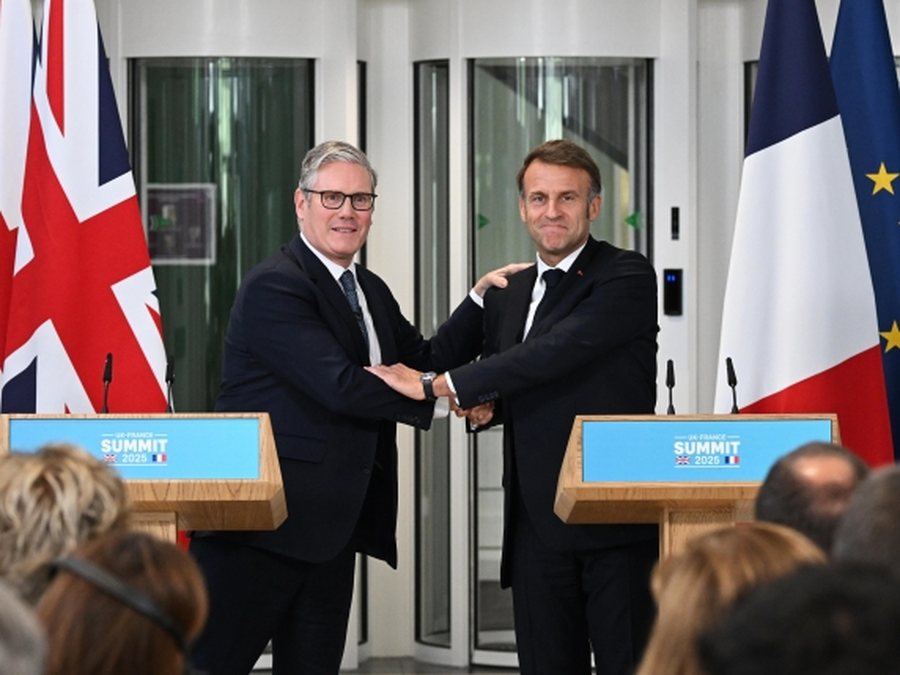
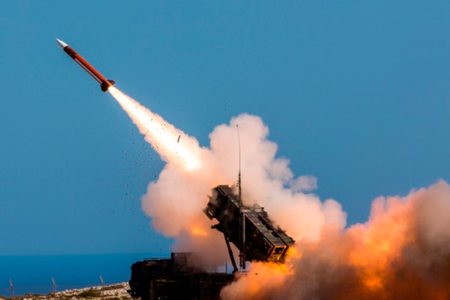
The Franco-British nuclear umbrella will protect Europe from any threat.
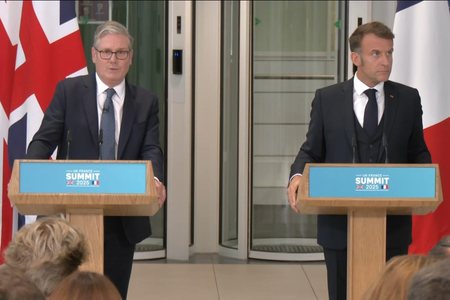
This is the most significant outcome of the London summit between Keir Starmer and Emmanuel Macron, an agreement that the Labour prime minister described as "a historic moment for the world".
"We are the two nuclear nations in Europe and we have agreed to take a tremendous step forward in how we coordinate our capabilities to support Europe and NATO," Starmer said at the press conference.
While Macron stated that this agreement will respond quickly to any extreme threat.
As Macron explained, the UK and France have modified their nuclear doctrine and, from now on, any "extreme threat" to Europe will be met with a "swift response" from both nations.
"A message that our partners, as well as our adversaries, must take into account," warned the French president. The two national nuclear forces remain independent, but from now on they will be "coordinated."
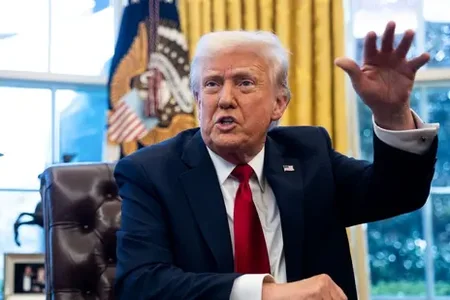
Trump's ambiguous stance on NATO's Article 5
In practice, London and Paris are taking responsibility for Europe's defense in the face of Donald Trump's ambivalence, with the United States even questioning its commitment to NATO's Article 5, which mandates a collective response to aggression against a member state. Now, the British and French are taking on this commitment directly because, as Macron declared, the two nations share a "particular responsibility" for the continent's security, as the only nuclear powers with credible armed forces. Common European defense will also be ensured at the conventional level, with the joint development of next-generation anti-ship missiles and a range of advanced weapons, including those based on artificial intelligence.
And above all, with the expansion of the Franco-British rapid reaction force to 50,000 men, which is being refocused on defending Europe and is becoming “combat-ready.” According to the Elysee, it could serve as “a nucleus for planning security forces that could potentially be deployed in Ukraine as part of a future ceasefire.”
Virtual meeting of Volunteers from London
From London, Starmer and Macron chaired a new virtual meeting of the "Coalition of the Willing" yesterday, which was attended by German Chancellor Friedrich Merz, Italian Prime Minister Giorgia Meloni and, for the first time, the United States, with Trump's special envoy, Keith Kellogg.
However, in the face of American reluctance to commit to a security guarantee for a potential peacekeeping force sent to Ukraine, the coalition has refocused on putting Kiev in the best possible position for a ceasefire: training and equipping the Ukrainian armed forces, patrolling the skies alongside their air force, and strengthening the existing mission to secure the Black Sea.
"We must refocus our efforts on peace, forcing Putin to sit down at the negotiating table. This coordinated pressure will make a difference," Starmer said. He and Macron, however, were keen to underline that the operational phase has begun, with the coalition headquarters based in Paris.
US-Russia diplomacy
On the diplomatic front, US Secretary of State Marco Rubio reported that Russian Foreign Minister Sergei Lavrov shared a "new idea" on Ukraine during their meeting in Malaysia.
"This is not a new approach, it's a new idea or a new concept that I will bring to the president for discussion," Rubio said, emphasizing that it is not something that "automatically leads to peace, but it could potentially pave the way for a path forward."



Lini një Përgjigje