


 Shkruar nga Peter Singer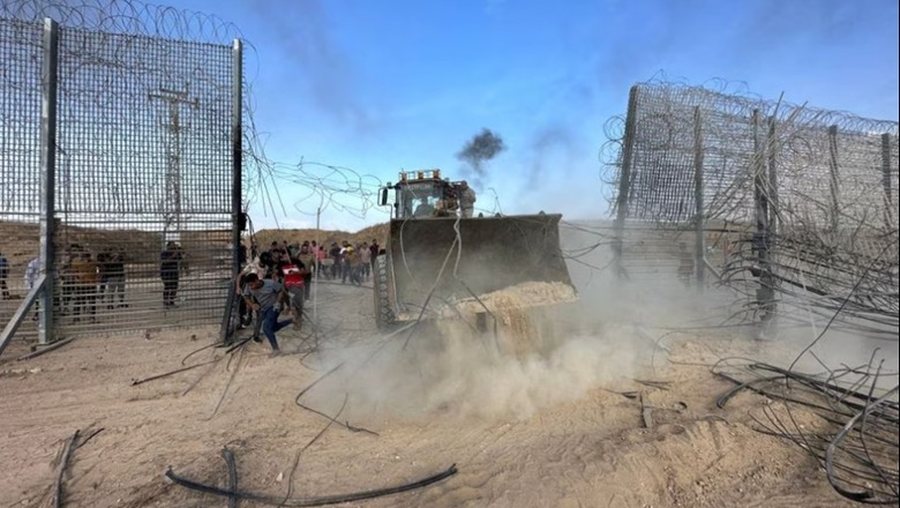
Hamas' ugly attack on Israel has been rightly condemned around the world. If this is war, and both sides agree, then Hamas's deliberate targeting of civilians is a serious war crime.
It's just that the brutality demonstrated by Hamas did not come out of nowhere. The lesson of what is currently happening in Gaza and Israel is that violence only breeds more violence.
The last real chance to avoid a conflict like the one going on between Israel and Hamas was effectively destroyed two decades ago by a single assassination: the assassination of Israeli Prime Minister Yitzhak Rabin in 1995. The assassin was not actually a Palestinian militant but an Israeli extremist who opposed the Oslo Accords, through which Rabin dreamed of a "land of peace," an agreement that was anathema to Israeli radicals, for whom Jewish sovereignty in the Holy Land is non-negotiable.
Rabin's assassination came at the end of a peace demonstration attended by more than 100,000 Israelis, hoping that hostilities between Israel and Palestine were finally coming to an end. And at the time, that hope was indeed realistic.
The biggest beneficiaries of this assassination were Israeli nationalists, above all, Binyamin Netanyahu, head of the right-wing Likud party. Netanyahu has opposed the Oslo Accords because the agreement requires Israel to withdraw from territories it captured during the Six-Day War in 1967. In protest against the Accords and against Rabin, Netanyahu at the time led a mock funeral procession, complete with with a rope and a rope for hanging.
In the years following Rabin's assassination, and particularly after the failure to reach an agreement at the Camp David talks in 2000, right-wing extremists took power in Israel, further diminishing the prospect of a Palestinian state in occupied territories. At the same time, the failure of the secular Palestinian leader Yasser Arafat and his Fatah movement to establish the state of Palestine was what empowered Hamas, which, along with other Palestinian militant organizations, bases its legitimacy on the killing of Israelis (as and of those he accuses of being collaborators with Israel).
As Hamas extended its influence (and exported violence) from Gaza, which it has controlled since 2007, to the Israeli-occupied West Bank, in which the Fatah-controlled Palestinian Authority is nominally in charge, a number growing among Israelis supported Netanyahu's repressive measures. And while the Palestinian Authority was powerless to stop the relentless expansion of Israeli settlements in the occupied West Bank, the cycle of extremism and violence continued.
Netanyahu currently leads the most fanatical nationalist government in Israel's history, a government that includes Finance Minister Bezalel Smotrich, whose responsibility includes administering large parts of the occupied West Bank. Smotrich has repeatedly incited violence against Palestinians.
In February, after a Palestinian shot and killed two Israeli settlers, hundreds of Israelis attacked Huara, a nearby Palestinian village, in scenes reminiscent of Cossack pogroms against Jewish settlements in Russia a century ago. The Israelis set fire to Hëara, leaving one villager dead and injuring many others. And, like Russia's police while the pogrom was taking place, Israeli forces in the area did not intervene to protect the residents or arrest the perpetrators.
None of this justifies the crimes committed against Israeli civilians by Hamas terrorists who killed more than a thousand Israelis, most of them defenseless civilians, including women and children. Chilling video shows armed militants shooting young people in cold blood at a music festival. As a percentage of the population, this attack hit Israel ten times harder than Al-Qaeda hit the US with the attacks on the World Trade Center and the Pentagon on September 11, 2001.
When Hamas attacks Israeli civilians, it knows that it will lead to Israel's counterattack in Gaza, which will lead to the killing and wounding of many civilians. Hamas places its military facilities in residential areas, hoping that this tactic will deter the Israelis from striking them, or at least reduce international support for Israel.
Hamasi raportohet se po mban aktualisht 150 pengje dhe ka deklaruar se do të vrasë një prej tyre sa herë që një bombë e Izraelit do të godasë një shtëpi të Gazës pa paralajmërim. Udhëheqësit e Hamasit me siguri që e mbajnë mend se më 2011, Netanyahu, si kryeministër, pranoi të lirojë mbi 1 mijë të burgosur palestinezë, disa prej të cilëve terroristë, në shkëmbim të lirimit të një ushtari të vetëm izraelit të marrë peng, Gilad Shalit. Në këtë kontekst, ata mund të besojnë se Izraeli nuk do të jetë i gatshëm të sakrifikojë jetët e pengjeve në mënyrë që të arrijë objektivat e veta ushtarake.
Nëse udhëheqësit e Hamasit i kanë bërë llogaritë në këtë mënyrë, ata ka gjasa do të zbulojnë se i kanë bërë llogaritë gabim. Mbetet për t'u parë nëse Izraeli do të jetë apo jo në gjendje të eliminojë Hamasin si forcë ushtarake, por është e qartë se në betejën për të arritur këtë objektiv, Izraeli do të duhet të përgatitet të humbasë shumë jetë, mes ushtarëve e me gjasa, edhe mes pengjeve.
Se deri në çfarë pike do të vijojë Izraeli me qëllimin e vet për të bllokuar elektricitet, energji, ushqim dhe ujë për dy milionë banorët e Gazës, shumë prej të cilëve janë fëmijë, kjo është e vështirë për t'u ditur. Ajo që është e sigurt është se krimet brutale të Hamasit nuk i japin të drejtë Izraelit të vdesë urie fëmijët.
In the eyes of many outside observers, the cause of Palestinian autonomy and statehood has long held the moral superiority. Now the cause has been tarnished by the brutal murders and kidnappings – many of them on camera – carried out in its name. Paradoxically, if the Palestinians are to regain moral superiority, they must hope for the destruction of Hamas. As long as Hamas can claim to represent them, the crimes Hamas has committed will continue to tarnish their cause.



Lini një Përgjigje