


 Shkruar nga Bedrettin Bölükbasi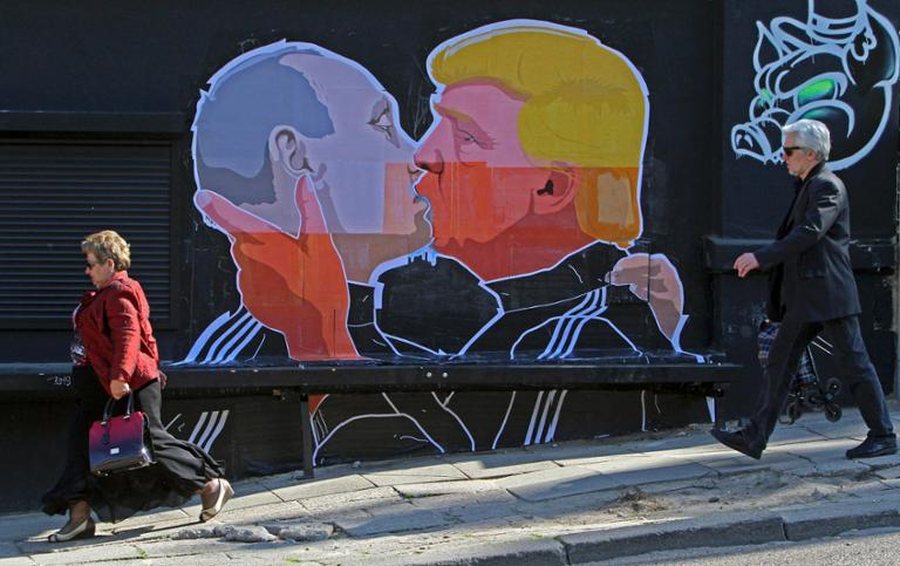
And that's not all: Putin even called for a ban on all NATO activities in Eastern European member states that joined after 1997, and this would affect many countries, from Poland to Albania to North Macedonia.
Donald Trump and Vladimir Putin will meet in Alaska on Friday night for the first time since 2021, and also since the start of the war in Ukraine in February 2022. The specific topic is a ceasefire in the war in Ukraine, but much more is hidden behind the scenes. For the Kremlin leader, this could be the first step towards a new order in Europe.
It remains to be seen what results the summit will bring. However, one thing is certain: the meeting itself is a success for Russia. At the beginning of the war in Ukraine, there was still talk of its isolation. With this meeting and the global political stage it offers, Putin may finally be able to destroy the narrative of an isolated Russia. Pro-Russian bloggers are emphasizing this, and they are even proud that this isolation is being broken directly with the US.
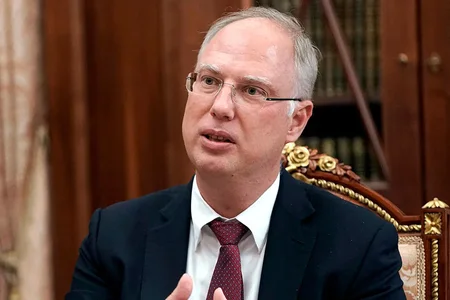
Putin has long been keen to ensure that bilateral relations with the US are not defined by the war in Ukraine, as he has sought to restore good relations with Washington. The Alaska meeting could offer an opportunity to restore relations. For months, Russian officials and Kremlin insiders have been talking on state television about the possibilities for technical and economic cooperation with the US. Thanks to Trump’s fascination with “good deals” and the planned presence of Putin’s economic envoy, Kirill Dmitriev, in Alaska, the Kremlin could intervene.
Friendly relations between the US and Russia would undoubtedly divide the Western world. Europe is concerned that Trump might bow to Putin's demands in Alaska. This potential rift would make it easier for Putin to implement his imperial plans within the framework of a new order in Europe, which is no longer limited to Ukraine.
The Kremlin leader wants to bring all of Ukraine under his control: not necessarily by annexing all of the territory, as is the case in Luhansk, Donetsk, Zaporizhia, and Kherson, but by taking political control of the country. To achieve this, he intends to use military pressure to force Ukraine to surrender and install a pro-Russian government in Kiev. This could ultimately set in motion the next step in his plan: a realignment of spheres of influence in Europe.
The Kremlin leader's far-reaching thinking is evident in the draft agreements he sent to NATO and the US in December 2021, two months before the attack on Ukraine. He called for a halt to NATO's further eastward expansion and an end to military activities in Ukraine and Eastern Europe.
And that's not all: he even called for a halt to all NATO activities in Eastern European member states that joined after 1997. This would affect many countries: Poland, the Czech Republic, and Hungary joined in 1999. Bulgaria, Estonia, Latvia, Lithuania, Slovakia, Slovenia, and Romania followed in 2004. Albania and Croatia joined in 2009, Montenegro in 2017, and North Macedonia in 2020.
The Kremlin leader does not see the countries of Eastern Europe as sovereign states, as these treaty texts, among other things, demonstrate. Russian officials and propagandists on state television also consistently follow the same line with their statements. If Putin and his circle succeed, these former Soviet states should still be within the Russian sphere of influence. Therefore, he does not want to cede these countries to NATO, including Ukraine. For the Russian leader, a success in Ukraine is only the first step on the path to pushing NATO back and restoring the Soviet sphere of influence. With the summit in Alaska, he could go a long way toward that goal, if he can prevail on Trump.
Undoubtedly, all this also has an impact on the world order itself: Putin is transforming sovereign states into chess pieces of great powers and dividing the world into spheres of influence. / Adapted from Fr.de /



Lini një Përgjigje