


 Shkruar nga Pamfleti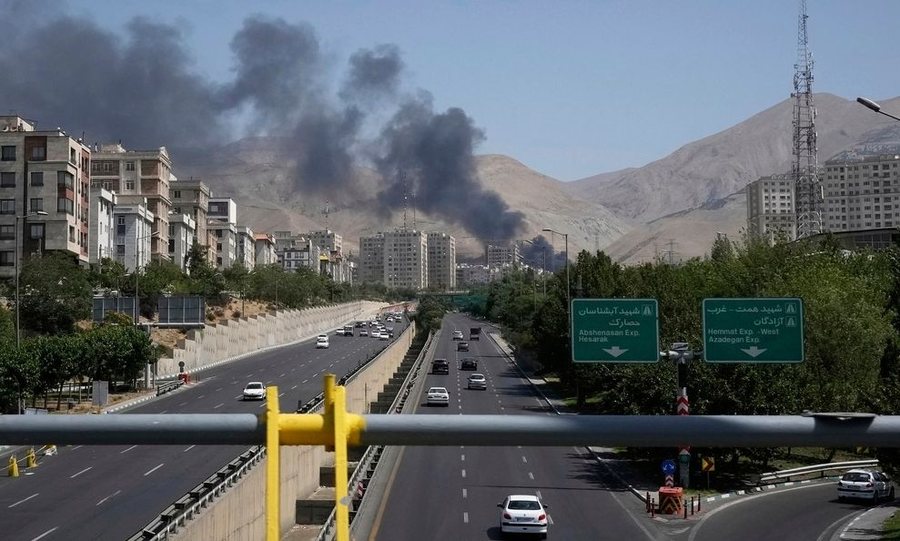
Farhadi, like many other residents, was reluctant to leave his home. The young man, who was studying international relations, had just secured a part-time job that he hoped would boost his applications to universities in Europe...
Terrified residents of Tehran are facing grueling journeys as they flee the Iranian capital.
Farhadi and his friends were fleeing the Iranian capital, they had plenty of time to observe the destruction. Smoke billowed from rooftops and flames spread behind them as they slowly walked through miles of traffic to escape Israeli bombing.
Despite setting off early on Tuesday morning, it took Farhad six hours to reach his ancestral village, a journey that usually takes two and a half hours. “Young children, elderly and sick grandparents, everyone was stranded on the road,” the 22-year-old university student in Tehran told the Guardian in a text message.
Another Tehran resident described a 10-hour journey filled with anxiety as Israeli fighter jets flew overhead.
"All the way, while I was stuck in traffic, we were afraid of what would happen if attacks hit us on the highway? What if there were secret storage facilities around us? The fear of not knowing created a lot of anxiety," said Mina, 24, a financial professional in Tehran.
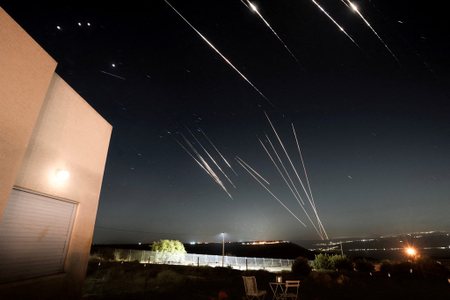
They were among thousands of Tehran residents who have fled the city since Israel launched hundreds of airstrikes on Iran early Friday morning, which it said were aimed at preventing Iran from developing nuclear weapons. Iran responded by launching a barrage of ballistic missiles and drones toward Israel in an escalating war of revenge that has entered its sixth day.
Tehran has no special shelters
Unlike Israel, which was well-prepared for Iranian ballistic missiles, Tehran has no special shelters. City authorities opened the metro as an “ad hoc” shelter on Sunday and ordered other people to go to mosques, although it was not clear what protection the above-ground shelters would offer.
Farhadi, like many other residents, was reluctant to leave his home. The young man, who was studying international relations, had just secured a part-time job that he hoped would boost his applications to universities in Europe. But when a huge explosion occurred while he was shopping and his father's friend was injured in the Israeli attack on Iran's state broadcaster on Monday, he knew he had no choice but to leave.
A Tehran resident who stayed there estimated that “more than half” of the city’s residents had fled, an estimate the Guardian could not verify.
"Tehran is a deserted city. You could say that only banks and some services are open. Food supplies are running out, the market is almost closed and Tehran is almost evacuated," said Akram, who was still in the city.
Queues at gas stations
He added that gas stations are limiting customers to 10 liters per day, creating long lines for fuel. Platform X is officially banned in Iran and the Iranian government has restricted internet access since the start of the Israeli strikes on Friday, preventing many Iranians from seeing evacuation orders.
Donald Trump also called on all residents to immediately evacuate Tehran in a post on Truth Social, his social media platform. Human rights experts criticized the evacuation orders, which they said were too vague and appeared to be designed to encourage displacement.
“The most ‘specific’ evacuation order we have seen in Iran is 300,000 people. This is a very, very large order. You cannot order 300,000 people to leave without giving them specific routes to leave,” said Hossein Bhoumi, Deputy Regional Director for the Middle East and North Africa at Amnesty International.
"The evacuation orders appear to follow the same pattern as in Lebanon and Gaza, where they appear to be aimed at causing confusion and panic, rather than providing protection for civilians," Bawumi added.
Not all Tehran residents were able to leave. The war with Israel comes during Iran's worst economic crisis in decades, and some lacked the means to travel outside the city.
The 3 categories of people who cannot leave
"There are three types of people still in Tehran: those who have nowhere to go; those who don't have the money to leave; and mid-level government employees whose request for leave was rejected by the government," said Sandia, a 40-year-old woman who was still in the city.
Activists have also raised the alarm for Evin prison, which is located within the area designated by Israel's evacuation order.
It is full of political prisoners and protesters arrested in the 2022 "Women, Life, Freedom" protests, as well as common offenders, and has not been evacuated.
“My father is in prison! Can you tell me how he should be evacuated from Tehran!? Can you tell me? What do you mean by he should be evacuated from Tehran!?” said Mehraveh Khandan, whose father, Iranian human rights activist Reza Khandan, is being held in Evin prison, in an Instagram post.
The ongoing fighting has left displaced residents of Tehran in a precarious state, as they worry about those left behind and their own exile.
"From here, I see images of my beautiful homeland being destroyed. I haven't brought much with me, just what I need to survive. My whole heart and soul are in Tehran. I have only brought hope with me," Mina said. /Adapted from Pamphlet/





Lini një Përgjigje