


 Shkruar nga Lynne O’Donnell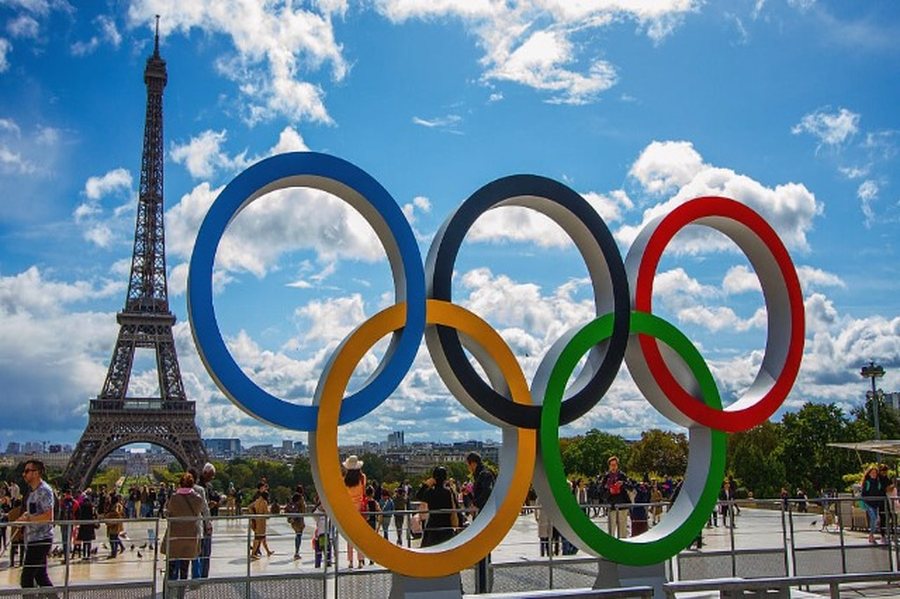
It's usually Islamic State, Al-Qaeda and lone actors. Whereas now we have Hamas, Hezbollah, actors acting alone, Islamic State, Al-Qaeda, extreme left and right. And all of these can see their targets. The threat of terrorism has been there all along, but because of the attacks on October 7, 2023, it has taken a lot of media attention, and that is the threat that comes from the Islamic State.
The threat of violent extremism in Europe has escalated since Hamas launched its horrific attack on Israel on October 7, 2023. The first Olympic Games to be held in Paris in 100 years are likely to open with a limited ceremony. , while European football's governing authorities are increasing security measures ahead of Euro 2024, due to threats of attacks by the Islamic State.
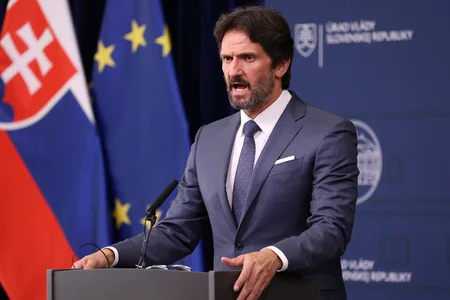
Political tension is increasing, and this was also seen by the assassination attempt on the Slovak Prime Minister, Robert Fico. Across the continent, police have busted Islamist cells planning mass-casualty attacks. US security agencies fear that white supremacists and Islamic extremists may find common cause in their opposition to democratic government.
"The current terrorist threat to Europe is very large, as there is an intersection of a series of disconnected but unfortunately mutually reinforcing events," says Hans-Jakob Schindler, director of the Berlin-New York-based Counter-Extremism Project. .
"The attacks of October 7 changed the level of threat from groups that for a long time did not pose any threat on the European continent. Certainly there has always been Islamic terrorism, but it is not Islamic terrorism in all its varieties from Hamas to Al-Qaeda.
It's usually Islamic State, Al-Qaeda and lone actors. Whereas now we have Hamas, Hezbollah, actors acting alone, Islamic State, Al-Qaeda, extreme left and right. And all of these can see their targets. The threat of terrorism has been there all along, but because of the attacks on October 7, 2023, it has taken off the media's attention, and this is the threat that comes from the Islamic State ," he adds.
"Today the danger comes to us from the extreme left, which has very clearly, openly and publicly sympathized and associated itself with the Palestinian cause since October 7 as part of this anti-imperialist war, with the attacks against the infrastructure in Germany during the last 2 months.
And we have the new phenomenon of 'active clubs' of the extreme right, which exist all over Europe, including in France and Germany, and which can see these big events as training opportunities', the expert underlines.
Multilateral and intensive cooperation in the field of security around the Paris Olympics and Euro 2024 has already given results by hitting extremist cells and preventing possible attacks. Such large sporting events present striking opportunities for terrorists, from the big screen party squares in the center of cities, to street parties to victory parades.
It is impossible to prepare for every scenario or possibility. Experts are trying to manage such a huge confluence of security challenges. With attention focused on the Middle East - and especially the humanitarian catastrophe in Gaza - analysts predict a wave of extremism, which is rapidly building, and which has generally escaped public attention and media scrutiny.
And the lack of attention escalates the risk. Terrorist organizations need prominence, as this is how they attract funds and recruits. While Hamas, Hezbollah and Yemen's Houthis were in the spotlight, analysts said a major threat to European security was coming from Afghanistan, where the Taliban, a violent and criminal group, regained control of the country nearly 3 years ago, turning it back into a haven for transnational jihadists.
Al-Qaeda, always close to the Taliban leaders who gave Osama bin Laden the space to launch the September 11, 2001 attacks on the US, has been greatly weakened as its long-time masters consolidate power. Those heinous acts inspired generations of radical Islamists.
The return of the Taliban has vindicated the claim that bin Laden's vision of a caliphate centered in Afghanistan, a highly motivating ideological goal, is achievable. Events in the Middle East, where Iran and its backed militias seek the destruction of Israel, are part of this plan.
Complex operations have become common, and have expanded to include firearms, explosives, suicide vests, and multiple attackers, causing large numbers of deaths, extensive damage, large-scale panic, and often hours-long attacks. Such examples include the attack on the Bataclan Theater in France in November 2015; the Manchester Arena bombings in 2017; the Bastille Day attack in Nice in 2016; and the attack on the Strasbourg Christmas market in 2018. The ISIS group that claimed responsibility for the March attack on the Crocus shopping center in Moscow warned that this was just the beginning of a longer campaign.
More than 140 people died in that incident and hundreds more were injured. IS-Khorasan Province, or ISKP, an Afghanistan-based ISIS affiliate, is believed to be behind the attack. "Khorasan" refers to a historical region that spans present-day parts of Afghanistan, Iran, and Central Asia.
ISKP aims to bring it under control as a large "caliphate". Two days after the attack in Moscow, France's prime minister, Gabriel Attal, said the National Defense and Security Council had raised the alert for terrorist attacks in the country, increasing preparedness to the highest level.
Soon after, ISIS threatened to attack the stadiums where the Champions League football matches were played, but also national championships in Germany, Spain and England. On April 12, German authorities said four people had been arrested for planning attacks against churches and police.
German media reported that the teenagers "glorified the Islamic State" and had "declared themselves ready" to carry out attacks. Sources from security agencies have linked them to ISKP. Arrests of individuals and groups suspected of being aligned with ISKP have occurred in Austria, Spain, Sweden and the Netherlands and have included nationals from Turkmenistan, Kyrgyzstan, Tajikistan and Afghanistan.
Some have been linked to known ISIS sympathizers; others are more directly involved in fundraising or recruitment. According to ISKP data, there are currently 4,000-6,000 fighters. Analysts at the Counter-Terrorism Center at West Point Academy in the US describe the ISKP as strategically and operationally agile, and adept at dealing with rivalries from other groups, including al-Qaeda and the Taliban./ Taken from "The New European", Pamphlet adapted


Lini një Përgjigje