


 Shkruar nga Pamfleti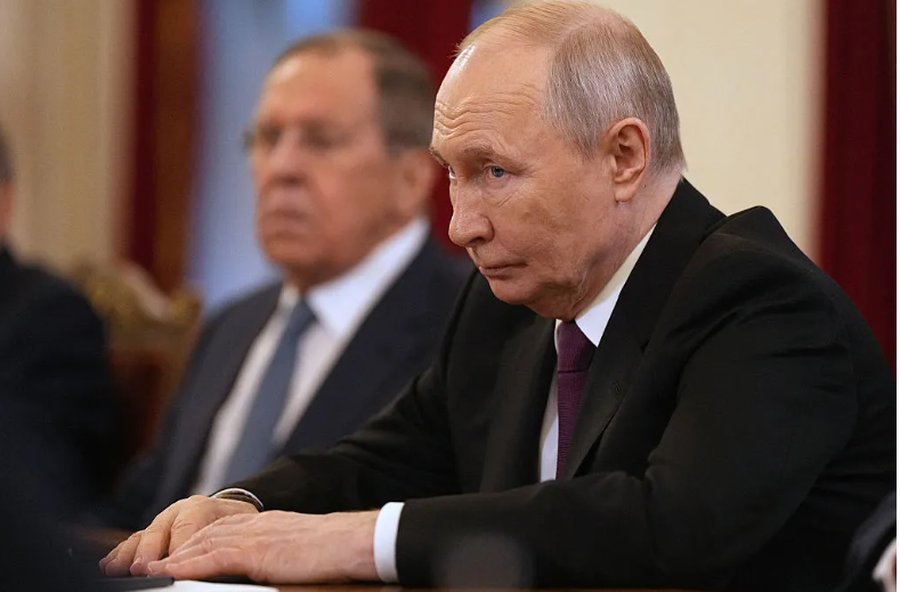
Claims of fear of a conspiracy against Putin seem more like an information operation than real analysis...
As much as Western leaders complain about Russian disinformation (which, yes, is a real problem), we should never pretend that this isn’t a two-way street. The sudden wave of news reports that an anonymous “European intelligence agency” claims the Kremlin fears a coup seems more like a psychological operation to create paranoia among the Russian elite than a serious assessment.
The claim is that Putin's personal security has been significantly increased, not simply to protect him from increasingly frequent and long-range Ukrainian drone attacks, but especially because since early March, the Kremlin and Vladimir Putin himself have been concerned about the risk of a conspiracy or coup attempt targeting the Russian president.
Specifically, it is alleged that Sergei Shoigu, defense minister until 2024 and now secretary of the country's Security Council, "is associated with the risk of a coup, as he retains considerable influence within the military high command."
It is entirely plausible that security around the president has been increased, regardless of whether they consider the threat credible or possible.
The aging Putin may well fear a direct Ukrainian attack, and his FSO, the Federal Protective Service, guards are, like any security service, professionally paranoid and react to their leader’s concerns. It is entirely plausible that security around the President has been increased, whether they consider the threat credible or possible. The scaling down of Saturday’s Victory Day parade in Moscow appears to be aimed at avoiding creating an overly visible target for Ukrainian attack.
But an attack on Putin? While Moscow tried to strike Volodymyr Zelensky early in the war, there has been an unspoken bilateral moratorium on attacks on the other side’s top leaders ever since. Despite Russian claims of an attempted attack on one of Putin’s residences in December, that agreement remains in place. If Kiev were to target Putin, let alone kill him, it could expect a harsh retaliation.
However, it is precisely the claims of a coup that have attracted the most attention and that seem the least credible. The security system in Russia is carefully organized to minimize the risk of a coup. Various military and paramilitary forces balance each other, and the FSO is filled with loyalists and has the power to monitor anyone it deems necessary.
When Yevgeny Prigozhin and his Wagner mercenaries rebelled in 2023, it was an uprising, not a coup: the goal was not to overthrow the President, but to convince him to abandon his support for Shoigu. In any case, the 2,000 or so people who approached Moscow would have had no chance of taking the city, much less overthrowing Putin.
Shoigu’s portrayal as a potential coup mastermind is particularly ludicrous. Rightly or wrongly, he has borne the brunt of the criticism within the military for the failure of the initial invasion and for shortcomings in leadership, strategy and supply. There has been a widespread campaign to dismiss, prosecute or remove his ministerial colleagues. Those officers with whom he was associated, including the Chief of the General Staff Gerasimov, whom he appointed, have clearly distanced themselves from him.
It is difficult, if not impossible, to imagine that he would have the authority and credibility within the high command to organize a coup, much less the freedom of action to do so without falling foul of the informants, wiretaps, and communications interceptions of the DVKR, the Military Counterintelligence Department of the Federal Security Service. Despite its name, it is more about supervising soldiers than protecting them from foreign spies.
Moreover, claims about Putin’s security that can be verified from abroad seem highly dubious. Contrary to these claims, for example, Putin, who has for years reduced his travel and public engagements in the country, has continued a program of public activities, including his recent meeting with the Iranian foreign minister in St. Petersburg.
This could simply be faulty intelligence, coming on the heels of a Swedish report that grossly exaggerated the strain on the Russian economy. There is a great desire in Europe for a sudden resolution, a miraculous end to the war in Ukraine. The idea that Putin could be overthrown in a coup or that the country would collapse fits into this desire. It would not be the first time that intelligence agencies have succumbed to the temptation to give their leaders what they want to hear, not what they need to hear.
However, with news that NATO has been holding meetings with film and television producers to influence their content, it is worth considering the possibility that this is a deliberate deception. Perhaps the aim is to plant ideas in people's minds. Perhaps it is to push Putin to turn against Shoigu, who is a personal friend, and to make the rest of the elite wonder if they could be next. This would not be the first time we have seen such a diversion in the secret wars waged by the secret services. /Adapted from The Spectator /





Grusht shteti eshte "zevendesimi i diktatorit me diktatore te tjere. Vetem revolucioni pa njerez te blere permbys sistemin sundues. Nuk behet stan me lepuj