


 Shkruar nga Eric Jozsef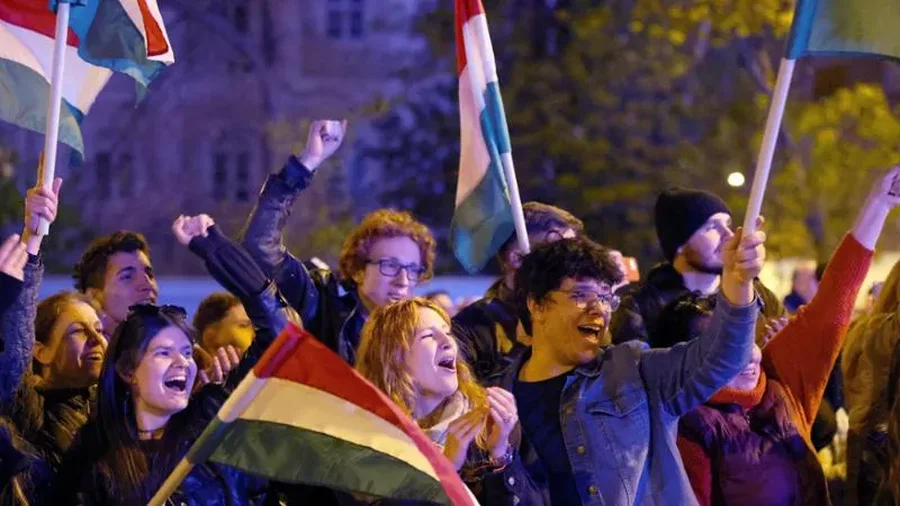
The election result showed that economic sanctions and the rule of law conditionality of funds bore fruit against populism. Hungary proved that the European model can survive the reactionary wave, even when the latter is supported by great powers like Washington, Moscow and Beijing.
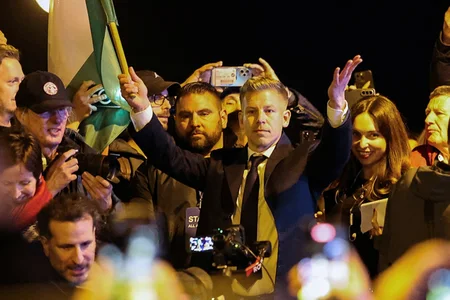
Hungary is turning towards the West, or at least towards the European Union. On the eve of the most anticipated vote in the country, but also abroad, Péter Magyar, leader of the "Tisza" (Respect and Freedom Party), had clearly stated that the parliamentary elections of April 12 represented for his country a choice between "East and West".
On Sunday, his fellow citizens overwhelmingly voted “no” to distancing themselves from Brussels and rejecting Viktor Orbán’s increasingly pronounced rapprochement with Moscow. Of course, the reasons for the illiberal leader’s defeat include the wear and tear of long-term power, high inflation, and growing public impatience with widespread corruption.
And yet, during a fierce election campaign, opponents of that seemingly invincible prime minister revived the old slogan of the 1956 anti-Soviet Budapest revolt: Ruszkik haza! (Russians at home!).
This time, it is Viktor Orbán who is returning home, after 16 years in power. For European Union leaders, this development is a relief. But it should also serve as a broader lesson of primary interest to all EU citizens. Here are 4 lessons to take away from Budapest:
Lesson one: The 2004 enlargement, which welcomed ten new countries, including Hungary, Poland, the Czech Republic, Slovakia and the three Baltic states, was far-sighted. Despite legitimate criticism and unacceptable violations of the rule of law by some populist governments in these member states, there is no doubt that integration has averted the worst.
Without its anchor in the EU, Hungary today would likely be an authoritarian state similar to Alexander Lukashenko's Belarus, and Russian tanks could be much closer to the former Iron Curtain.
Budapest's presence in the EU allowed it to keep alive, albeit somewhat precariously, a democratic and pro-European opposition, the one that triumphed yesterday, just as Donald Tusk's liberals won in Poland in June 2025.
Second lesson: The sanctions imposed - albeit belatedly - proved to be very effective. When in 2022 the European funds intended for Hungary (18 billion euros, or over 7 percent of GDP) were frozen, due to violations of the rule of law, it became much more difficult for the Fidesz leader to continue to "buy" social consensus.
Lesson three: Liberal and democratic Europe should thank Volodymyr Zelensky’s soldiers. For a long time, Viktor Orbán moved skillfully like an acrobat between Brussels and Moscow. Under his rule, without falling into open Russophilia, Hungary — a small Central European nation of just 10 million people and 1 percent of the EU’s GDP — thought it could maximize benefits by taking the best of both worlds.
This game worked until Putin’s Russia invaded Ukraine in February 2022. The unexpected resistance of Ukrainians forced Orbán to come out and take sides, ultimately choosing to support the Kremlin. The result was increasing isolation from Brussels and the subsequent rejection by many Hungarians, who, even without being pro-Ukrainian, saw Moscow as a greater threat than Kiev.
Lesson four: This vote shows that, if no election in Hungary had previously attracted the attention of so many Europeans, the ground had been prepared long before.
A common political forum already exists and the citizens of the “Old Continent” understand well that their fate is linked to that of their neighbors. This was understood by both Orbán’s nationalist supporters (from Marine Le Pen to Giorgia Meloni and Matteo Salvini, to Alice Weidel and Santiago Abascal), as well as by the Europeanists who see in yesterday’s result an opportunity to send a message of stability in the face of the international reactionary wave.
Because Orbán was not simply the leader of a small illiberal democracy. He was the one who founded the third political grouping in the European Parliament, “Patriots for Europe,” and placed himself at the center of that anti-Enlightenment thought that inspired the MAGA movement.
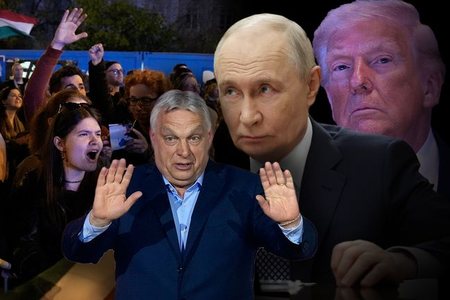
His defeat - despite the open and strong support of the US administration, which sent Vice President JD Vance to attempt to "rescue soldier Orbán", but also the benevolence of Vladimir Putin's Kremlin and Xi Jinping's China - proves that the EU model is capable of resisting those who want its destruction.
The biggest risk for the EU today would be the idea that the danger has been averted and the reactionary wave has been deflated. Undoubtedly, without Moscow's "Trojan Horse" in Brussels, it will be easier to adopt the twentieth package of sanctions against Russia and unblock the 90 billion euro loan for Ukraine.
However, the absolute need is to take further steps towards the EU's strategic autonomy. Since yesterday evening, European leaders can no longer hide behind the pretext of the Hungarian veto to justify their inaction./ Adapted from "Pamphlet" by "La Stampa"




Lini një Përgjigje