


 Shkruar nga Pamfleti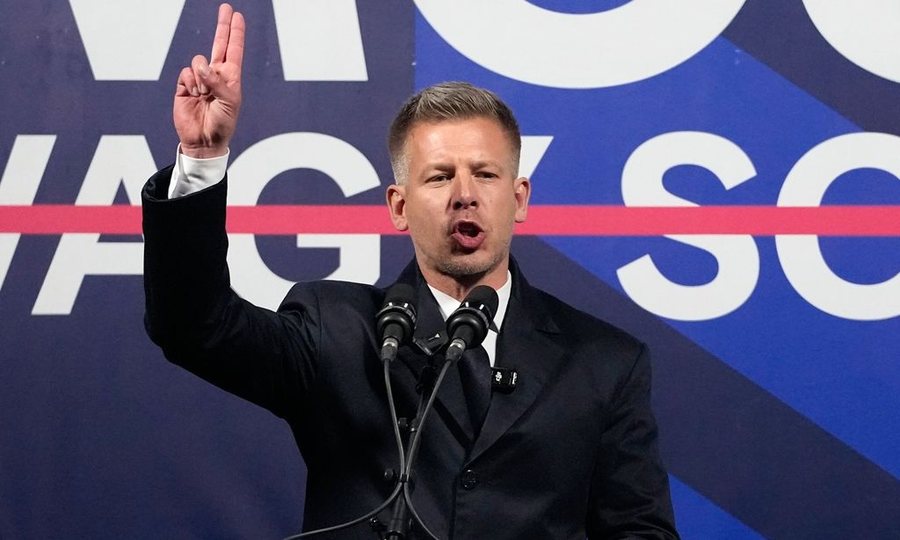
Peter Magyar emerged as the big winner of the most important elections of the year in Europe
In the short time between the announcement and the parliamentary elections, 45-year-old Peter Magyar created a strong and broad-based civic movement that forms the backbone of the Tisza party.
In his election manifesto, he promised to revamp politics in the EU and NATO member state. He declared war on widespread corruption and mismanagement. He said he would restore relations with the EU and Western partners.
Just two years and two months ago, his name was unknown to the general public. In February 2024, Peter Magyar, a previously insignificant official in the ruling Fidesz party, went to the studio of an independent television channel, from where he announced his irreversible separation from the power system of Prime Minister Viktor Orban. He spoke openly about the corruption and intrigues surrounding the Hungarian Prime Minister. The video of the interview has collected 2.8 million views on YouTube.
His words carried political weight because, just a year earlier, his wife had held the post of Justice Minister, Judith Varga. His ex-wife was part of the center of power. Orban had intended to give her a high position. However, her career was ruined by the scandal surrounding the pardon of an accomplice of a pedophile. The way Orban abandoned her, as well as the resigned president Katalin Novak, was the final straw, pushing her to abandon the system.
Peter Magyar comes from a conservative family of lawyers in Budapest. His grandmother, Terez Mandl, was the sister of Ferenc Mandl (1931–2011), the second president of Hungary after the democratic transition of 1989/90. Magyar studied law at the Pázmány Catholic University. He worked as a diplomat for his country in Brussels, headed the Hungarian university scholarship administration from 2018 to 2022, and then held positions in state and quasi-state enterprises.
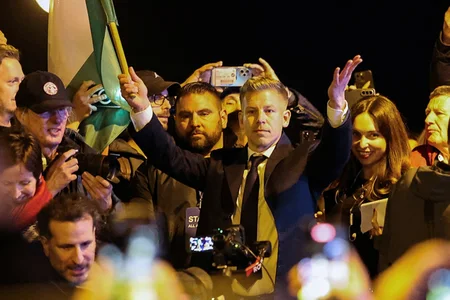
After openly criticizing Orban, he founded Tisza (Party for Respect and Freedom) and launched a tireless election campaign across the country. He visited not only cities, as he did during this election campaign, but also small villages. He presents himself directly, becomes approachable, speaks the language of ordinary people and addresses their concerns and needs, in a country where the economy is stagnant and government power barely allows for individual initiative.
Magyar has a conservative upbringing, but he is not an ideologue. He likes to present himself as a patriot and uses national symbolism without hesitation. However, he is against harsh nationalism and chauvinism.
He plans to enshrine in the constitution that no one can be prime minister more than twice. With his promise of change, Magyar has captivated large sections of the Hungarian population and is now expected to succeed Viktor Orban as head of government after 16 years.




Lini një Përgjigje