


 Shkruar nga Nicholas Vinocur & Erin Doherty
The online survey, conducted by the independent London-based polling company, reveals how trust in the United States among NATO's four key allies has fallen sharply over the past year due to a series of disagreements with Washington...
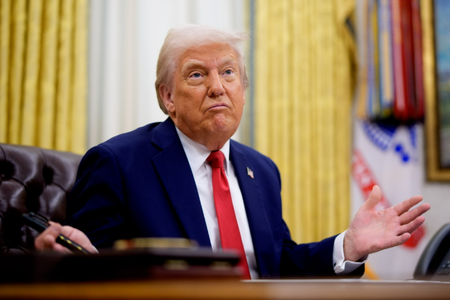
As global leaders gather in Germany for the Munich Security Conference, new results from a Politico poll show that President Donald Trump's efforts to rewrite long-term international relations, particularly in Europe, are alienating their traditionally loyal partners.
The United States' declining reputation is raising new questions about the stability of the global order that has been stable for decades and about the country's strength on the world stage.
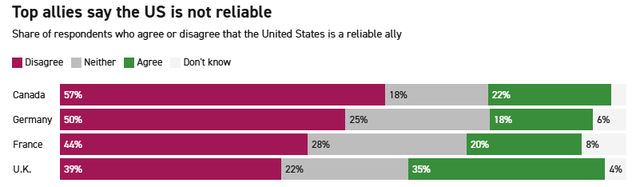
Across all countries surveyed, far more people described the US as an unreliable ally than as a reliable one, including half of adults surveyed in Germany and 57 percent in Canada.
Even in France, the share of people who called the US untrustworthy was more than double the share who said it was trustworthy.
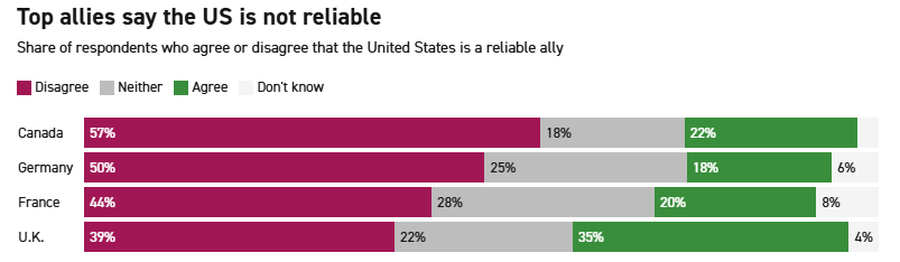
The online survey, conducted by the independent London-based polling company Public First, reveals how trust in the United States among the four key NATO allies has fallen sharply over the past year due to a series of disagreements with Washington.
In the UK, France and Germany, negative perceptions of the US are more important than positive ones on key measures, including whether it defends democracy, shares their values and acts as a reliable ally.
Beginning with US Vice President JD Vance's speech at the Munich Security Conference last year, which shocked his European hosts, relations between Washington and key NATO allies have been rocked by trade disputes, aggressive rhetoric and a Trump-led effort to seize Greenland from the Kingdom of Denmark.
The crises have prompted leaders to warn that relations with the United States have fundamentally changed, with Canadian Prime Minister Mark Carney telling an audience in Davos, Switzerland, in January that "we are in the midst of a disruption, not a transition."
In an interview with several European newspapers published this week, French President Emmanuel Macron sharply criticized what he called "threats and intimidation" from Washington and warned other EU leaders that transatlantic relations are unlikely to return to normal anytime soon.
During the opening ceremony of the Winter Olympics in Milan, Vance was greeted with boos and jeers. The EU's top diplomat, Kaja Kallas, explained the performance by referring to "European pride" and "not so nice" words from the US administration towards Europe.
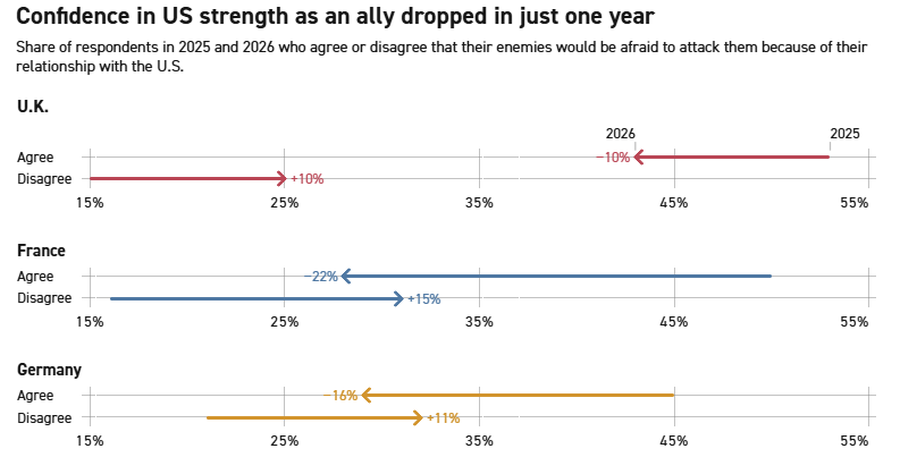
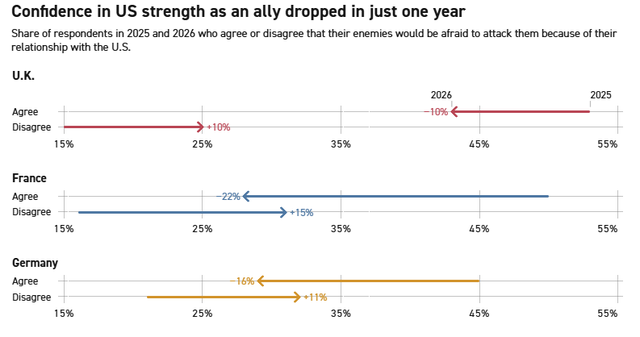
"Last year, the public felt that the US was an unreliable but critical ally, deterring its enemies despite being a bit unpredictable," said Seb Wride, head of polling for Public First.
"But now, far from taking for granted the transatlantic deterrence provided by the NATO alliance, the European public barely believes it exists. The key question for leaders heading to the MSC is how security can be recreated without the US."
Ahead of the high-stakes meeting in Munich, where Secretary of State Marco Rubio will lead a US delegation, the Politico poll further shows that a growing share of respondents in the countries surveyed do not think the United States shares their values or defends democracy, a long-standing American tenet.
In France, only 17 percent of respondents agreed with the statement "the US shares our values" versus 49 percent who disagreed. In Germany, 50 percent of respondents said the United States does not share their values, while only 18 percent said Washington "defends democracy."
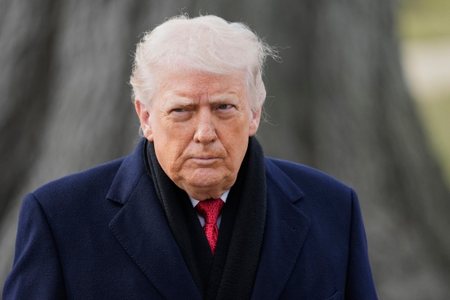
As leaders gather this week, Trump will surely loom large. In preparation for the event, France's Macron said the Trump administration is "openly anti-European."
Yet while adults in key NATO countries have increasingly negative views of the United States, they expressed some hope for the future. In Germany, France and the United Kingdom, majorities said Trump has weakened relations with their countries but that they could recover after he leaves. /Adapted from Politico /



Lini një Përgjigje