


 Shkruar nga Pamfleti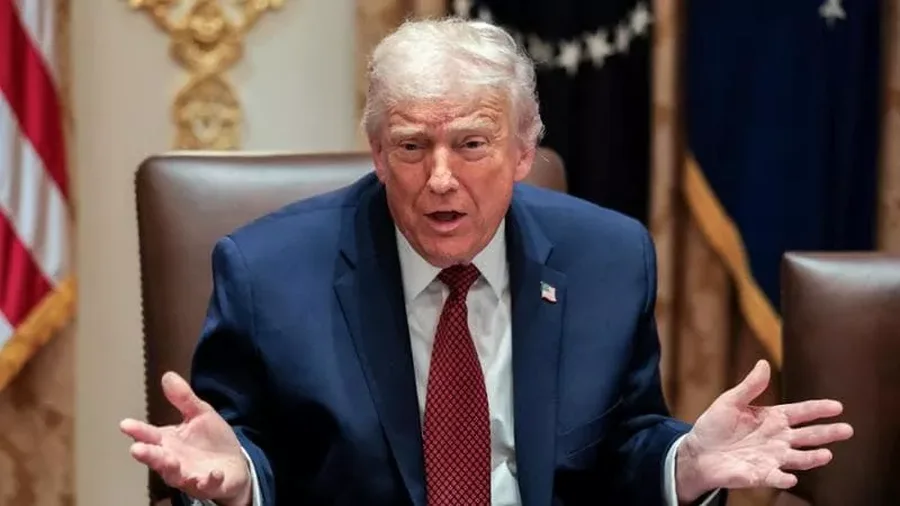
US President Donald Trump is disappointed with Zelensky because he "has not yet read the peace proposal" presented by the United States and with Europe because it is "going in the wrong direction."
It is not clear whether the White House chief was referring to the original 28-point document, written in Miami by his envoy Steve Witkoff under the dictation of Moscow's envoy Kirill Dmitriev, or the revised version, reduced to 19 paragraphs after the Geneva summit, which Putin has so far rejected. The intent, however, seems clear, especially since he simultaneously emphasized that Russia would be ready to sign it.
On Sunday, Trump attended the Kennedy Center Honors. He stopped to speak with reporters, who asked if he had any news on the war, following Witkoff and his son-in-law Jared Kushner’s visit to the Kremlin to meet with Vladimir Putin, and a weekend of talks in Miami with the Ukrainian delegation. The starting point was the 28-point plan, which has since been revised and returned to the Kremlin, leaving open the territorial issues, security guarantees and the prospect of Kiev joining NATO. “We are talking to Putin and the Ukrainian leaders, including Zelensky. I have to say,” Trump added, “I am a little disappointed that Zelensky has not read the proposal yet. I think Russia is in agreement, but I am not sure whether Zelensky is. His people like the plan, but I don’t know about it.”
It seems highly unlikely that the Ukrainian leader would not have time to consider the potential deal, and it is unclear who his supporters are.
The signal, however, is clear: the president sees his allies as an obstacle to peace, rather than the person who ordered the aggression and illegal occupation of their neighboring country.
The confirmation came this afternoon, when Trump shared a New York Post article in Truth magazine titled "Powerless Europeans Can't Help But Be Angry as Trump Rightly Excludes Them from Ukraine Deal."
The article argues that the Old Continent's blocking of the deal is "a gift to Putin. The adults negotiated this proposal for Ukraine while ignoring the Europeans. Of course the Europeans feel humiliated; the United States and Russia are shaping the future of Europe without consulting them. But if you act like a child, you will be treated like one." Trump shared this because that is his opinion, as evidenced by the new National Security Strategy.
A little later, as he was hosting farmers at the White House, to whom he will offer $12 billion in subsidies to offset the damage caused by the tariffs, reporters asked him if he would remain committed to seeking peace in Ukraine, given statements by his son, Donald Jr., that he was ready to shift the blame. His answer was vague and standard: “I want the slaughter to end. Biden had given $350 billion, I gave nothing. Now we have this huge, unresolved problem: people are dying, Russian and Ukrainian soldiers, 27,000 in the last month alone. Military personnel, but also civilians, as happened in Kiev. I want it to end. We sell the equipment at full price to the Europeans, who then pass it on to Kiev. We are not spending money, we are spending time, on humanitarian grounds, to see if we can stop the slaughter.”
Then they asked him about Brussels' fine on X, which became another opportunity to complain about the EU: "Europe needs to be careful. It does a lot of things that go in the wrong direction for its people." So the engagement continues, but with the clarification that the blame for the failed deal lies with the allies, not with the former Cold War enemy who attacked them.


Lini një Përgjigje