


 Shkruar nga Pamfleti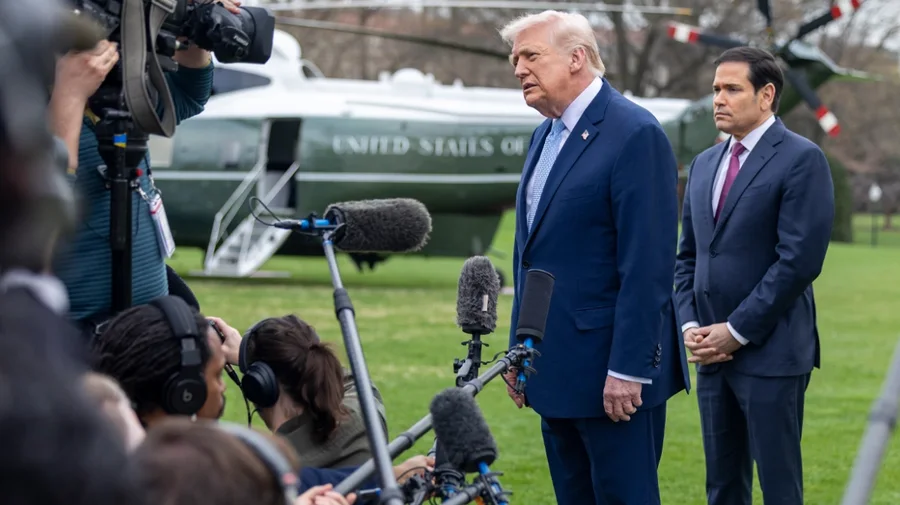
United States President Donald Trump is entering the third week of conflict with Iran, as he faces a situation that is becoming increasingly difficult to control.
Global energy prices have risen sharply, while the United States appears isolated from some of its traditional allies. At the same time, new military deployments are being prepared, despite Trump's initial pledges of a "short operation."
Aaron David Miller, a former Middle East negotiator, believes the US president is in a complicated situation. " Trump is locked in a war with Iran and is having difficulty finding a way out," he said, citing this as the main source of his dissatisfaction.
On the other hand, a White House official defended the progress of the military operations, emphasizing that they have yielded concrete results. According to him, some of Iran's top leaders have been neutralized, a large part of the naval fleet has been destroyed, and ballistic missile capabilities have been significantly limited. " This constitutes an indisputable military success ," he declared.
Analysts note that Trump is at a critical juncture, without a clear strategic direction. One option remains to escalate the attacks further, including by seizing energy hubs like Kharg Island or deploying forces along the Iranian coast to strike missile launchers. However, such a move could lead to a long-term military commitment and face opposition from the American public.
The other alternative would be to declare "victory" and withdraw, but that could disappoint allies in the Persian Gulf.
They would be left facing a weakened but still dangerous Iran, capable of influencing sea lanes and potentially pursuing the development of nuclear weapons, an accusation Tehran denies.
A Reuters analysis says the conflict is also testing support for Trump within his political base, the MAGA movement. Although support remains, analysts warn that continued rising fuel prices and deepening military involvement could weaken it.



Lini një Përgjigje