


 Shkruar nga Pamfleti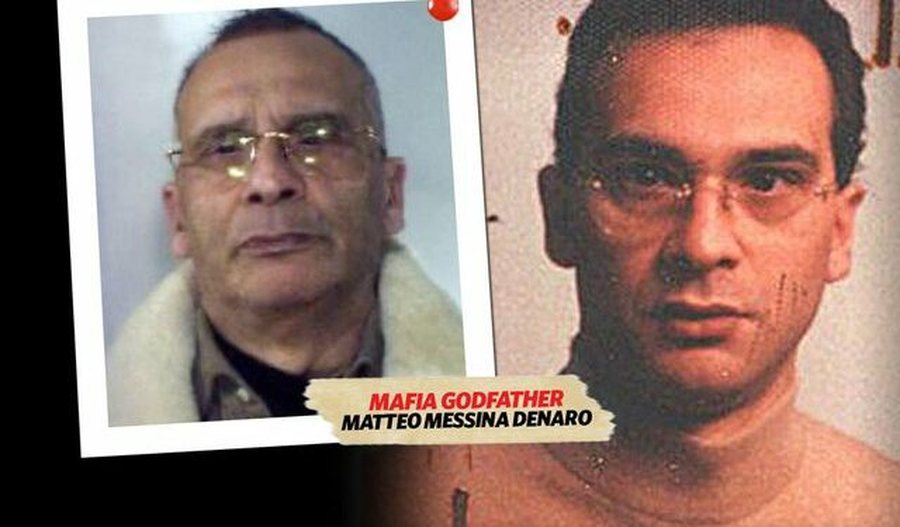
Matteo Messina Denaro, the "last godfather" of the Sicilian mafia, who was accused of orchestrating some of the most horrific crimes committed by Cosa Nostra, has died after a long illness.
Italian news agency Ansa reported his death on Sunday night. The mayor of the central Italian city of L'Aquila, Pierluigi Biondi, confirmed Denaro's death in hospital "after a worsening of his illness".
His death "ends a history of violence and blood", Biondi said, thanking prison and hospital staff for their "professionalism and humanity". It was "the epilogue of a life lived without regret, a painful chapter in the recent history of our nation."
In January, 61-year-old Denaro, who had been in hiding since 1993, was arrested at a private clinic in Palermo, where he was receiving treatment for a tumor under the alias Andrea Bonafede.
In August, he was transferred from L'Aquila maximum security prison and admitted to the San Salvatore city hospital after his health had deteriorated, said his lawyer, Alessandro Cerella.
As of Friday night, Denaro was reported to be in an "irreversible coma." In recent days, his daughter, whom he met for the first time while in prison in April, has been at his bedside, Ansa reported.
As the Guardian reports, preparations had already begun to bury him near the grave of his father, Don Ciccio, who was also the head of the local "clan", according to the Corriere della Sera newspaper.
Denaro was born in Castelvetrano, Sicily in 1962. He thrived in the family business, building a multi-billion euro illegal empire in the waste, wind energy and retail sectors.
In 2002, he was sentenced in absentia to life imprisonment for murdering or ordering the murder of dozens of people.
While on the run, the mobster maintained his lavish lifestyle thanks to a series of financiers that prosecutors said included politicians and businessmen. He was known to wear expensive suits, Rolex and Ray-Ban sunglasses.
The search to find Denaro has been complicated by the almost complete lack of recent photographs. With only a few ID photos taken in the late 1980s and early 90s, Italian authorities reconstructed his likeness digitally, using the latest computer technology and information provided by Mafia defectors.
Over the years, dozens of people have been arrested in his place for cases of mistaken identity. In 2019, Carabinieri military police raided a Sicilian hospital to arrest a man from Castelvetrano who was recovering in the neurological unit.
For 30 years, every time the researchers seemed to be getting closer to their goal, Denaro would disappear, only to reappear somewhere else.
Police say he spent most of 2022 hiding in Campobello di Mazara, a town of about 11,000 not far from his mother's home in western Sicily. He communicated with other mobsters through "pizzini", small letters written with codes distributed by various people, some of whom were caught by the police.
Before the arrest, the carabinieri received an important piece of information: on January 16, around 8 am, the suspect would return to the clinic to undergo treatment. After his arrest, Denaro was transferred to a maximum security prison in L'Aquila, where he continued his cancer treatment.
"You only arrested me because of my illness," Denaro told the judges who questioned him after his arrest.
Ashtu si bosët e tjerë të mafias siciliane, Denaro ka refuzuar gjithmonë të bashkëpunojë me autoritetet dhe të ekspozojë krimet e Cosa Nostra-s. Sipas informatorëve dhe prokurorëve të turmës, ai mbante çelësin e disa prej vrasjeve më të tmerrshme të kryera nga mafia siciliane, duke përfshirë shpërthimet me bomba që vranë gjyqtarët antimafia, Giovanni Falcone dhe Paolo Borsellino.
Hetuesit tani kanë frikë se kumbari i fundit i mafies siciliane i ka marrë këto sekrete në varrin e tij. “Ajo që ai tha ka ndodhur – ai vetëm iu dorëzua sëmundjes . Nëse ai nuk do të kishte kancer, do të kishte qenë e vështirë për të që të ishte arrestuar”, tha vëllai i Paolo Borsellino, Salvatore.
Enzo Alfano, the mayor of Castelvetrano, said: Borso Borsola has nothing to do with this case: "A man died who did so much harm to his country. It will take decades to put a cultural end to a mentality, a culture - sometimes rampant - of lawlessness, of impunity, which he, his followers and others before him had cultivated for a long time."




Lini një Përgjigje