


 Shkruar nga Pamfleti
General Clark says that today it is unfair that there is more pressure on Kosovo than on Serbia
25 years after NATO intervened to stop ethnic cleansing in Kosovo, General Wesley Clark says he is proud of the operation he led and that the course of events that culminated in Kosovo's independence was dictated by the brutality of Serbian forces.
General Clark says in an interview for the Voice of America on the occasion of this anniversary, that today it is unfair that there is more pressure on Kosovo than on Serbia, but he emphasizes that the two countries must find a way to coexist. In the interview with colleague Keida Kostreci, he says that many of the attitudes of the West are determined by what is happening thousands of kilometers away, in the war between Russia and Ukraine.
Voice of America: General Clark, a quarter of a century has passed since NATO intervened in Kosovo to stop ethnic cleansing. You were the top NATO commander at the time, (directed the NATO bombing campaign against Serbian forces in 1999), what are your reflections now, 25 years later?
General Wesley Clark: I am proud of the actions that NATO took at that time to end the campaign of ethnic cleansing against Kosovo Albanians. NATO acted using the minimum of force, taking every precaution to avoid harming innocent civilians, and still accomplished the goal of ending ethnic cleansing.
VOA: General Clark, at that time there was a lot of debate internationally, as humanitarian interventions were not something that happened often. In retrospect, how do you see today this type of intervention in general, as a matter of international relations?
General Wesley Clark: I would say it was a necessary intervention that was carried out strictly (specifically) for humanitarian purposes and it accomplished its mission.
Voice of America: When you see Kosovo today, is it the way you imagined it would be 25 years ago?
General Wesley Clark: What we knew at the beginning of the campaign was that we were going to engage NATO forces. At that time we did not know that the Serbs would leave completely. It was never our intention to divide Kosovo in any way, or to influence it to become independent.
But the actions of the Serbian army and police during the campaign, the merciless killing of civilians, the attempts to destroy the properties of the Kosovo Albanians, the brutal behavior of neighbor against neighbor in this campaign, made it really impossible for the Serbs to stay.
That is why NATO made it one of its objectives that the Serbian forces should leave. Then Kosovo was supervised by internationals, under the guidance of the UN, and then decided that it should be independent.
But to tell the truth, the situation in the region continues to be unacceptable, because Serbia continues not to recognize Kosovo's independence, continues to interfere within it, and the political pressure on Kosovo, as a smaller country, is very heavy and difficult.
VOA: General Clark, let's talk about the current situation that you referred to and especially the relationship between the United States and Kosovo. Kosovo has been one of the most pro-American countries and this is largely thanks to the intervention that you led then. But now, relations between the United States and Kosovo, or at least between the two governments, are at their lowest point. What is your opinion about this? Why have they reached this point and what can be done to overcome this situation?
General Wesley Clark: I see things from the outside, I'm not on the inside, so it's a little difficult to comment on that. But it is important to understand that two states that are side by side, Kosovo and Serbia, cannot advance relations if they continue to be involved in conflict between them. Serbia has extended its long arms inside Kosovo for a long time, north of the Iber River. Even when I was a NATO commander, there was a campaign of ethnic cleansing by the Serbs against the Albanians north of the Iber River. It was wrong. But it continued. It seems clear that the Serbian intervention still continues.
But when the United States asks the parties to cooperate, I think they should exert the highest pressure on Mr. Vučić in Serbia. The reason for this is that Serbia is the largest, most powerful country and has the greatest possibility for flexibility in this case, the greatest possibilities for compromise. It seems clear that Serbia has not yet accepted that Kosovo is independent today. And one must make peace with this idea. It is a historical consequence of all the tensions and a long enmity.
I will never forget when I was with President Milosevic in November 1998 and we were signing the final agreement of November '98 which provided for the withdrawal of the excessive Serbian forces from Kosovo, which the UN Security Council Resolution required to leave Kosovo.
President Milosevic said unequivocally: "I know how to deal with these Albanians." We have done it before," he said. I asked him, how did you act? He told me "we kill them all".
Në këtë kuptim, i vetmi rezultat për këto tensione historike me rrënjë të thella, ishte ndarja në dy shtete. Dhe tani, dy shtetet, duhet të gjejnë udhën për të bashkëjetuar, për të përparuar, për të bashkëpunuar me qëllim përmirësimin e gjendjes ekonomike të qytetarëve të tyre. Kjo është një sfidë, është një sfidë shumë e vështirë që duhet të kapërcehet. Kujtimet janë ende të freskëta për të dyja palët dhe mendoj se kjo është diçka që nuk mund të bëhet e sforcuar, duhet të vijë natyrshëm.
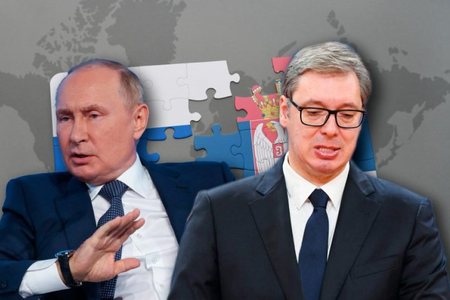
Problemi është se veprimet e Rusisë ndaj Ukrainës e kanë vështirësuar edhe më tej situatën, sepse gjithkush e kupton se Serbia ka një lidhje historike me Rusinë dhe Rusia po e përdor Serbinë për të përgatitur terrenin që nëse shënon sukses në Ukrainë, të shkaktojë kaos më të madh përsëri në Ballkanin Perëndimor. Kjo dihet.
Zoti Vuçiç duket i dyzuar mes dy alternativave: Të rreshtohet në krah të Perëndimit apo të mbajë marrëdhënien historike vëllazërore me Rusinë. Mesa duket ai po përpiqet t’i ketë të dyja. Së paku kështu duket nga jashtë. Po duke e parë nga jashtë, duket se populli i Kosovës, një vend më i vogël, varet nga mbështetja e huaj, nga Shtetet e Bashkuara dhe gjetkë për të mbijetuar dhe për të përmirësuar gjendjen ekonomike. Në një fare mënyre duhet të tregohemi të duruar. Duhet të vazhdojmë përpjekjet mbi këtë situatë. Duhet të kuptojmë se zgjidhja e çështjes së kufirit mes Kosovës dhe Serbisë nuk është e pavaruar nga rezultati i luftës mes Ukrainës dhe Rusisë.
Zëri i Amerikës: Gjeneral Clark, ju përmendët kontekstin e ri gjeopolitik pas agresionit rus ndaj Ukrainës. Duke marrë parasysh se ka kritikë të cilët thonë se është pikërisht kjo arsyeja se përse po bëhet më shumë trysni ndaj Kosovës, në mënyrë që të mos shtohen sfidat, cili është mendimi juaj. A bini dakord me këto qëndrime?
Gjeneral Wesley Clark: Mendoj se trysnia ndaj Kosovës nisi gjatë administratës së Presidentit Trump, ku të dërguarit e Shteteve të Bashkuara në Ballkan donin të shënonin një sukses diplomatik. Dhe pikërisht aty nisi trysnia. Tani, me luftën (në Ukrainë), sigurisht që është normale dhe e natyrshme që Perëndimi kërkon ta shohë të zgjidhur këtë çështje, ta shohë Serbinë plotësisht në kampin e Perëndimit dhe të lidhur me Bashkimin Evropian në mënyrën më pozitive të mundshme. Por pikërisht për shkak të tensioneve mes Rusisë dhe Ukrainës kjo ka pak gjasë që të ndodhë. Problemet mes Kosovës dhe Serbisë janë të lidhura me atë që ndodh mes Rusisë dhe Ukrainës. Dhe këto probleme pasqyrojnë tensionet më të mëdha gjeopolitike në rajon.
Zëri i Amerikës: Gjeneral Clark, ju e njihni ambasadorin amerikan në Serbi, Chris Hill prej një kohe të gjatë, që nga koha e ndërhyrjes (së NATO-s). Dy ditë më pare ai tha se tani “Serbia është më afër me NATO-n sesa Kosova. Kemi patur stërvitje të përbashkëta dhe shumë gjera më ushtrinë serbe. Tani punojmë shumë më shumë së bashku (me Serbinë) sesa me UÇK-në apo çfarëdo që ka dalë prej saj”. Cili është mendimi juaj për këtë deklaratë?
Gjenerali Wesley Clark: Mendoj se ambasadori Hill është një diplomat i shkëlqyer. E marr atë që thotë ashtu siç e thotë.
Zëri i Amerikës: A mund të shpreheni më konkretisht?
Gjenerali Wesley Clark: Mendoj se ajë që thotë ai është absolutisht e vërtetë.
Zëri i Amerikës: Që Shtetet e Bashkuara kanë marrëdhënie më të mira me ushtrinë serbe se sa me Kosovën?
Gjenerali Wesley Clark: Nuk mund të flas me detaje sepse nuk jam pjesë e asaj marrëdhënieje. Unë i shoh gjërat nga jashtë. Por ambasadori Hill duket se ka bërë një punë të mirë për të forcuar këtë marrëdhënie dhe për të çuar përpara raportet mes Shteteve të Bashkuara dhe Serbisë. Dhe kjo është detyra e tij si ambasador. Nëse kjo është (një marrëdhënie) më e fortë apo më e dobët se sa marrëdhënia e Kosovës me Shtetet e Bashkuara dhe NATO-n, këtë nuk mund ta them, sepse i shoh gjërat nga jashtë.
Zëri i Amerikës: Por kjo në fakt bie ndesh me qëndrimin e vetë Beogradit që nuk ka shprehur gatishmëri për të qenë anëtar i NATO-s ose për të qenë më pranë aleancës, apo jo?
Gjenerali Wesley Clark: Mendoj se kjo është një përpjekje për ta çuar Beogradin në drejtimin e duhur. Shpresoj që ambasadori të arrijë sukses në atë që po bën, sepse është shumë e rëndësishme, do të ishte një arritje e jashtëzakonshme.
Zëri i Amerikës: Të kthehemi pak tek qëndrimi i qeverisë së Kosovës. Ju thatë se po ushtrohet më shumë trysni ndaj Kosovës, por a mundet që Kosova dhe veçanërisht drejtuesit e saj të jenë më konstruktivë, përsa u takon përpjekjeve për të bashkëpunuar drejt normalizimit të marrëdhënieve mes dy vendeve?
Gjeneral Wesley Clark: Si dikush që i sheh këto çështje nga jashtë, nuk mund të jap një mendim të detajuar. E vlerësoj dhe është nder që më kërkoni një koment mbi këtë, por nuk mundem. Nuk mund të jap asnjë koment të dobishëm mbi këtë sepse nuk jam në brendësi të këtyre diskutimeve dhe do të ishte e gabuar që të guxoja të jepja një opinion.
Zëri i Amerikës: Në raportin e fundit të komunitetit amerikan të zbulimit mbi rreziqet globale, për Ballkanin, përmendet pikërisht situata mes Kosovës dhe Serbisë si edhe Bosnje-Hervegovina si pika ku mund të shpërthejnë konflikte. Kjo në mesin e tensioneve që u acaruan vitin e kaluar, pas sulmit në veri të Kosovës. Si i shihni ju këto shqetësime mbi gjendjen e sigurisë duke mbajtur parasysh ato që kanë ndodhur në këto muajt e fundit?
Gjenerali Wesley Clark: Mendoj se është një situatë që duhet ndjekur me kujdes. Jam i sigurt që ambasadori Hill po bën gjithçka që mundet që ta shohë situatën nga perspektiva amerikane. Shpresoj që NATO-ja po bën gjithçka që mundet për të qenë në gatishmëri dhe për të marrë masat për të parandaluar çdo lloj përshkallëzimi në anën e Kosovës. Sikurse e thashë këto tensione ndizen nga përpjekjet ruse. Rusia kërkon të ndezë mosmarrëveshje dhe kaos në rajon dhe e gjitha puna që kemi bërë në Ballkan nuk do të ketë rezultat të frytshëm nëse nuk trajtojmë çështjen mes Ukrainës dhe Rusisë.
Voice of America: Do you think that in this case, it is necessary to have a change of tactics and strategy regarding the way the United States and the West in general approach Kosovo and Serbia?
General Wesley Clark: I don't think I can comment on the current strategy right now. It's not possible because I'm not around enough to give a helpful comment. I think that whatever strategy we implement, it is again hostage to what is happening 1,600 or 1,300 kilometers to the east of Ukraine, in the Donbass region, or in the conflict zone, and what Russia's intentions are. This is what determines the positions of Europe, on the one hand it is pushing Europe to want to solve the crisis between Serbia and Kosovo and on the other hand making it more difficult to achieve such a thing.
VOA: Do you think this is right for the future of the process between the two countries?
General Wesley Clark: I think the process will continue for some time, and I think it's important to keep this process alive and continue the dialogue. If we had a significant breakthrough, that would be great, but I don't foresee it. Therefore, as I said, this is a secondary issue in Europe and in many respects it depends on what will happen between Russia and Ukraine.
VOA: You mentioned history earlier. There is a tendency, usually, among diplomats and politicians to forget history, or to put it behind them, when they want to solve a current issue.
It seems that this is also happening with Kosovo and Serbia and with diplomats who are more involved in trying to solve the issue they have on the table, not forgetting it, but somehow ignoring or neglecting the historical context. Is it possible to have issues resolved without addressing past problems?
General Wesley Clark: I'm sure there are different perspectives on what you're asking. If I were to give a general answer, I would say that specific aspects should be addressed on specific agreements that are on the table. But I certainly don't want to give a general answer to that. History matters. Of course, the sensitivity of the people is also important. The loss of loved ones, the humiliations they have suffered, the fear, everything matters. But it is the duty of the diplomat, as much as possible, to find the common interest and to look towards the future, to push these interests forward. And I'm sure no one in the American diplomatic service can do that better than Ambassador Chris Hill./VOA




Lini një Përgjigje