


 Shkruar nga Nils Adler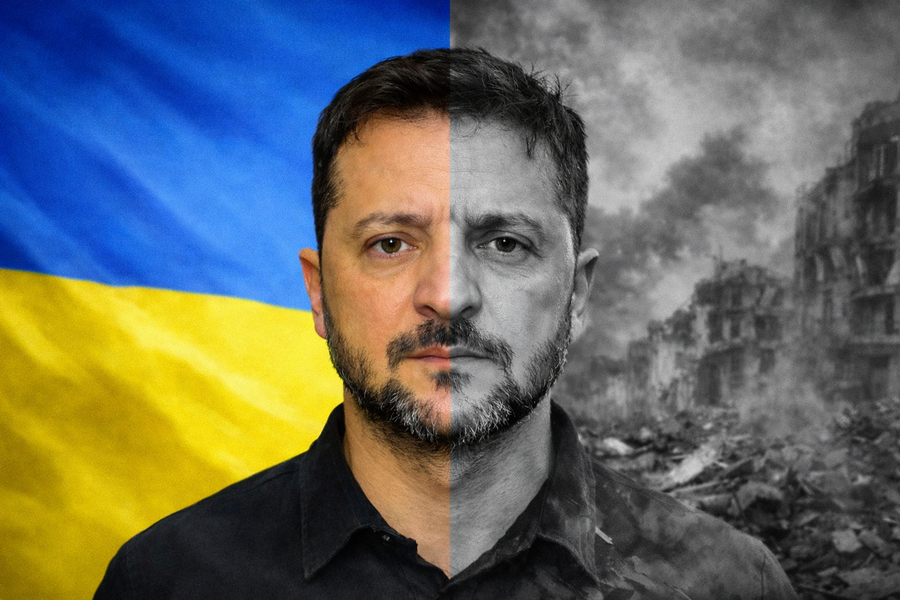
Russia's full-scale invasion has rallied Ukrainians around the president, but a corruption scandal has dented his popularity...
Volodymyr Zelensky’s fortunes have changed since he was elected as an outsider in the fight against corruption in 2019. In the early months of Russia’s full-scale invasion, his defiance and image as a common man won him global acclaim and overwhelming support at home. But that unity, worn down by four years of full-scale war, has given way to a more complex atmosphere.
Now, while many Ukrainians still support him as an international figure, concerns about governance and corruption are reshaping his image domestically.
-From Messiah to Pariah
In 2019, when Zelensky ran for president, he was a popular comedic actor, best known for his role as a school teacher who wakes up to discover that he has been elected head of state after a video of him complaining about corruption, secretly recorded by his students, goes viral.
His campaign used much of the same anti-corruption rhetoric as his on-screen character, positioning himself as an outsider to the entrenched oligarchic networks that dominated Ukrainian politics.
This was something that appealed to voters disillusioned with the status quo, and he won a landslide victory, winning 73 percent of the vote.
After Zelenskyy came to power, the realities of governance began to erode his image as a common man, as he first faced an energy crisis and then the impact of the global COVID pandemic.
In December 2021, two months before the war began, his popularity was just 31 percent, according to the International Institute of Sociology in Kiev.
It's a cycle that Peter Dickinson, the British publisher of Business Ukraine magazine and editor of the Atlantic Council's UkraineAlert service, sees as common in Ukrainian politics.
"Ukrainian democracy is very vibrant and very dynamic, but also very immature in many ways, often resembling a popularity contest in high school. Politics revolves around individuals, not institutions ," he says.
Leaders are initially embraced as national saviors, only to be quickly dismissed when expectations for rapid change are not met, something he called the “Messiah to Outcast” effect.
-Ordinary wartime president
On February 24, 2022, Russia invaded Ukraine and overnight, Zelensky became a wartime president. Wearing a green everyday military shirt, he addressed the nation in a series of self-filmed videos posted on social media.
Fjalimet e tij plot pasion i nxitën ukrainasit të merrnin armët dhe refuzimi i tij për t'u larguar nga Ukraina, pavarësisht paralajmërimeve nga Shtetet e Bashkuara, i fitoi atij lëvdata brenda dhe jashtë vendit. Vlerësimi i tij i miratimit u rrit ndjeshëm, duke arritur në 91 përqind në javët e para të pushtimit.
Disa njerëz që Al Jazeera intervistoi në javët para pushtimit në shkallë të plotë, të cilët kishin qenë kritikë ndaj presidentit, ndryshuan mendje në javët e para.
-Pjesë e institucionit
Megjithatë, që atëherë, presidenti ukrainas ka kaluar më pak kohë në rrugë dhe më shumë kohë në Pallatin Presidencial dhe në udhëtime diplomatike, ndërsa kërkon të sigurojë mbështetje ndërkombëtare.
Në një anketë të dhjetorit, Instituti Ndërkombëtar i Sociologjisë i Kievit zbuloi se ndërsa 61 përqind e ukrainasve i besojnë Zelenskyt, 32 përqind nuk e besojnë. Disa besojnë se ai do ta kishte të vështirë të rizgjidhej në një votim pas luftës. Dickinson tha se kjo është pjesërisht për shkak të skandaleve të korrupsionit që përfshijnë bashkëpunëtorët e tij dhe perceptimit se ai po përqendron pushtetin dhe po përdor kushtet e kohës së luftës për të zgjeruar autoritetin presidencial.
Zelensky po përballet me presion në rritje nga Uashingtoni për të organizuar zgjedhje kombëtare në vitin 2026, por kjo do të kërkonte ndryshime ligjore dhe kushtetuese sipas rregullave të ligjit ushtarak të kohës së luftës në vend. Ditët e fundit, Zelensky ka deklaruar se është “gati” të zhvillojë zgjedhje, për sa kohë që Uashingtoni dhe, ndoshta, Brukseli mund të sigurojnë sigurinë e tij.
Në fund të vitit 2025, Ukraina u trondit nga një skandal i madh korrupsioni, duke shkaktuar kërkime dhe arrestime që përfshinin figura të larta dhe duke nxitur shqyrtimin e rrethit të ngushtë të Zelensky-t, përfshirë shefin e kabinetit prej shumë kohësh, Andriy Yermak, i cili dha dorëheqjen.
“Ukrainasit janë shumë, shumë cinikë gjithsesi kur bëhet fjalë për korrupsionin politik, kështu që ishte një optikë katastrofike për të që miqtë e tij personalë, të cilët i kishte emëruar në role të larta, të përfshiheshin në një skandal”, tha Dickinson.
Ai shtoi se skandali i fundit përqendrohet rreth sektorit të energjisë, gjë që është veçanërisht tronditëse për ukrainasit, duke pasur parasysh se sulmet e Rusisë ndaj infrastrukturës kanë lënë miliona njerëz pa energji elektrike, ujë apo ngrohje në kushte të ftohta.
“Njerëzit dikur mendonin se ai ishte njeriu i zakonshëm në rrugë, por tani ai është pjesë e establishmentit”, tha Dickinson.
Amina Ismailova, një menaxhere në një kompani tekstili në Kharkiv, në verilindje të Ukrainës, i tha Al Jazeera se ajo ka bindjen se besimi tek Zelensky është më i ulët nga sa sugjerojnë sondazhet.
"While many soldiers and veterans are not being paid or receiving adequate health care, politicians are benefiting from corruption schemes, something that is difficult for people to accept ," she said.
The problem, Ismailova added, is the lack of a viable alternative. Valerii Zaluzhnyi, Ukraine's ambassador to the United Kingdom, was a name mentioned by some, although the former head of Ukraine's military has never announced political ambitions.
Zaluzhnyi, known as the “Iron General,” enjoys the image of a war hero and military mind, and Zelensky’s decision in early 2024 to “renew leadership” and send him to the United Kingdom raised suspicions that he saw him as a potential threat to his presidency.
-Rally about the flag effect
But despite the current domestic atmosphere, many Ukrainians still support Zelensky as a wartime leader.
Dickinson said Zelensky's response to US President Donald Trump in their tense meeting in the Oval Office in February 2025, in which the Ukrainian president was seen as being pressured or belittled by Trump, sparked a patriotic surge within Ukraine.
Polls at the time showed a sudden rise in his approval ratings. Many people thought that when Zelensky was attacked, Ukraine itself was being attacked, Dickinson said. / Adapted from “Pamphlet” by “Al Jazeera”



Lini një Përgjigje