


 Shkruar nga Pamfleti
An intelligence tip about Ali Khamenei's location prompted Donald Trump to order the attack after a phone call with Benjamin Netanyahu, according to exclusive reporting by Axios.
Referring to reporting by Marc Caputo and Barak Ravid for Axios
Israeli Prime Minister Benjamin Netanyahu called US President Donald Trump on Monday, February 23, with information that, according to three sources briefed on the conversation, changed the course of events in the Middle East. Netanyahu told Trump that Iran's Supreme Leader Ali Khamenei and his top advisers would gather on Saturday morning at a single location in Tehran. According to Israeli intelligence, a single air strike could eliminate them all.
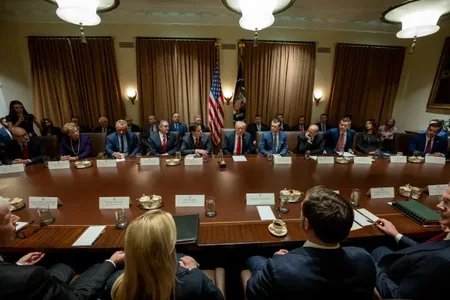
The call took place in the Situation Room at the White House and had not been made public until now. According to Axios, this conversation became the decisive moment that led to war with Iran. It also explains the question that many American lawmakers and world leaders have been asking since the bombings began: Why now.
According to American and Israeli officials, Trump was already inclined to strike Iran. He had not yet decided on the timing of the operation. Information about Khamenei's presence in a single location pushed the decision towards immediate action.
The Feb. 23 call was part of intensive coordination between the two leaders in the two months leading up to the war. According to officials, Trump and Netanyahu met twice and spoke on the phone 15 times during that period. The U.S. and Israel had also discussed an attack a week earlier, but the operation was postponed due to intelligence and bad weather.
Trump ordered the CIA to immediately verify the information provided by Israeli military intelligence. The first check confirmed that the report of the Khamenei meeting was credible. Preparations were accelerated, but Trump decided to keep a low profile publicly so as not to alarm the Iranian leadership before the operation.
On Thursday, the CIA fully confirmed that the Iranian regime’s top targets would be in the same location. On the same day, two of Trump’s envoys, Jared Kushner and Steve Witkoff, called from Geneva after negotiations with Iranian officials and reported that diplomacy had failed.
After this moment, according to American sources, Trump reached two conclusions. The intelligence information was accurate. The negotiations had no prospects.
At 3:38 p.m. Washington time on Friday, Trump gave the final order for the attack. About eleven hours later, the bombers struck targets in Tehran. According to Axios, the Iranian supreme leader was killed and the war began.
US officials say Trump considered Netanyahu a close partner on the Iranian issue, but they stress that the US president wanted to exhaust diplomatic options first. One official described the situation this way. One part of the administration was negotiating with Iran, while another part was planning the military operation with Israel.
US Secretary of State Marco Rubio later said the operation would happen anyway and that it was just a matter of timing. He said the weekend created a unique opportunity to act against the Iranian threat.
According to some Israeli officials, Trump had wanted to strike Iran even earlier, in early January. Netanyahu had requested the operation be postponed for tactical reasons. The original plan called for an attack in late March or early April to build public support in the US.
But when intelligence indicated that Khamenei and his entourage would be in one place, the deadline was accelerated. The White House found itself justifying war after the bombs had already fallen, not before.
Meanwhile, the fact that the operation was kept secret left many American citizens stranded in the region as Iran launched counterattacks in the Persian Gulf. The State Department organized an emergency evacuation for more than 1,500 Americans who requested assistance in leaving.
Israeli Ambassador to Washington Yechiel Leiter declined to comment on the details of the February 23 call, but said the US and Israel have been cooperating closely for a year in the face of the Iranian threat.
Trump also rejected claims that the decision to go to war was dictated by Israel. He stated that he thought Iran would strike first and that the decision to attack was his. According to him, if there had been pressure, he could have gone in the opposite direction.


Lini një Përgjigje