


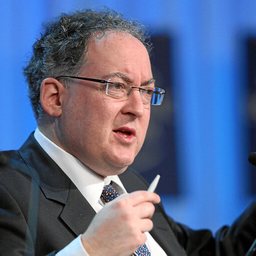
 Shkruar nga Gideon Rachman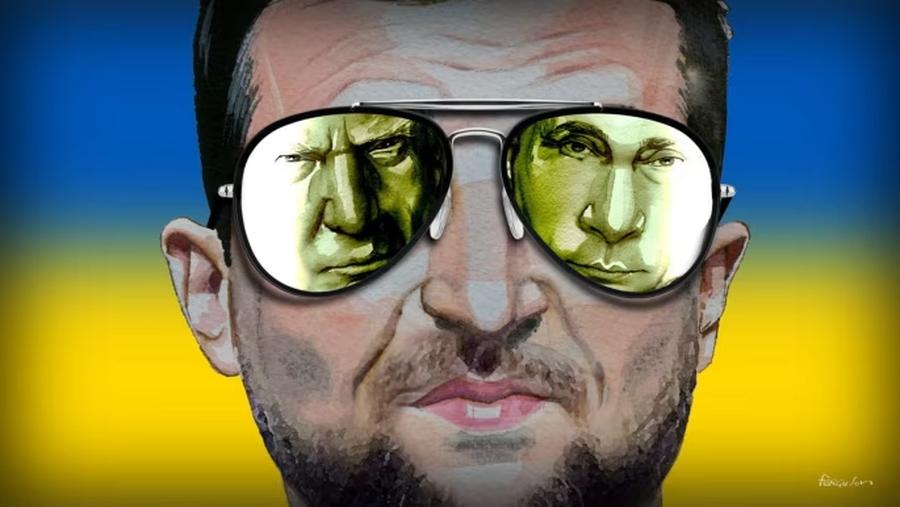
It is impossible for Zelensky to accept the loss of any territory. This would jeopardize Ukraine's future security, but also his own political survival.
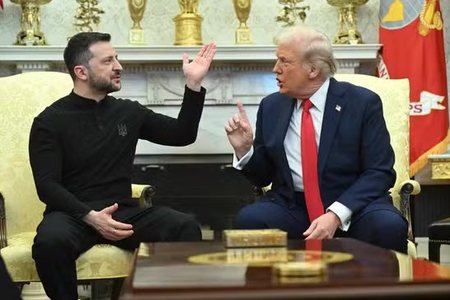
Memories of Volodymyr Zelensky's last meeting in the Oval Office, which went badly, will remain unforgettable during the Ukrainian president's visit to the White House tomorrow.
The feud between Zelensky and Donald Trump in February of this year cost the US and its Western alliance a lot of points. It was also a moment of danger for the Ukrainian cause.
Another dangerous moment is approaching. It seems clear that Trump was deceived by Vladimir Putin at the US-Russia summit in Anchorage. Now he will try to push forward with a peace plan prepared by Russia, which would be completely unacceptable to Ukraine.
The Russian president is reportedly demanding that Ukraine completely withdraw from the Donetsk and Luhansk regions, including strategic cities that are under Ukrainian control. The Russian demands also appear to include severe restrictions on Ukraine's armed forces and the country's sovereignty.
The challenge for Zelensky is to steer Trump away from the path Putin has set for him without provoking another public debate that could have consequences for his country. The fact is that Ukraine's ability to fight still depends on America's willingness to provide military support.
Repairing some of the damage done in Anchorage will not be an easy task. But Zelenskyy will have learned from his recent horrific experience, and he will not go into the lion's den alone.
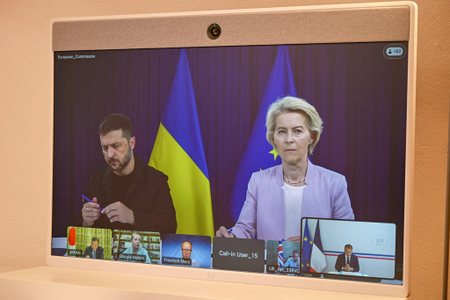
The current plan is for the Ukrainian leader to be accompanied by key European leaders, including Britain’s Sir Keir Starmer, France’s Emmanuel Macron, Germany’s Friedrich Merz and the European Commission’s Ursula von der Leyen; as well as three of Europe’s top “Trump whisperers”: Italy’s Giorgia Meloni, Finland’s Alexander Stubb and NATO’s Mark Rutte. The Europeans will do their best to steer the meeting onto safer ground.
This will be an extremely delicate operation. The task will be to somehow convince the American president that Putin has led him astray.
Fortunately for Europeans, Trump has a strong tendency to reflect the views of the last person he spoke to. In Alaska, that was Putin. But now it's the turn of Zelensky and his friends.
The few moments when Trump has spoken harshly about Russia have usually come after a meeting with a European leader. After seeing Starmer in Scotland in July, Trump cut short a deadline for Putin to agree to a ceasefire and threatened punitive sanctions on countries that trade with Russia.
Rutte is known for his demeanor with the US president, with a marked courtesy towards Trump, and has sometimes been harshly criticized for it. But Rutte's smile will hide a difference of opinion with some of Trump's closest advisers.
Steve Witkoff, who has served as Trump's de facto envoy to the Kremlin, said in March that it was "absurd" to think Russia was ready to invade Europe or NATO countries. Rutte, on the other hand, warned that within five years "Russia could be ready to use military force against NATO."
Such statements emphasize that Europeans are siding with Zelensky for reasons that go beyond solidarity. They believe that Ukraine's security is at risk.
The main issue is how the war in Ukraine might end. Trump’s recent talk of the need for “territorial swaps” has alarmed Europe. But Trump has also made vague references to U.S. security guarantees for Ukraine, which have been exploited in Kiev and Brussels.
If substantive negotiations begin, whether at the White House or in the coming days, they will likely be related to territory and security guarantees.
It is almost impossible for Zelensky to accept the loss of any territory. That would jeopardize Ukraine’s future security, but also his political survival. But if Ukraine is made credible security offers, it may be easier to consider territorial concessions.
It is now assumed that Ukraine’s membership of NATO is no longer the focus. Earlier, there was discussion instead of deploying a European “security force” in Ukraine as part of a peace settlement. British troops would make up a significant part of any such force. But Starmer said that any European force would need American “protection”.
The Trump administration has been extremely wary of any attempts at obstruction, fearing that it could drag the US into a war. But if Trump is now willing to revisit the issue of US security guarantees for Ukraine, then other parts of a potential peace deal, including territory, could come into play.
Would a European security guarantee include a commitment for Europe to fight if Russia attacks Ukraine again? And what would America's role be then?
When Trump sharply criticized Zelensky in their last meeting in the Oval Office, he emphasized that this would give a “great show.” Now is the time for great diplomacy. / Adapted from “Pamphlet” from “Financial Times”



Lini një Përgjigje