


 Shkruar nga Pamfleti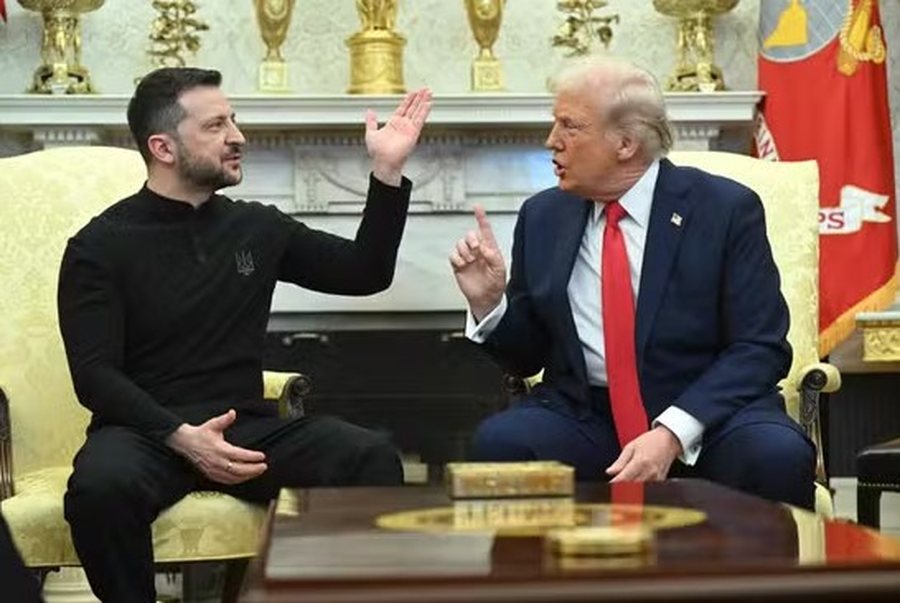
Ukrainians worry that Trump supports land grabs and Kremlin fantasies...
Most Ukrainians learned about the Alaska summit only on Saturday morning. Although their initial reaction was relief, they are now dreading what will come next. The immediate sigh of relief was understandable. The big, scary talk in Anchorage between Donald Trump and Vladimir Putin had not materialized. Initial reports suggested that the talks at a U.S. military base were truncated and had no clear outcome.
But as the dubious details have hardened into a growing prospect of future demands that will be impossible for Ukraine to accept, confidence is giving way to concern, not least about the planned meeting in Washington on Monday between Mr. Trump and President Volodymyr Zelensky.
The warning signs were evident from the start of the summit. A red carpet, laid out in front of Mr. Putin’s presidential plane by American soldiers. Applause and handshakes for Mr. Putin from Mr. Trump. The very fact that a summit took place before a ceasefire had been agreed, despite earlier harsh rhetoric from Mr. Trump to the contrary. Ukrainian officials insist that the negotiations are constructive and point to European talks on American-backed security guarantees for Ukraine. “There is an attempt to get somewhere,” one said. But privately they worry that the American president has just allowed the end of the war to be rewritten on Russian terms.
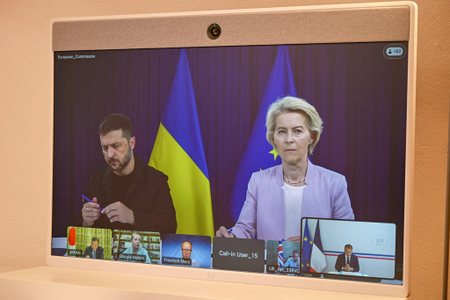
The most obvious change is the new acceptance of Russia’s preferred order. Gone is any prospect of a full ceasefire as a first phase, or of the crippling sanctions once promised by Mr. Trump if Mr. Putin did not agree to one. On Saturday, Serhiy Leshchenko, an adviser to the Ukrainian presidential office, reiterated the Ukrainian position: a ceasefire must come before a more comprehensive deal to freeze or end the conflict. But Mr. Trump, suddenly aligning himself with Mr. Putin, now says the immediate goal must be a comprehensive peace. It is an “all-or-nothing” prospect that can easily be sabotaged by bad actors, or used to extract maximum concessions. European leaders will meet later today by videoconference to coordinate their responses.
Ukrainian security sources say they worry about what a “comprehensive peace” would mean. For Mr. Putin, it still seems to mean removing what he calls the “root causes” of the Ukrainian war, a vision he outlined in a 2021 essay in which he laid out his case for the invasion: in translation, he opposed NATO’s eastward expansion since the fall of the Berlin Wall and Ukraine’s independence. In that essay, Mr. Putin spoke of Ukraine and Russia as “one people.” On Friday, at least, his rhetoric softened to talk of “brotherly” relations, something most Ukrainians would still have great difficulty recognizing three and a half years after a brutal invasion that has led to hundreds of thousands of Ukrainian casualties and millions of refugees.
Trump may or may not have understood Putin’s signal, but he said nothing to counter it. “For Putin, a comprehensive peace means changing us,” complains one Ukrainian source. “And now the Americans seem to agree, whether they realize it or not,” he adds.
Roman Bezsmertny, a former Ukrainian diplomat, says Putin has “mockered” the US president and his desire for a Nobel Peace Prize. “This is not a tragedy for Ukraine. It is a tragedy for America and for the world. Under Mr. Putin’s spell, Trump is an incompetent politician,” he said.
Throughout July, secret contacts between Ukraine and Russia had brought the two countries closer to an understanding of how the war might unfold. But subsequent talks between Mr. Putin and Steve Witkoff, a Trump confidant from his time in real estate, created a series of new, impossible territorial demands on Ukraine.
At Friday’s summit, Mr. Putin again demanded that Ukraine withdraw from the parts of Luhansk and Donetsk provinces it still holds, which together represent the most heavily fortified parts of the front line. That would put Mr. Putin in a much stronger position to attack again in the future, if he chose to do so. In return, the Russian president offered to return small pieces of occupied territory in Sumy and Kharkiv provinces, and to lift the current lines in Zaporizhia and Kherson.
Years of war have strained the Ukrainian people, and Russia continues to exploit its advantage in metal and men on the front lines. As expected, opinion polls show a clear shift toward pragmatism in peace concessions. Most respondents now favor accepting de facto occupation of areas that Russia already holds in exchange for real security guarantees from the West. But there are still solid and overwhelming majorities against making any further territorial concessions to Russia. According to Anton Hrushetskyi, executive director of the International Institute of Sociology in Kiev, fewer than one in five Ukrainians would be prepared to accept the kind of land swap that Mr. Trump is said to favor.
A Ukrainian intelligence officer says the Americans are being “extremely aggressive” in pushing Ukraine to lose more territory. The Russian interest is clear enough, he says. “They want to maximize the package they’re going to get in return, from sanctions relief, to the return of seized assets, to the reopening of energy markets.” What, he says, is much less clear is why the Trump administration is pushing so hard to promote Russia’s interests.
Despite the obvious difficulties, Mr. Trump seems committed to his quick peace. The Economist learns that a three-way meeting between Mr. Trump, Mr. Putin and Mr. Zelensky could happen as early as the end of next week. Before that, on Monday, the Ukrainian leader will arrive in Washington for his first visit since his humiliation in February. European leaders will join him in a show of support. But channeling Mr. Putin’s logic, Mr. Trump is already preparing to blame Ukraine if his plans fail, Ukrainians fear. “Make a deal,” he advised Mr. Zelensky, via Fox News. “Russia is a very big power. [You] are not.” / Adapted from “Pamphlet” by “The Economist”


Lini një Përgjigje