


 Shkruar nga Ines San Martin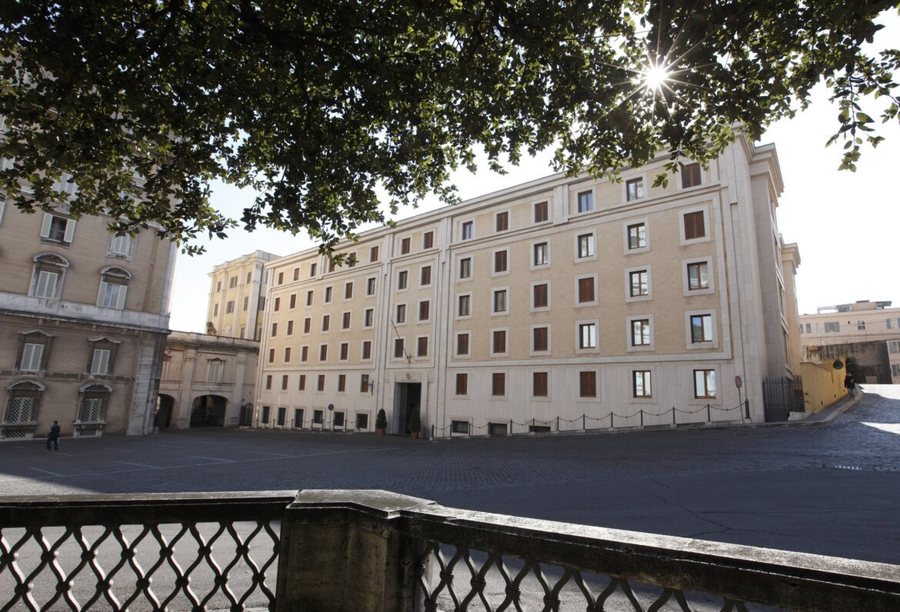
Alongside the cardinals who will vote for the new pope, around 70 to 80 support staff - nurses, doctors, liturgical assistants, waiters and cooks - will remain present, all bound by an oath of secrecy and isolated from the rest of the world.
In the heart of Vatican City, the usually quiet Casa Santa Marta is full of workers, engineers and Vatican officials who are transforming Pope Francis' residence into a "guest house."
With the 2025 conclave to elect Pope Francis' successor set to begin on May 7, the Vatican's guest house is preparing to house 128 of the 133 cardinal electors expected to be present during the conclave, according to a source who asked not to be identified.
This change from a general hotel to a secure dormitory for cardinals attending the conclave became apparent on April 29, when all permanent residents, including some cardinals who have had a room there for years, were forced to vacate their rooms. According to a Vatican official with direct knowledge of the preparations, many will return to the same rooms once the conclave begins, but only after each room has been inspected, secured and sealed.
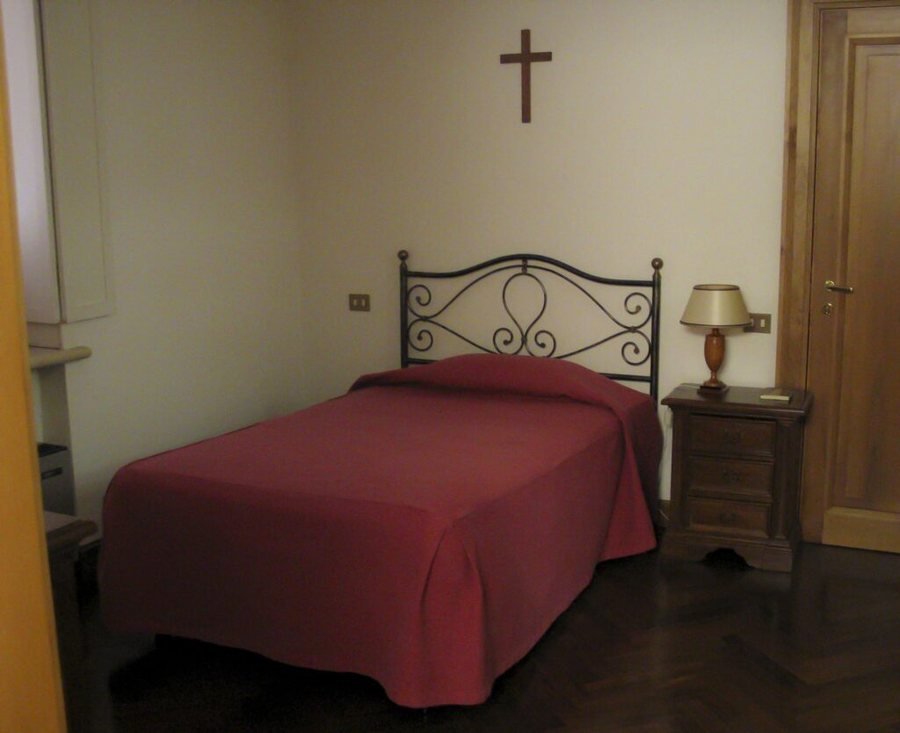
The next day, the Vatican Governor's staff began a week-long renovation of the facility. Every detail - from door locks to the adjustment of shutters - is being examined. The kitchen, temporarily closed, is undergoing a deep cleaning to comply with conclave protocols. Even the underground garage has been repurposed as a logistics center, where clean sheets, fresh food and other essential items will be distributed under the careful supervision of Vatican security.
Although often associated with comfort, a guesthouse is not a hotel in the traditional sense.
“There is no minibar or room service,” the official noted, adding, “some residents had small refrigerators, but during the conclave, the focus is on simplicity and safety, not convenience.”
Room service? Out of the question, except when a guest is sick or in the recovery phase.
The kitchen will be staffed by the same small team that usually serves Santa Marta: two young Italian chefs and a chef from Africa.
The menus - while not luxurious - are expected to be high quality and tailored to the health needs of the Cardinals, including those who are diabetic, gluten intolerant or require special diets.
While Matteo Bruni, director of the Vatican press office, said during a May 2 press conference at the Vatican that he "has no precise indication" of how many cardinals will be staying outside Santa Marta, a source told OSV News that, since the hotel has 129 rooms, there will be space for 128 electors. The room previously used by Pope Francis is sealed until the new pope opens it.
The remaining cardinals, the source said, will be housed in the adjacent "Old Santa Marta" building, which is physically connected to the newer structure.
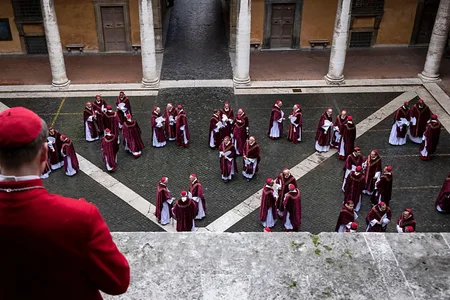
Alongside the cardinals who will vote for the new pope, around 70 to 80 support staff - nurses, doctors, liturgical assistants, waiters and cooks - will remain present, all bound by an oath of secrecy and isolated from the rest of the world.
This oath is not a symbolic gesture. The same Vatican official confirmed that any person within the conclave environment - whether cardinal, layperson, priest or bishop - will be subject to excommunication if they violate the conclave's strict rules of secrecy.
Phones, tablets, laptops, radios and televisions will be confiscated, placed in sealed bags labeled with each cardinal's name, and kept in reserve until the end of the conclave.
"Even the windows will be sealed, including the shutters, so that no one can look outside," the source said.
Each cardinal's room will be sealed after inspection to ensure that it contains no means of communication with the outside world. These seals will be removed only after the cardinal-elector arrives and takes possession of the room, always in the presence of the Swiss Guard or Vatican gendarmes.
These security measures are deeply rooted in church tradition. The word "conclave" itself comes from the Latin "cum clave" - literally "with a key" - evoking the image of cardinals locked in solitary confinement until they elect a new pope. The practice of locking up electors dates back to the conclave of 1271, which followed nearly three years of gridlock and political interference. In response, Pope Gregory X formalized the conclave process in 1274 with the constitution.
"Ubi periculum", which requires strict isolation and constant voting.
Secrecy became even more important in the modern era. During the 1903 conclave, Emperor Franz Joseph of Austria exercised a long-standing but controversial right to veto one candidate—Italian Cardinal Mariano Rampolla—through a proxy inside the Sistine Chapel. Although the veto failed to prevent Rampolla from gaining significant support, it likely influenced the cardinals' final decision. As a result, the newly elected Pope Pius X quickly abolished the veto and any secular interference in papal elections.
This commitment to autonomy was reaffirmed by Saint John Paul II in 1996 with his apostolic constitution "Universi Dominici Gregis," which governs modern conclaves. The document outlines everything from the required 2/3 majority to the penalties for breaking the oath of secrecy. It was later amended by Pope Benedict XVI and Pope Francis to reflect changes in technology and church governance.
This year's conclave presents both logistical and spiritual challenges. For the first time, the number of cardinal electors exceeds the limit of 120 set by Pope Paul VI in 1970, prompting adjustments to accommodate all participants without compromising the integrity of the conclave.
The gist, however, remains unchanged. As cardinals continue to meet in Rome — with only a handful of the 133 electors absent — the Vatican is quietly closing the doors, sealing the windows and preparing the rooms of what is now one of the world's most famous hotels — and from which the next pope will emerge. / Adapted Pamphlet from OSV News /




Lini një Përgjigje