


 Shkruar nga Pamfleti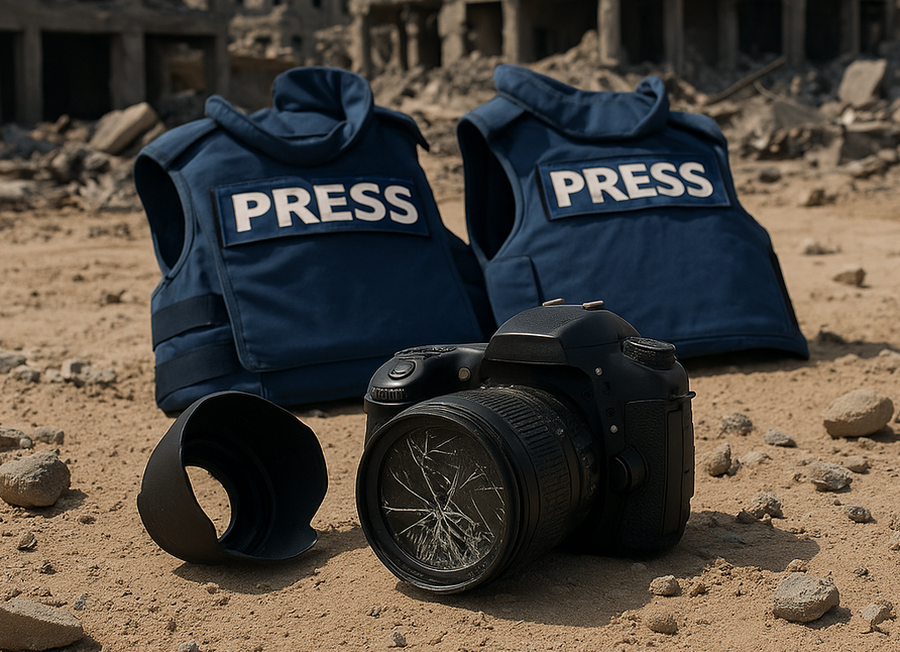
Silence is not neutrality; it is an invitation to censorship...
Journalists’ freedom is being destroyed by increasingly sophisticated methods, often cloaked in the cloak of “legality.” From Gaza, where reporters like Anas al-Sharif and his colleagues were killed in direct bombardments, to the Balkans where politicians and oligarchs have turned the media into an instrument of their own interests; the global situation is at its most critical point in recent decades.
According to the World Press Freedom Index 2025, over half of the world's population lives in countries where the media is in the "red zone", under censorship, financial pressure, or physical violence.
In the region, Albania ranks among the countries with serious problems: powerful media groups, such as those linked to businessmen through close relations with Edi Rama's government, benefit from public advertising and economic privileges in exchange for silence or promotion of the government's agendas.
Critical journalists face SLAPP-type lawsuits, open threats, and removal of material from online platforms with tacit orders.
In Kosovo, reports that touch on high-level corruption are often labeled by politicians as “enemy propaganda” or “Serbian disinformation,” creating a climate of fear for critical media. In North Macedonia, media ownership is concentrated in a few hands, often linked to the DUI and SDSM governments, while pressure on journalists investigating infrastructure affairs is ongoing.
Serbia remains the most extreme example in the region: Aleksandar Vučić has transformed the main national television stations into propaganda megaphones, while independent journalists like those from "KRIK" and "BIRN" have been targeted with fabricated investigations and media attacks by pro-government media outlets.
The threat does not come only from the state; organized crime has become a direct actor in blackmailing reporters, as in the case of Montenegro where journalists from Vijesti and Dan have been threatened by groups linked to drug trafficking.
All of this is happening at a time when social media has become a tool for lynching, especially against female journalists, where orchestrated campaigns spread hate speech and death threats, often without any reaction from the justice system. Without a free media, citizens lose their only means of checking power.
In the Balkans, this is happening silently and with the help of a public that is accustomed to receiving information only from captured sources. Today, silence is not neutrality, it is cooperation with censorship. And if this trend is not stopped, very soon free speech in the region will be a distant memory, conveyed only in the files of history and the archives of international courts./ Pamphlet



Lini një Përgjigje