


 Shkruar nga Kastriot Kotoni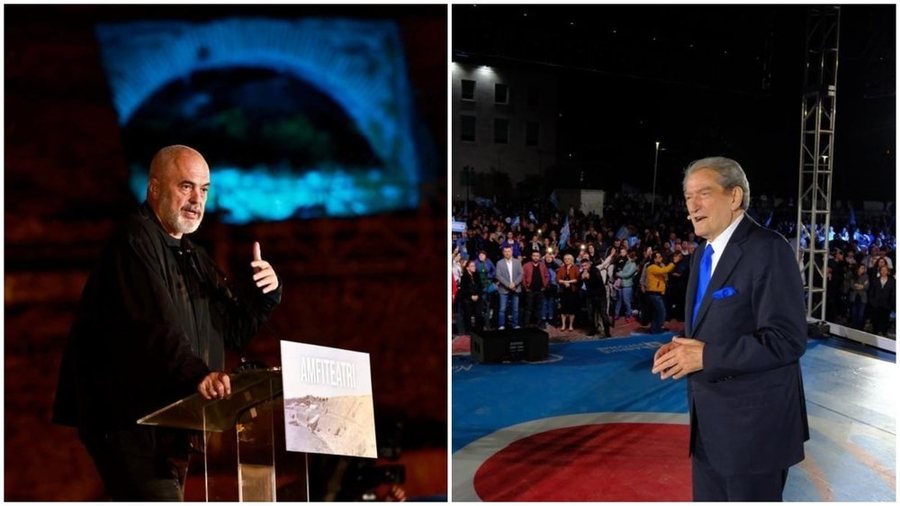
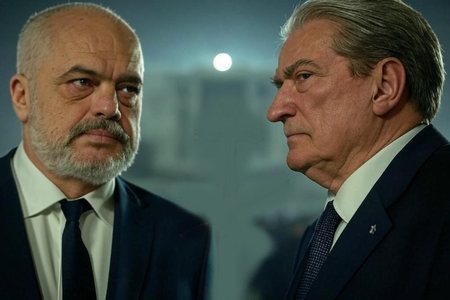
In a country seeking a fourth term, the elections are entering their peak phase amid political anomalies, a captive media and the indifference of citizens. The Rama-Berisha clashes produce spectacle and memes, while the grim political and economic reality remains unchanged. The opposition still without a clear cause, Albania under the shadow of crime.
The electoral campaign is entering its peak phase. But what we are seeing is a completely abnormal campaign. Under normal conditions, seeking a fourth term in government would not constitute an event for countries with political, economic and social stability such as Sweden, Denmark or Austria. But in the Albanian reality, such a fact constitutes an anomaly in itself. More than that, the Albanian opposition, from the day of its creation until today, has been fragmented into dozens of new parties, which openly display its structural weakness.
Sali Berisha's regrouping seems to have reached its electoral maximum, using as its main weapon the confrontation with Edi Rama's three-term government. On the other hand, the government is trying to ignore this reality by shifting the political debate into a spectacle of jokes and avoiding the real problems of the country.
Imagine for a moment what would happen if the Socialist Party won a fourth term. In politics, "appetite comes with eating," and a fifth term would become a natural ambition. But more than the winner or loser, the value of these elections would be the necessary withdrawal of the two main figures, Rama and Berisha, from active politics. Albania needs to free itself from the extreme polarization produced by these leaders.
On the other hand, the opposition cannot be blamed solely for its disastrous blunders. It fled parliament, did not participate in local elections, and committed acts of vandalism by attacking the DP headquarters. Furthermore, the opposition must be clearly defined: is it or is it not in favor of SPAK and justice reform?
Under these conditions, four consecutive terms of government are very tiring for any society, especially for a country in economic and social crisis like Albania. This situation is producing extraordinary stress and psychological pressure on politicians, who are turning the campaign into a festival of gaffes that are consumed as memes on social networks.
One of the reasons for this absurd situation is the imitation of the American campaign style, with television spectacles and leaders in the spotlight, which in fact do not correspond at all to the European mentality of Albanian voters. This form of imported spectacle creates indifference, dulls public interest and expands the gray area of the electorate.
The Albanian media has played a negative role in this process by giving unlimited space to politics, due to connections with interest groups and financial interests. In this way, every minute of political broadcasting is translated into material benefits, severely damaging the quality of public debate and turning the media into a weapon in the hands of political parties.
As a society, Albania shows political immaturity. It continues to be a bad copy of American models, where elections are financed by powerful corporations and lobbies, ignoring the modest economic reality of the country. Politicians promise impossible things, without remembering that Albania is under strict supervision of international financial institutions, which strictly monitor public spending. Reality shows that any sensational promise will end up locked in government drawers.
The crucial question remains what will happen after the elections. Will the government change? How strong will the opposition be? What will be the fate of politicians involved in buying and selling votes, especially now that SPAK is launching investigations?
Instead of inventing "shadow cabinets" or government programs without real weight, new parties should strongly engage in opposing the dishonest methods of the big parties. Instead of imitating costly and unusual campaigns, more modest, more honest and closer to Albanian reality should be promoted.
Ultimately, protecting the vote should be the top priority for all parties. The fight should be against the criminal elements that still influence politics. Without clearing the political terrain of the "black hoodlums" who have become electoral soldiers, Albania can have neither political stability, nor a stable economy, nor a functional democracy./ Pamphlet


Lini një Përgjigje