


 Shkruar nga Robert Kelly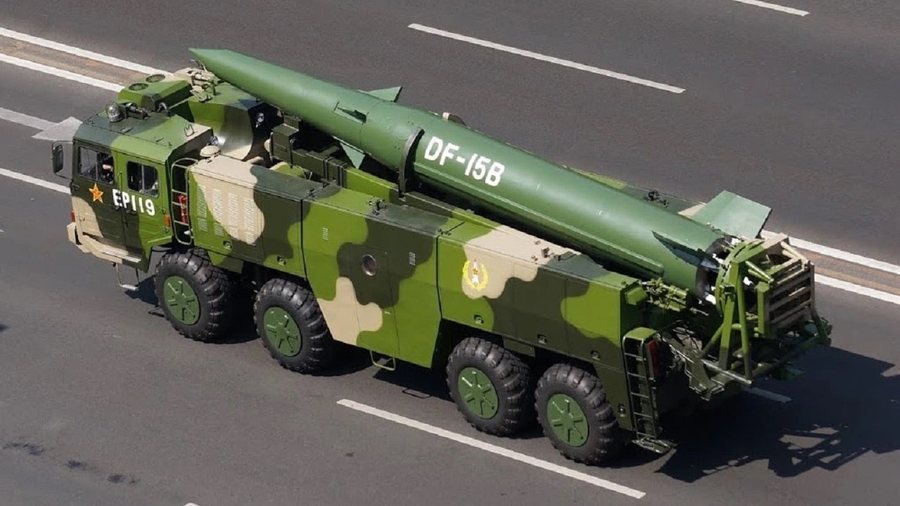
China knew of Russian President Vladimir Putin's intention to invade Ukraine in 2022, and Chinese support - diplomatic and economic - has been crucial in avoiding Russia's collapse as the war continues...
Donald Trump is the president of the United States again. While his domestic agenda is very clear - as a candidate he spoke at length about immigration and tariffs - his foreign policy is seemingly open to interpretation. Some elements are, however, familiar. Thus, Trump is friendlier to autocrats than any other American president.
On the other hand, he is tough, almost bullying, towards smaller, weaker states, including US allies. However, it remains unclear how Trump will resolve the Ukraine issue, which he promised to do in a day. Or even how he will deal with the US's most important challenger for decades to come, China.
Trade tariffs alone will not be enough. China's rise to prominence on the global stage is nothing new, but under its current president, Xi Jinping, China has embarked on a much more revisionist and belligerent course. And there are many suspicions that it will attack Taiwan in the next decade.
It is unclear how Trump will respond, given his past comments about Taiwan. China is also a key member of a rebel alliance seeking to overthrow the current international order. The most prominent members of this grouping are China, Russia, Iran and North Korea.
However, in general, any dictatorship dissatisfied with the US-led world order would find support in this group. If these countries were to unite in a true bloc or “axis,” it would be a major challenger to the US. Preventing this scenario is perhaps the new administration’s biggest foreign policy objective.
The post-Cold War liberal international order has provoked many illiberal and antidemocratic states. But most of those countries were small, poor, or both.
States like Venezuela and Syria under the now-deposed Bashar al-Assad outraged the liberal world economy and American leadership, but there was little they could do about it. These dictatorial states hoped to survive in a hostile world. Former President George W. Bush called their stances against the liberal order an “axis of evil.”
These regimes were able to survive—“regime change” proved beyond the power of the United States—but they were isolated. China’s rapid rise has given these challengers new space. Chinese autocracy seemed like a distant memory decades ago. But today, its record of economic growth and stability is highly attractive to dictatorships hoping to maintain authoritarian rule, resist U.S. dominance, and still achieve economic growth.
Beijing has drawn other disgruntled states to its side, most notably Russia. There is no doubt that China knew of Russian President Vladimir Putin's intention to invade Ukraine in 2022, and Chinese support - diplomatic and economic - has been crucial in averting Russia's collapse as the war continues.
Putin and Xi declared that their latest alliance has no “boundaries.” The rest of the members of this axis hover in the background. Islamic Iran has long been a useful proxy for states wishing to challenge the United States. Since the 1980s, the atheist Soviet Union informally protected that clerical regime from U.S. pressure.
North Korea, too, is a useful regional troublemaker. Like Iran, North Korea distracts the US in a strategic region, keeping it engaged there. Now it is aiding Russian imperialism in Ukraine. The question for the future is whether this grouping can come together in a real alliance.
This would require the willingness of all members to subvert their own interests in a larger, shared agenda. Such a thing is possible, and Putin, perhaps the most reckless, openly aggressive member of this axis, could accept it. But the members of the axis also have problematic relationships with each other.
North Korea, for example, is wary of Chinese dominance, and Russia will have to accept that it is smaller than a larger and more powerful China. In fact, all members of the axis must be willing to accept the leadership of the Chinese bloc, because only China is rich enough to finance a broad challenge to the liberal order and its wealthy states around the world.
North Korea and Iran are economically weak. High military spending and radical ideology fill some of this gap, but neither could afford regular military deployments at high speed and without external support. For all their anger, they cannot initiate major conflicts like the current war in Ukraine, or a future Chinese attack on Taiwan.
Of course, Russia is richer than these countries, but its economy has already fallen out of the top 10 in the world. Now it has entered a full-scale war phase, which may help it win in Ukraine in the short term. But the medium-term costs will be high.
Increased military spending is robbing the civilian sector of resources for productive growth, and the sanctions regime against Russia is blocking future technologies. Only China, with the world's second-largest GDP, has the financial clout to find these revisionists.
But a complete turn by China against the liberal international order would end the trade relationships that have fueled its economic growth for decades. And that is the leverage Trump needs to use to force China to stop fully becoming part of Putin's resistance project.
In this context, his love of tariffs is problematic. Because the disruption of China-US trade relations will make it easier for China to fully align with this axis. /Adapted from Pamphlet by “19 Forty Five”
Note: Robert Kelly, professor of political science at Pusan National University in South Korea.







Lini një Përgjigje