


 Shkruar nga Namir Lapardhaja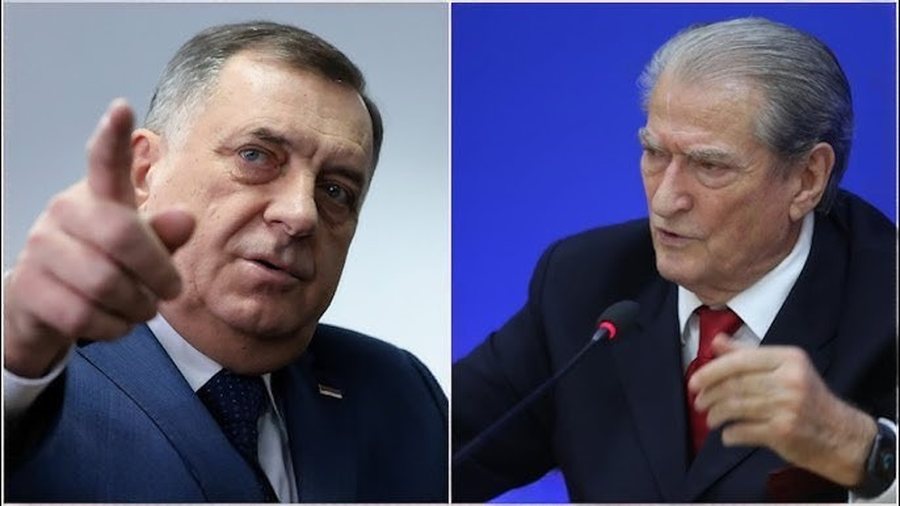
Both Dodik and Berisha rubbed their hands together with his return to the White House, nurturing the illusions that such a thing would bring about their political rehabilitation.
There is a striking similarity between what is happening to the leader of the Bosnian Serbs, Milorad Dodik, and what has happened to date and is expected to happen in the future to the leader of the Democratic Party, Sali Berisha.
Dodik was sentenced by a court to one year in prison for disobeying the decisions of the international High Representative in Bosnia. The decision was confirmed by the Court of Appeals, and the Bosnian CEC subsequently stripped him of his mandate as president, banning him from running for election for six years.
In Albania, Sali Berisha has roughly the same resemblance, despite local peculiarities. Declared “non grata” by the US State Department for corruption and undermining democracy, he began a battle, first with the internationals, then with the judiciary until he took full control of the opposition, with the justification that a major international coup had been organized against him, while the indictment filed and the trial that is underway is an attempt to silence the opposition and install a dictatorship. Berisha, similar to Dodik, is self-victimizing and does not recognize any institution that finds him guilty or dares to cast a shadow of doubt on his honesty.
Another element that unites the two is the expectations they had from Donald Trump's return to power. Both Dodik and Berisha rubbed their hands with his return to the White House, nurturing the illusions that such a thing would bring about their political rehabilitation. The hope was that the new administration would reconsider the decision on the "non grata" and change its attitude towards them. However, not only did this not happen, but, on the contrary, their positions worsened.
Dodik and Berisha present criminal charges and institutional decisions as acts of political revenge orchestrated by their respective governments supported by international enemies. In both cases, accusations of corruption or abuse of power are not confronted with legal arguments, but are replaced by a discourse where justice is presented as a tool of political power.
The case of Dodik and Berisha is not just a story of two politicians, but a profound reflection on the political and institutional transition in the entire Western Balkans. They represent a generation of politicians who find it difficult to accept that their time is up and that the rule of law requires accountability.
If justice successfully confronts these figures, this will be a test of the maturity of democratic institutions in the Region, but if they manage to discredit the courts and prosecutors' offices, as they have tried, not without success, to date, we will have a setback and it will be a bad omen for the entire Region.





Lini një Përgjigje