


 Shkruar nga Gjergj Zefi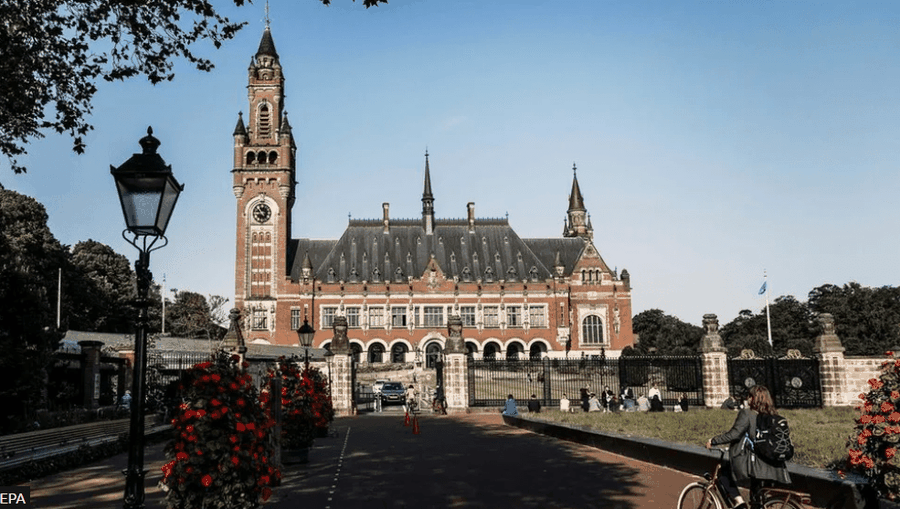
The claim against Thaçi as a test of the limits of international justice, not as an open geopolitical clash...
The claim against Hashim Thaçi in The Hague is not simply a procedural act of international justice, nor is it an open geopolitical conspiracy. It lies in a gray area, where law, history, and strategic interests intertwine without being openly declared. Precisely for this reason, reading it requires a cold diplomatic approach, far from emotions and equally far from absolute narratives.
Formally, the Kosovo Specialist Chambers are operating within their mandate, testing the principle that criminal responsibility is individual and not exempted by political status or historical symbolism. This is a standard that Europe has made a pillar of its institutional philosophy: justice as a regulatory instrument of the past and as a condition for long-term legitimacy. In this logic, short-term political costs are seen as acceptable, even necessary.
But justice does not operate in a vacuum. The claim against Thaçi produces effects that go beyond the courtroom, because it directly affects the narrative on which Kosovo's statehood is built. By inserting the liberation war into an investigative framework that risks relativizing the historical context, the process creates an inevitable perception of selectivity, especially in a region where international justice has yet to achieve a credible balance in addressing the crimes of all parties.
At this point, the transatlantic difference appears, not as an open clash, but as a mismatch of approaches. Europe insists on the legal regulation of the past, while the United States of America has historically seen Kosovo through the prism of strategic stability and political functionality. American silence towards this process is neither enthusiastic support nor opposition; it is pragmatism. A signal that Washington does not want to return justice to the geopolitical front, but neither to sacrifice the institutional architecture that the West itself has built.
This makes the pretense a double test. For Europe, it is a test of whether justice can be administered without being perceived as an instrument of rewriting history. For the US, it is a test of whether the stability they have guaranteed for decades can coexist with a process that potentially strikes at the key figures of that stability. For Kosovo, however, the challenge is the more difficult: to maintain a correct institutional stance towards the court, without allowing the process to delegitimize the liberation war or to become a political precedent for the weakening of state subjectivity.
In the end, the indictment of Hashim Thaçi does not judge just one individual, nor does it mark an open Europe-US battle. It exposes the limits of international justice when it is confronted with unfinished history and unequal interests. This is where the real danger lies: not in the indictment, but in the way it is read, used, and politically instrumentalized in a region that does not yet have the luxury of strategic mistakes.
What hides between the lines of international justice?
Between the lines of international justice is usually hidden what is never officially articulated: the balance of interests, the political moment and the need for narrative management. The trial of Hashim Thaçi is not read only as an individual criminal investigation, but as part of a broader effort to discipline the past without destabilizing the present.
International justice speaks in legal language, but operates in political realities. It chooses the time, the object, and the framework. The fact that the Kosovo Specialist Chambers deal with key figures in Kosovo's state-building, while many other crimes remain off the global radar, creates the perception that justice is not only punitive, but also regulating balances.
There is not necessarily a conspiracy hidden between the lines, but a well-known reality in diplomacy: the law is used to close politically inconvenient chapters, to signal boundaries and to redefine roles. It is here that the "gray area" arises, where justice does not lie, but does not tell the whole truth either. /Pamphlet




Një analizë brilante, sipas meje. Ftoj gazetarët dhe politikanët këtu e në Kosovë, që ta konspektojnë këtë analizë dhe të shikojnë para, për ta kuptuar drejt të djeshmen.