


 Shkruar nga Lee Yaron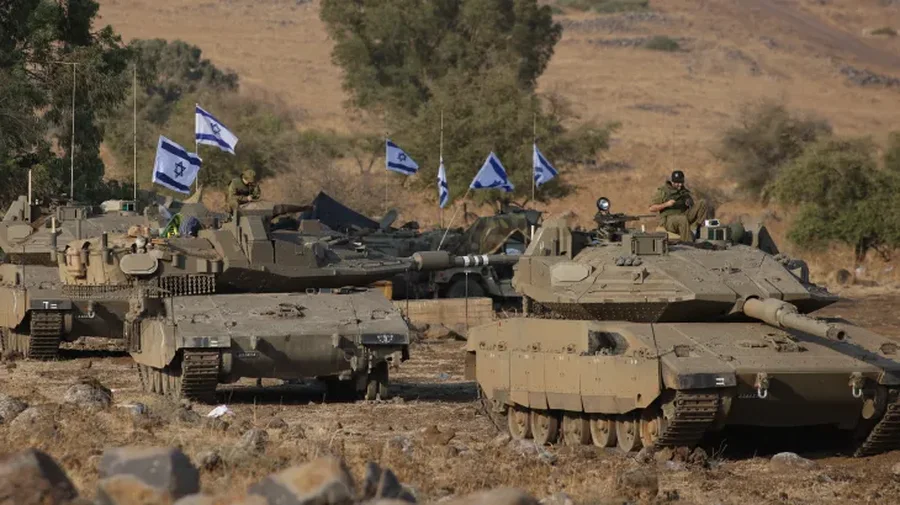
Half of all Israelis are under the age of 30, while half of all Palestinians in Gaza are under the age of 18. The children of this vast and lost generation came into this world after hope forsook it.
The last time - in fact the first time - that the Islamic Republic of Iran launched a missile attack on Israel in April, only one person was injured: Amina Al-Hassouni, 7, who remains hospitalized 6 months later. in a Tel Aviv hospital.
A piece of rocket tore through the thin metal roof of her house, hitting the little girl as she stood near the front door of the house. To date, Amina has undergone 5 very difficult surgical interventions, while another one is planned a little later.
Last week, when about 200 ballistic missiles rained down on Israel, Amina feared she would be hit again. "She told me crying that she didn't want any more missile strikes, begging me to protect her from Iran. But I can't do anything to protect my daughter" - her father Mohammed, 49 years old, told me during an interview.
Despite Israel's military superiority, force alone will not change the reality of the Middle East. While Amina's mother and sister stayed with her at the hospital, rushing patients and doctors to the shelter, Mohammed stayed at their home in Al-Fur'ah, a Bedouin village deep in the Negev desert.
He and the other 12 children were crammed into a small shelter, which the government gave them only after Amina was injured. At least this time they were protected. "We are dying of fear. All my children are crying, terrified that what happened to their sister will happen to them. Since April, her 16-year-old brother can't sleep without taking naps. We saw the rockets flying over our heads as we ran for cover. It is my little children, the ones who pay the cost of these wars" - emphasizes Mohammed.
Eitan Kusenov, a 15-year-old boy from Odessa, Ukraine, left his country in February 2023, with the promise that he would be safer in Israel. However, shortly after arriving here he was faced with Hamas rockets that, in October 2023, directly hit his new home in the coastal city of Ashkelon.
Now he and his family have taken refuge again, this time to avoid Iranian missiles at their newest home - their third in just over a year - in northern Israel, which is within striking distance of Lebanon. . This 1-year war, which has caused the greatest harm to the most vulnerable on both sides, must end.
But recent developments may offer a glimmer of hope. As the echo of Iran's latest missile attack fades, the Middle East is at a critical juncture. The current escalation marks the culmination of decades of third-party conflict, erupting into open war and signaling the demise of Iran's old strategy, the so-called "Ring of Fire."
For years, Israel has faced a challenge familiar to the post-9/11 United States: fighting non-state actors. Iran meticulously built a network of terrorist militias surrounding Israel's borders, including Hezbollah, Hamas, Islamic Jihad, and various forces in Syria and Yemen, and over decades provided them with financial support, weapons, and training.
When we talk about the Houthis in Yemen, we are actually talking about Iran. When we talk about Hezbollah, or even about Hamas, we are actually discussing Iran again. With its formal government, Lebanon functions almost as a facade for Iranian interests.
Although ostensibly governed, Syria has large swathes of its territory under Iranian control, and its leadership has turned against its own people. Iran's support for Hamas in Gaza, culminating in the October 7, 2023 attack, was largely motivated by a desire to sabotage the process of normalizing relations between Israel and Saudi Arabia.
Such an alliance would have dramatically changed the power dynamics in the Middle East, potentially tipping the scales in favor of the Sunni-Saudi bloc against Shiite Iran. While this open conflict carries great risks, it also presents an unparalleled opportunity to reshape the Middle East.
While these militias have been significantly weakened recently, Israel should use this new situation created after its military successes to move to the next phase: work with the United States, France and the international community to strengthen the Lebanese government and more after stimulating the new government to reach a peace agreement with Israel.
By strengthening Lebanon against Iran, Israel will also strengthen itself. With such an agreement, which would ensure the return of displaced Israelis to the north, it would be more politically acceptable for the Israeli public to declare a cease-fire in Gaza, and have a discussion on what will happen in the future.
From Amina Al-Hassouni to Eitan Kusenov, most Israelis were born under this atmosphere of violence. Half of all Israelis are under the age of 30, while half of all Palestinians in Gaza are under the age of 18. The children of this vast and lost generation came into this world after hope forsook it.
So after the assassination of Prime Minister Yitzhak Rabin and the violation of the Oslo Agreement. I am also a member of this generation. Therefore, I think that a new Middle East should be built, even in the midst of this gloomy situation. /Adapted Pamphlet from "Haaretz"



Lini një Përgjigje