


 Shkruar nga Dacia Maraini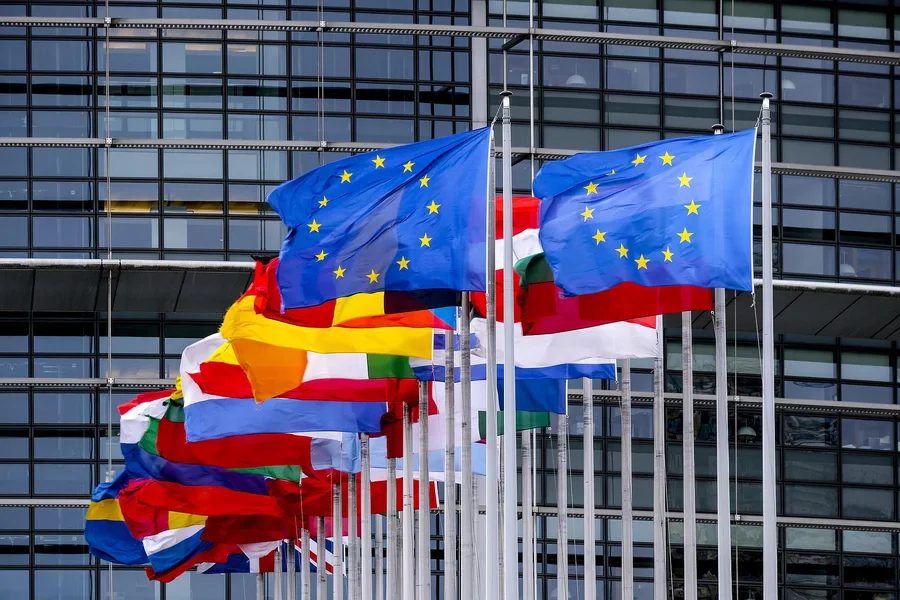
It seems like we've forgotten that since the existence of Europe, we haven't had any wars...
On every side I hear voices criticizing, denigrating and discrediting Europe. Even some of our refined intellectuals speak of Europe as if it were dead, ready to be buried. Yesterday morning I heard a man on the radio use the word "rotten". Yes, he said that. But if Europe is rotten; what is it doing there? First of all, I would ask those who criticize and revile to propose an alternative. It is very easy to criticize and denigrate a reality without suggesting a possible alternative. Otherwise, they are empty words. Words that sound suicidal, especially because we are Europe. It took us centuries to understand that we should not massacre each other because we have common interests and roots that are intertwined in the ethical and cultural underground.
It seems that we have forgotten that since the existence of Europe, we have not had any wars. Until the founding of the European Union, countries like France, Spain, Italy and England fought fierce wars that brought destruction, poverty and hatred. The Union allowed us a peace that lasted 80 years and is still going on. And how can we forget the wonderful institution that is Erasmus? So many young people from European countries have had the opportunity to travel at affordable prices, enroll in universities in other countries, learn languages, get to know each other and exchange ideas and interests, as well as pursue joint projects.
Also worth mentioning is Schengen, which has facilitated the free movement of people, goods, ideas and projects. 450 million people have been able to move freely where previously permits, passports, currency exchange and border controls were required. Finally, I would like to mention the single currency, which has enabled economic stability and the possibility of obtaining large loans for the development of poor areas and many other projects. But, as a clever character from Rossini puts it, a slanderous breeze with a convincing voice circulates in the air, "an invisible breeze, a gentle breeze, which invisibly, delicately, lightly, sweetly, begins to whisper...".
It is the persuasive and insinuating voice of social media that suggests, in seemingly truthful words, that democracy is now a useless tool, that European values have failed, that our values, our ideas, our achievements are worth less than cigarette butts.
At this point, my naive but timely question is: let's admit that Europe and democracy are in crisis: what would you like to put in its place? What new ways of governance would bring prosperity and peace? It seems to me that, with all its sharp difficulties, its delays, its conflicts, freedom of thought, speech and movement, in other words, the essence of the responsible and free citizen, is for the moment guaranteed only by democracy.
Europe is not just bureaucracy, slowness, inefficiency and corruption, which are certainly present. But what should make us proud are our great inventors, our scientists, our thinkers, our artists. We are European because we grew up reading Plato and Tolstoy, Dante and the Brontë sisters, listening to Mozart and Verdi. We are European because, after so many misfortunes and so many false promises, we have discovered some values that we share and of which we should be proud.
There are flaws, and above all, they existed when Europe was divided, lacking in self-awareness, and there were countries that considered themselves stronger, better, purer than others. From such claims arose the horrors of Nazism, fascism, and fratricidal wars. But it was precisely the victory over racism and nationalism that brought so much sorrow and pain that allowed us to discover the values embodied in our beautiful Constitution.
And yet, the breeze today is becoming more persuasive and whispers in the ears of the young in particular, seductively asserting that in this age of technology, a government of expert technocrats is needed, and the masses must play along and be obedient. Money and power are the only measure of progress and civilization. Meanwhile, the breeze "slowly, far down, flows, hums in people's ears, enters skillfully, into their heads and brains, stuns them and makes them swell."
A great wind of change is needed, many say. Without realizing that the seductive breeze, which strengthens, "gradually gains strength, becomes thunder, the storm that whistles in the heart of the forest...", hats off to the great Rossini's ability to understand the power of breezes set in motion by interested mouths...
But is this what we want? Instead of a hard-won democracy, do we want to hand over all power to wealthy technocrats because they know better and have the guns in their hands? At least say it clearly, friends, that you despise the great achievement that is democracy, born of centuries of mistakes and failures. Say it frankly that you want to throw away the freedom of citizens for the sake of security and profit.
Thanks go to Mattarella, who spoke clearly, urging Europeans, but especially Italians, to reflect on the importance of a political and ethical achievement that cost us so much and is worth defending.


Lini një Përgjigje