


 Shkruar nga Mero Baze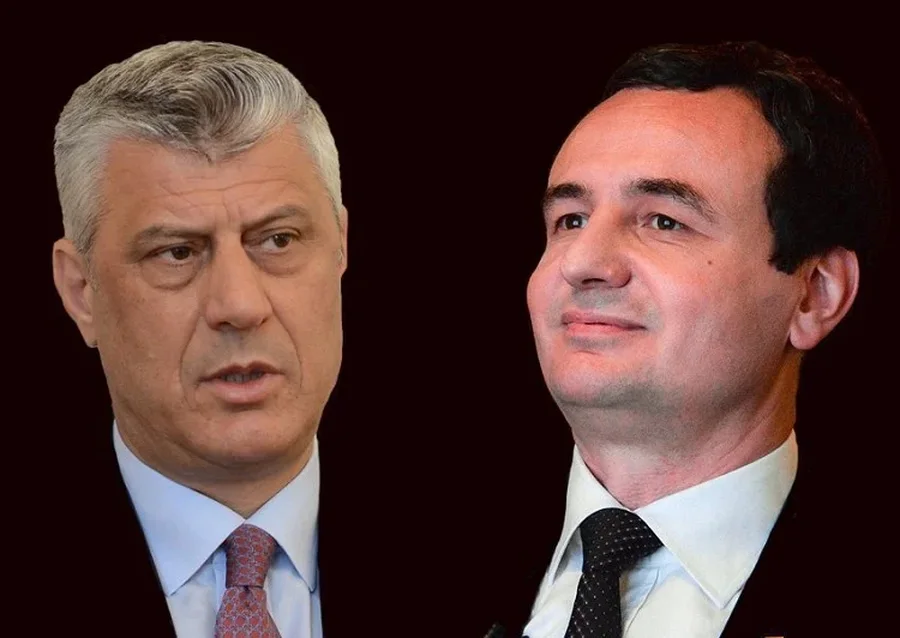
The only mitigating circumstance in the political battle against the Special Court is prosecutor Jack Smith, who is currently under investigation in the US as President Trump's special prosecutor and, at the same time, has an emotionally charged approach against the KLA leaders.
The August 7 protest in Pristina, in support of KLA leaders who are under indictment by the Special Court for alleged crimes of the Kosovo Liberation Army, has primarily political and not judicial value. It differentiated the current Kosovo society at this moment into two camps: pro and anti-government, on behalf of the KLA. But the protest does not function as a pressure mechanism on the Court, although anger towards it is legitimate.
The Specialist Prosecutor’s Office and the Specialist Chambers in The Hague were established in 2015, under pressure and assurance from the European Union and the US. They are part of Kosovo’s legal system, but with international oversight and assurance. This means that their status is more complex than an ordinary Kosovo institution.
Even if its opponents were to secure two-thirds of the votes in the Assembly today, which in fact requires a grand Albanian coalition beyond the opposition, any attempt to undo it unilaterally would cause the loss of international support for Kosovo, a greater risk than the Special Court itself.
The only mitigating circumstance in the political battle against the Special Court is prosecutor Jack Smith, who is currently under investigation in the US as President Trump's special prosecutor and, at the same time, has an emotionally charged approach against the KLA leaders. This is reflected in the way he has accepted evidence obtained by the Serbian police against an army that has fought to protect its own homes.
This could weaken American support for the Special Court and increase pressure for the trial panel not to display the same burden as the prosecutor.
But above all, the protest has political value within Kosovo. It is an attempt by the opposition to turn the KLA and the defense of its values into an electoral battleground against Vetëvendosje, aiming to identify Albin Kurti's government as its opponent.
Essentially, the protest is an attempt to form a new majority beyond political parties against the government, accusing it of abandoning former KLA leaders: not paying for their lawyers, serving prosecutors' charges by favoring postponements of sentences, and not providing guarantees for them to be tried in freedom.
The idea that Albin Kurti is in power because the Special Court arrested the leaders of the KLA, headed by President Hashim Thaçi, is paranoia that functions as a political motive in Kosovar society and as an excuse for the traditional opposition, including the LDK and its former leaders like Isa Mustafa.
This is why this protest, more than for Hashim Thaçi, is against Albin Kurti.


Lini një Përgjigje