


 Shkruar nga Roland Lami
These two lines just come together and form two opposing camps within the same party...
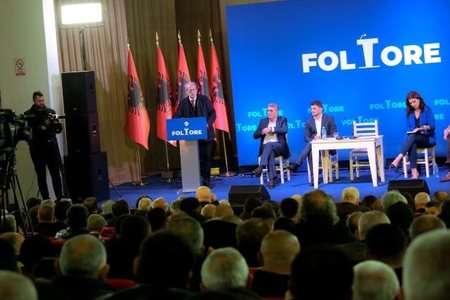
In the Democratic Party, two rounds of meetings are taking place these days, where we talk about different realities. In one, there is a group of deputies among the most voted in the elections of May 11, 2025 who want to deal seriously with the party, with the structures that are not functioning, with the organization that has remained in limbo, with the fact that the DP is losing not only the elections, but also its political meaning. All this type of analysis, in this group, does not seem like rebellion but seems like a natural process of reflection after several consecutive losses. Like a catharsis that should have been done long ago but that has now become an emergency.
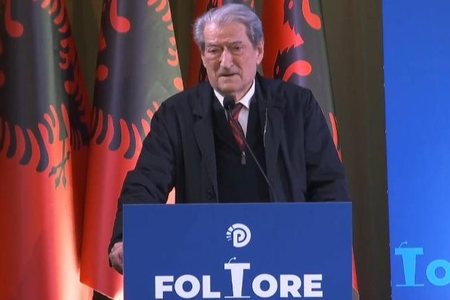
In the next round led by Berisha, the opposite happens. There, the situation is not perceived as a crisis, but as a siege. Problems do not appear as defects of the party, but as attacks on it. Even the most ordinary meetings of colleagues are interpreted as suspicious movements, and disagreements as evidence of a lack of loyalty. In this forum, reorganization is not required, but order, not restructuring, but alignment, not resignation but radicalization.
These two lines just come together and form two opposing camps within the same party. The former are accused of splitting the party because they are speaking out, the latter defend unity by not allowing any speaking at all. It is not that the parties clash ideologically, they simply believe in two opposing ways of building the party and how to rebuild it.
One side seeks reform, the other seeks solidarity, one sees the problem within, the other sees the problem outside the DP. In the background stands the central figure, who, with a kind of cool elegance that only leaders with decades of experience have, manages to leave the impression that everything that happens around is not political drama, but simply a natural process of the manifestation of the party's bread and butter. It seems as if, for him, the DP is a big family that needs not new rules, but stronger obedience and loyalty.
At the end of the day, the two tables talk about the future of the DP, but with two different logics, one analytical, the other mythological. The first says "let's see what's not working"; the second says "let's not touch anything". And as these two lines collide in the same headquarters, the party hovers in the middle, unable to choose between an honest diagnosis and the comfort of denial to look reality in the eye.
Today, the DP is faced with a dilemma as old as its 34-year history: should it treat internal tensions as a threat or as a necessary condition for development? One approach seeks to see the party as a body that self-regulates through debate, criticism, and role review; the other sees the party as an organism that survives only when it maintains unquestionable cohesion. These two perspectives clash today without an accepted authority to translate them into strategy. As long as this common orientation is lacking, the DP remains, both theoretically and practically, a party fragmented in the way it understands itself, and this makes it impossible to transform the crisis into reform.




Lini një Përgjigje