


 Shkruar nga Prof.dr. Skënder Asani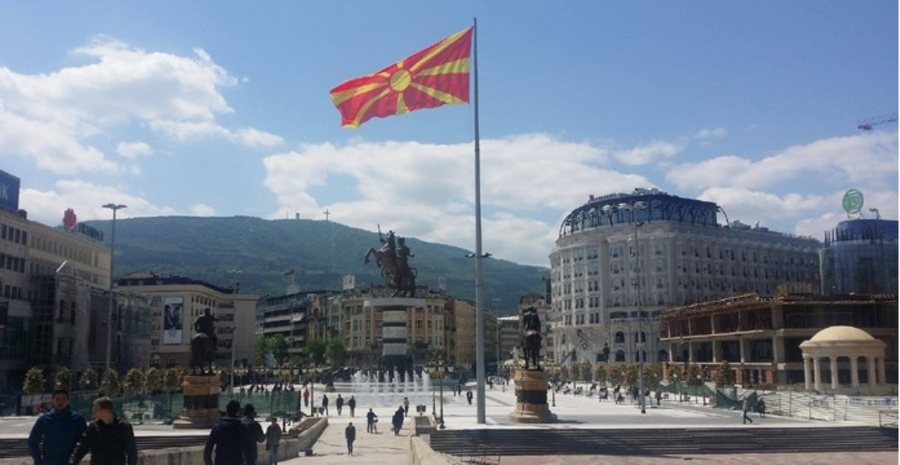
On the eve of 2028, Skopje faces a historic choice: to remain hostage to the old facades that have isolated it, or to move towards the universal values that Mother Teresa embodies - solidarity, humanism, coexistence and shared dignity. This choice is not simply cultural; it is historical, political and moral, and it determines the face that Skopje will present to Europe for decades to come.
The proclamation of Skopje as “European Capital of Culture 2028” is not simply a symbolic title serving a festive or protocol year. It constitutes a historical burden, a privilege that requires responsibility, commitment and an honest vision to present the city’s authentic identity before Europe. Skopje is not a simple urban space; it is a living mosaic of cultural layers that begin with Illyrian antiquity and continue through the periods of medieval, Catholic and Orthodox Christianity, the Ottoman (Muslim) heritage and the Albanian, Macedonian, Jewish and Roma communities. This plurality, this historical mosaic, is the essence of its European character and any attempt to reduce it to a one-dimensional vision or outdated schemes would be a denial of history and civic identity itself.
Last week’s meeting in Brussels, where the Minister of Foreign Affairs and Trade, Mr. Timço Mucunki, the Minister of Culture, Mr. Zoran Ljutkov, and the Mayor of the City of Skopje, Mr. Orce Gjorgjievski, reported to the European Commissioner for Intergenerational Justice, Youth, Culture and Sport, Mr. Glenn Micallef, on the “Skopje European Capital of Culture 2028” project, took place without any Albanian representatives in the decision-making team. This gap is not a technical or formal detail; it signals a direct risk to the integrity of the project, the international credibility and the history of the city. When communities that have preserved and embodied this heritage since the city’s founding are excluded from decision-making, the vision is fragmented, deformed and reduced to a selective narrative. The exclusion of full ethnic and cultural representation threatens the realization of an integrated European vision and risks turning an extraordinary historical opportunity into a problematic precedent. Any deliberate silence, delay or exclusion has direct consequences for the future of the city and the time for action is now, to guarantee a fair, complete and credible vision that reflects all of Skopje's cultural and historical wealth.
Any attempt to develop the project without equal representation of all communities, especially Albanians, undermines its legitimacy at its very foundations. Their involvement cannot be symbolic, ceremonial or postponed; it must be immediate, unconditional and real. Delegations that do not reflect the socio-cultural structure of the city cannot articulate its authentic voice. Equality in representation is not just a political demand; it is a moral standard, a professional criterion and a condition for international credibility. To build a worthy narrative, the cultural vision must be rewritten in a comprehensive way, including all historical layers and communities that have built Skopje: Illyrian culture, Ottoman heritage, Albanian culture, Macedonian culture, Jewish roots and Roma communities. Any attempt to distort or minimize these pillars turns the project into a fabricated political construct that cannot stand up to European Union standards.
The figure of Mother Teresa cannot be treated as a protocol symbol or a festive marketing image; she is the moral axis of the city, an irreplaceable reference point for any vision aimed at Europe. The humanism and universal message she embodies must be the ethical pillar of any narrative, and any narrative that avoids this axis loses one of the fundamental elements that make Skopje worthy of international presentation.
To realize a credible project, Skopje requires genuine, continuous and structured inter-community dialogue, not limited to speeches. Concrete policies, cooperation mechanisms, joint decision-making processes and cultural programs that reflect the diverse reality of the city are needed. Each community must have the space to articulate itself and contribute to shaping the common narrative. This process must be clearly separated from the practices of the 2014 project, which deformed the identity of Skopje through ethnocentric projects that did not reflect the reality of the city. Returning this spirit would be a serious cultural and political mistake, discrediting the project before European institutions and partners. Skopje should not follow the path of artificial and exclusionary images, but build a model of modern coexistence, transparency and historical integrity.
On the eve of 2028, the city faces a historic choice: to remain hostage to the old facades that have isolated it, or to move towards the universal values that Mother Teresa embodies - solidarity, humanism, coexistence and shared dignity. This choice is not simply cultural; it is historical, political and moral, and it determines the face that Skopje will present to Europe for the coming decades. Considering the importance of this process, it is strongly recommended that state institutions and international partners support an immediate reconfiguration of the project, which ensures equal representation of all communities, promotes the drafting of an inclusive and authentic cultural vision, establishes Mother Teresa as the moral axis of the city's narrative and guarantees full transparency at all stages of the process. Only in this way can Skopje worthily present itself to Europe as a city of truth, harmony and multiple heritage, fully deserving the title of European Capital of Culture for 2028. After all, Skopje cannot be a European capital with Balkan manners.


Lini një Përgjigje