


 Shkruar nga Frrok Çupi
He made it his duty not to harm anyone, especially his own people. When he smelled the gunpowder that the people of the South were going to be killed, he said 'stop'. He returned to freedom.
Since he was imprisoned at the age of 13, because he was caught at the border while fleeing, he has lived freely. He tried to join his father, the fugitive father in America.
Even on the eve of his last day, his face shone. The light came from life in freedom.
The last time he escaped captivity was in 1997. At that moment, he happened to be at the head of the country's politics. A member of the Albanian Parliament and vice-chairman of the Democratic Party. He was almost reluctantly summoned to the Parliament meeting on March 3. He raised his hand like his peers and Berisha was re-elected president. It was the height of the war. A state of curfew had also been declared. By the same president.
The same one: The one who caused the war. The one who supplied the war. The one who put the Republic under curfew. The one who asked the besieged state to vote for him as president.
It was the same man, just one, not four.
Berisha could only stand the test of time for four months as president. He fell in shame, bleeding. He came as a dead president to a dead Republic.
Tomor Dosti regained his freedom that day.
"I do not go to war to cripple my people!", said Tomor Dosti, and surrendered all mandates. The country's mercenary and professional army, under the orders of the president, would attack the South, including his hometown of Gjirokastra.
Dosti was not a melancholic man, because then he would not be able to escape to freedom. He did not connect the war with his homeland, only. He connected it with the bad luck of the country and of God for all. How can we attack our own with weapons, with the army and with planes?
He who asks questions becomes free. Questions about the war had raised Dosti. His whole world revolved around the question 'was it good or bad that his father, Hasan, joined the German occupiers in the Second World War!?'.
He had not set himself the task of becoming a 'good boy', unlike his father.
He made it his duty not to harm anyone, especially his own people. When he smelled the gunpowder that the people of the South were going to be killed, he said 'stop'. He returned to freedom.
Saliu, who had used it as a 'pillar for the politically persecuted', cursed and expelled Tomor; and continued the war and violence against the people.
Photographs of icons of political persecution such as Dosti, Kalakula, Kazazi, Arbnori, Jubani, Pllumi..., were thrown into the river that divided Albania in two.
The dictatorship that passed had been more honest than the Democracy that was said to be coming. The dictatorship did not try to use the high minds and strong characters of its opponents. The dictatorship threw them into prisons in broad daylight. Democracy humiliated and abused them, shamelessly. It threw them into its mud in the middle of the night.
Every week or more often, on the streets of Tirana, cells of violence awaken in the city. Dosti was freed from this masquerade from the start. Even those who are behind the same arsonist, they could also win their freedom. They would win it if they wanted freedom. But they are sitting in the firemen's pants and violating the peace of all.
Tomor Dosti passed away the day before yesterday, at the age of 96. Until he was ninety-six, he lived free, instead of in chains.
Look what happened!?
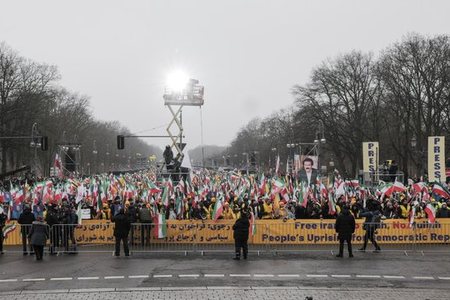
They often ask the question 'can Berisha be imprisoned at his age, close to 96?' Look at the model of the man in front of him! Sali Berisha could also be a free man, at least for these years of his life. Free means being free from sins and crimes. Sali Berisha has taken the life of an entire generation. He is also violating the next generation. He is reproducing here every specter of terrorist violence of the 'evil world'. Like Iran now.
But he can gain freedom by being isolated, or by being imprisoned.


Ketij b..q... pse ja postoni cfare shkruan? A e shikoni qe ka pjerdhur se nuk ja var askush.